

 English
 中文简体
中文简体 русский
 Español


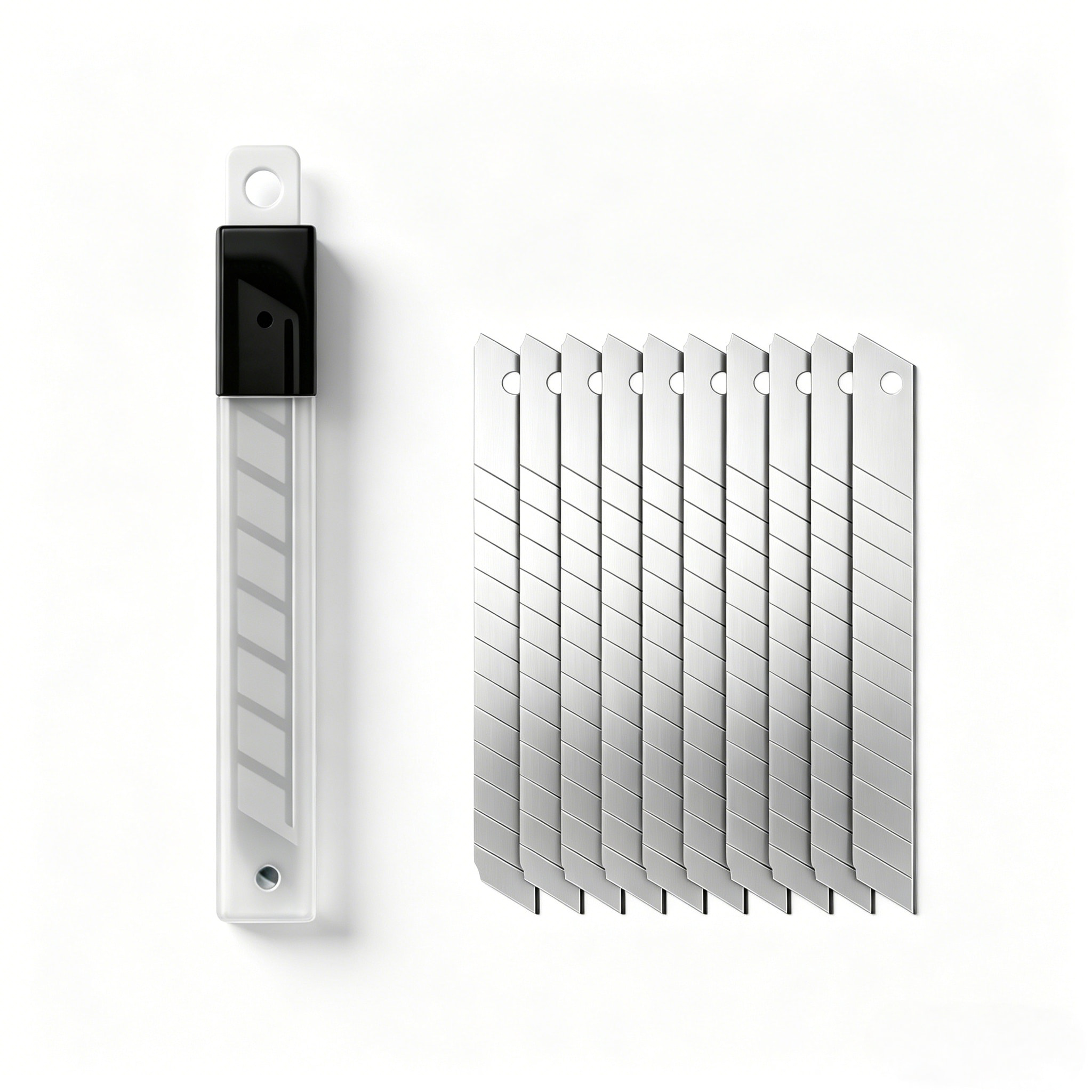
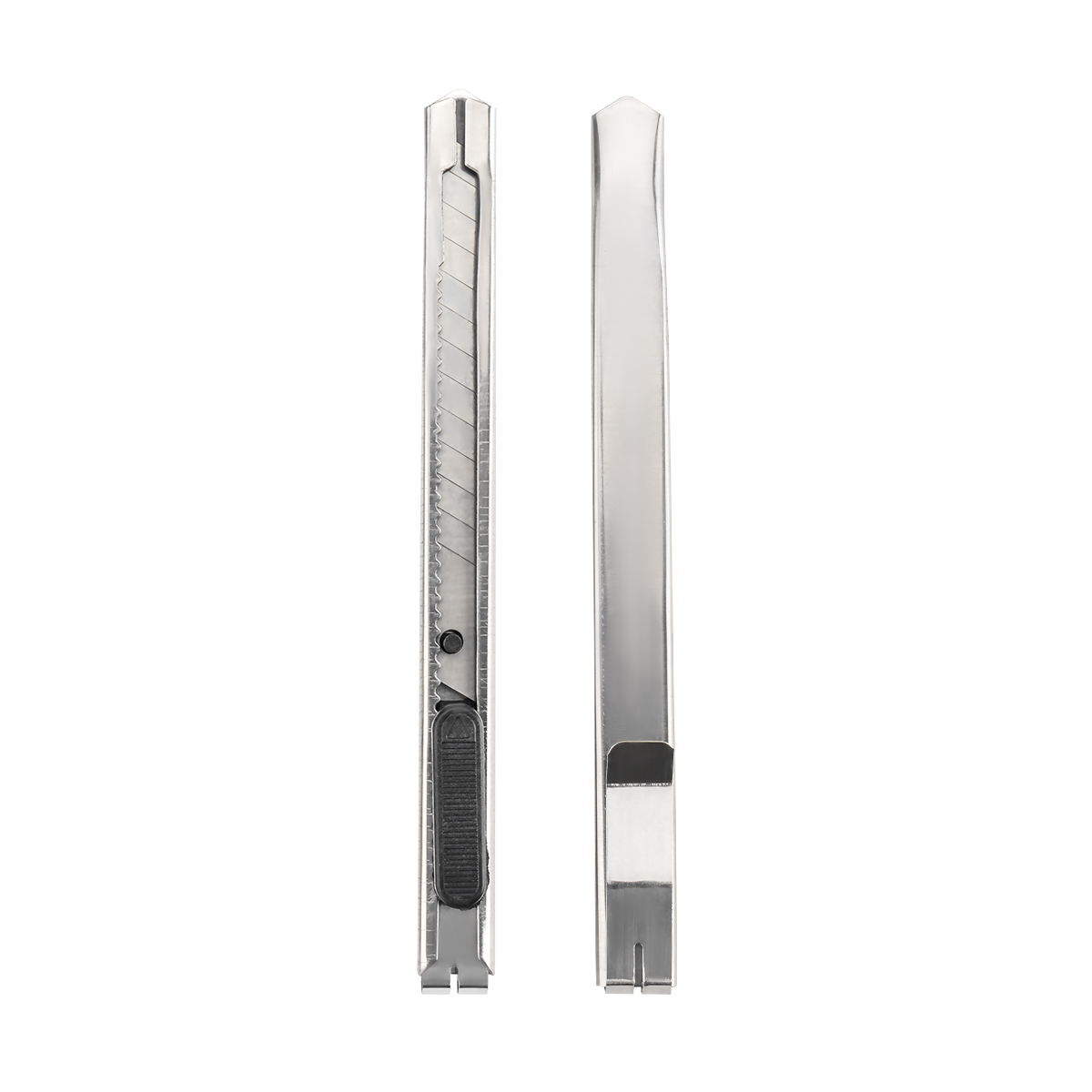
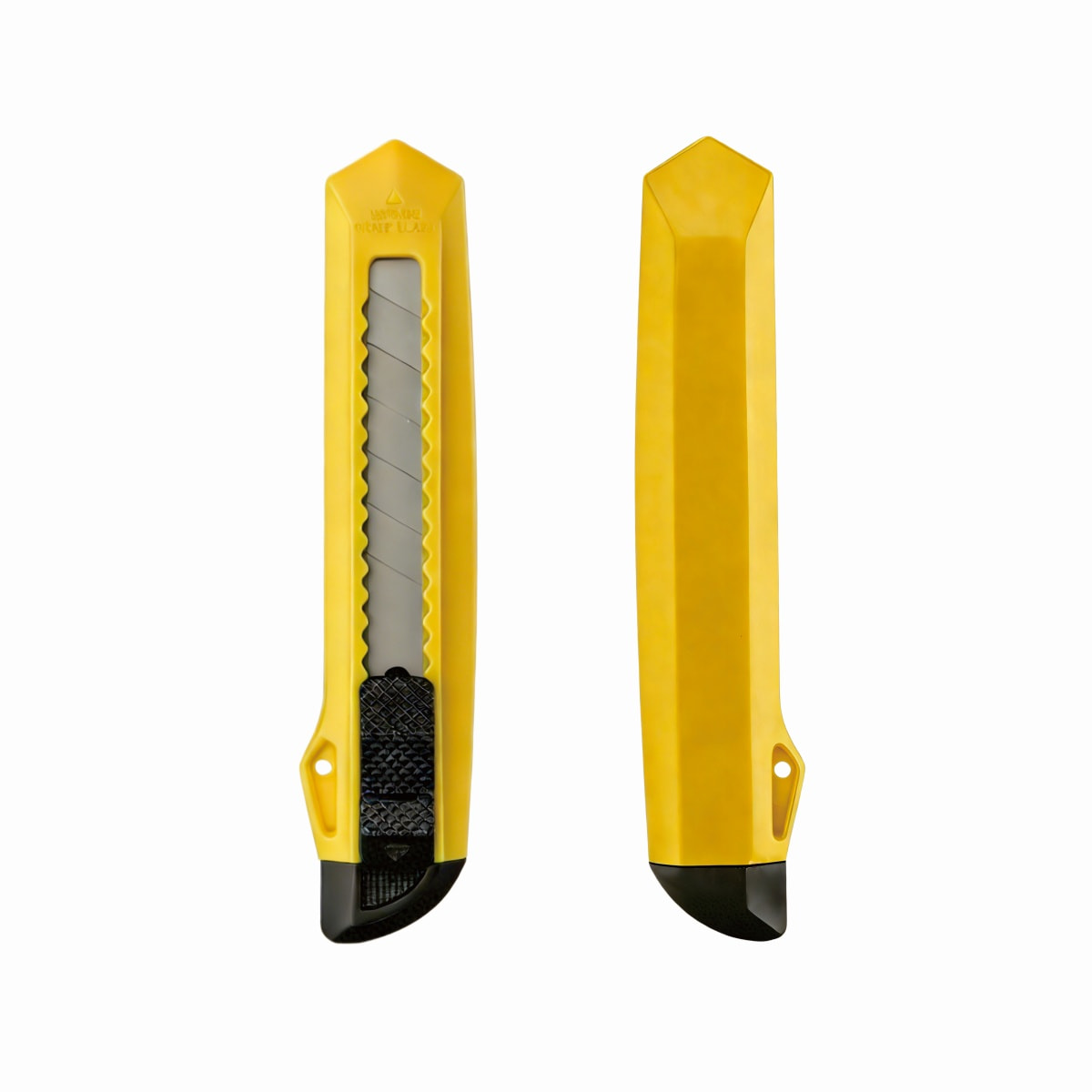
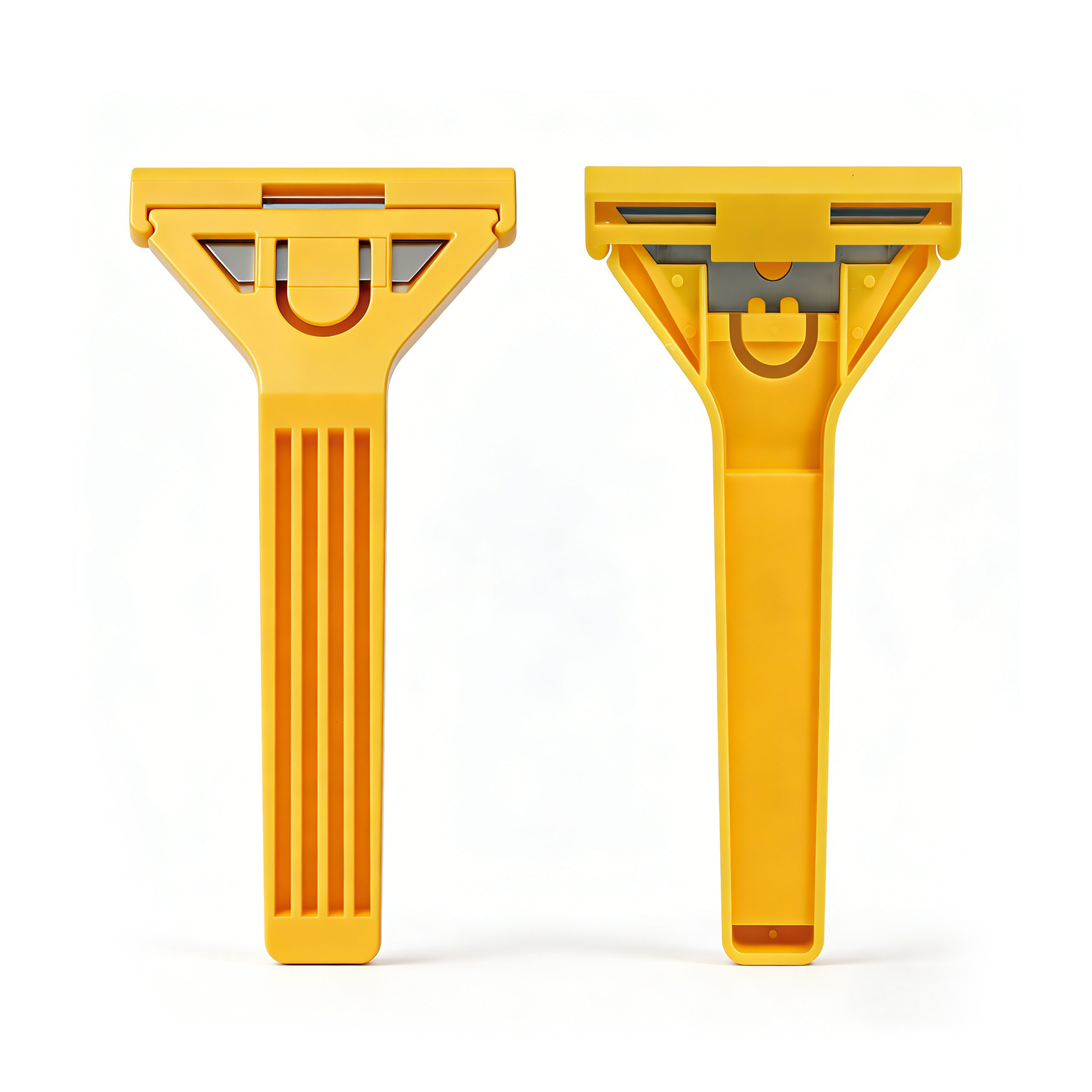
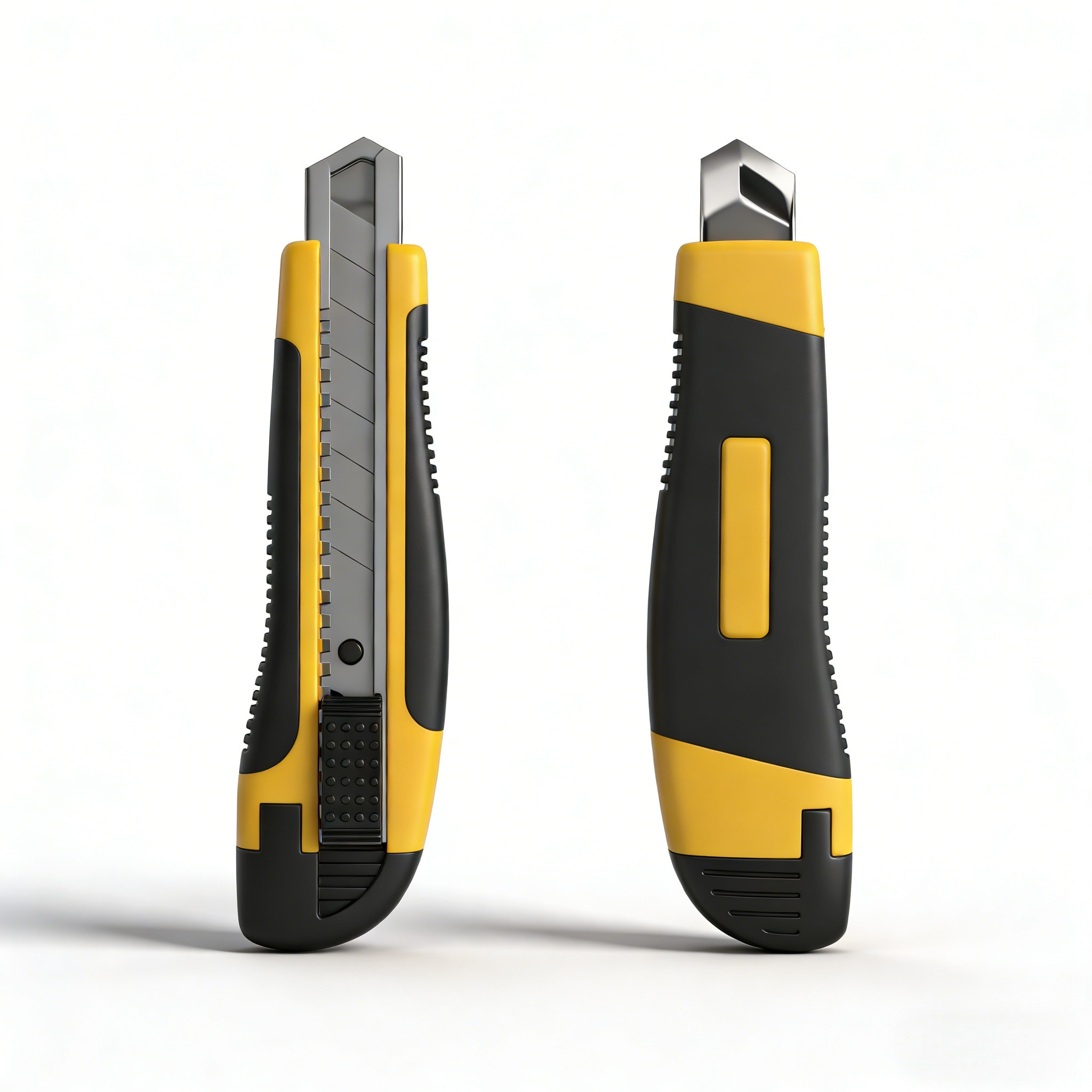
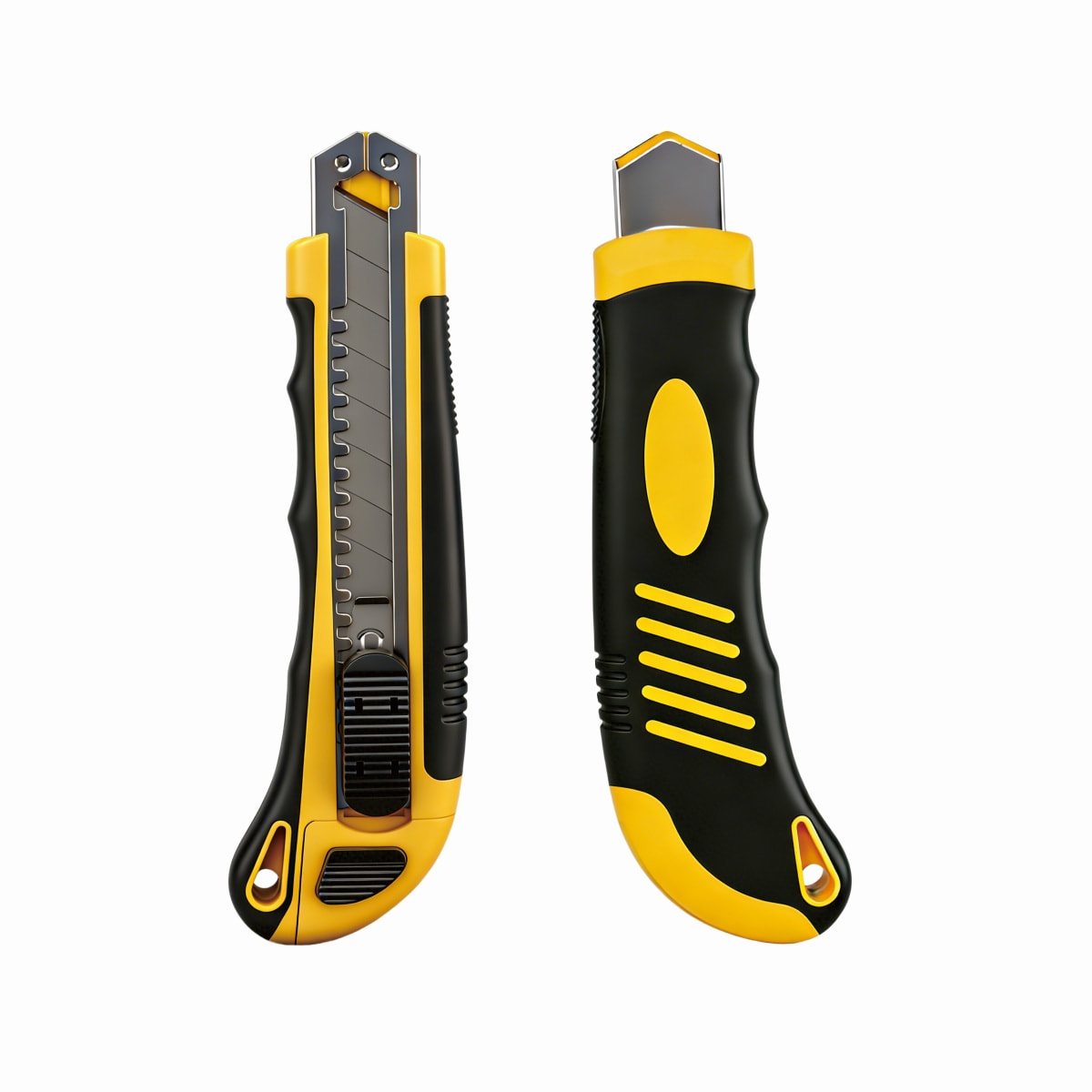
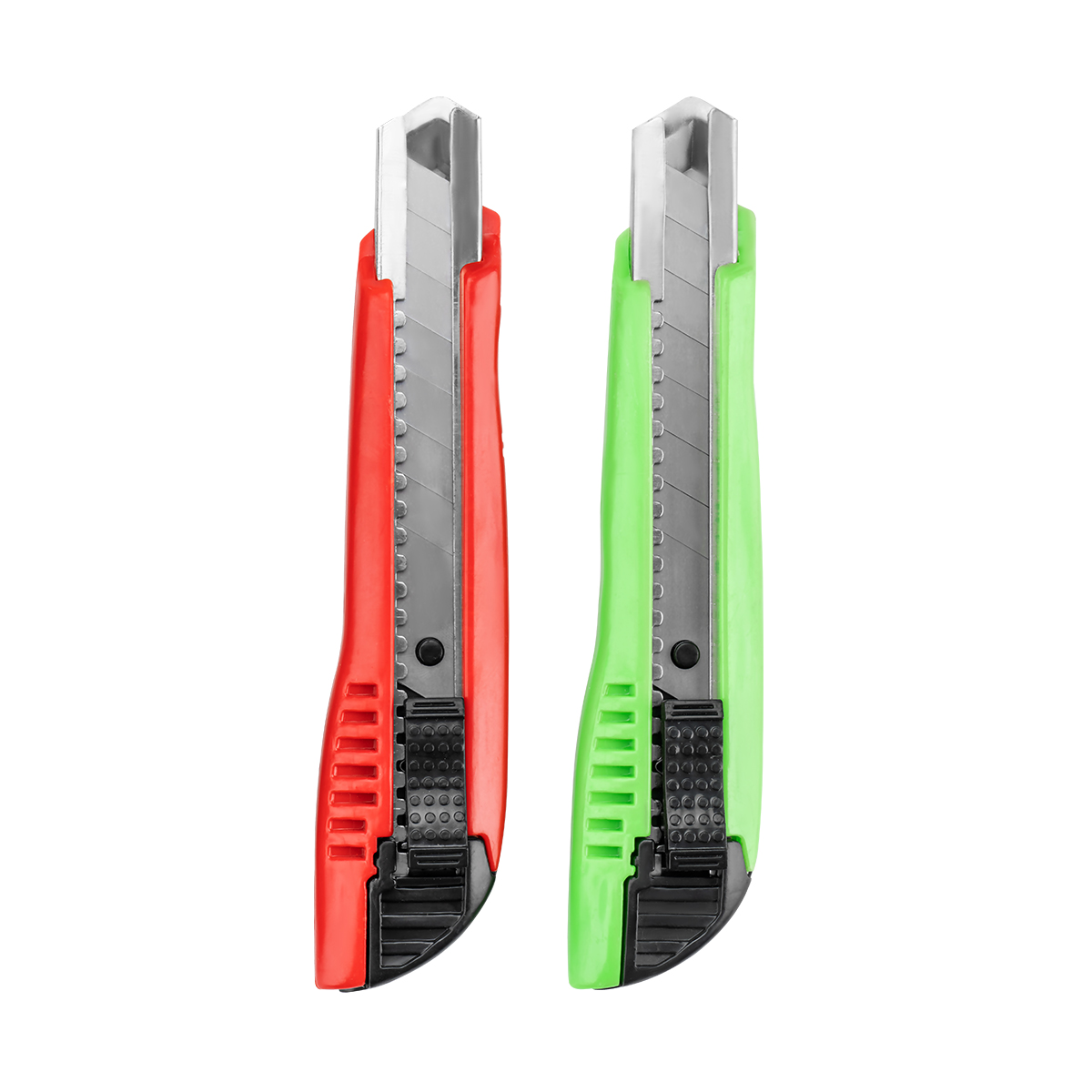
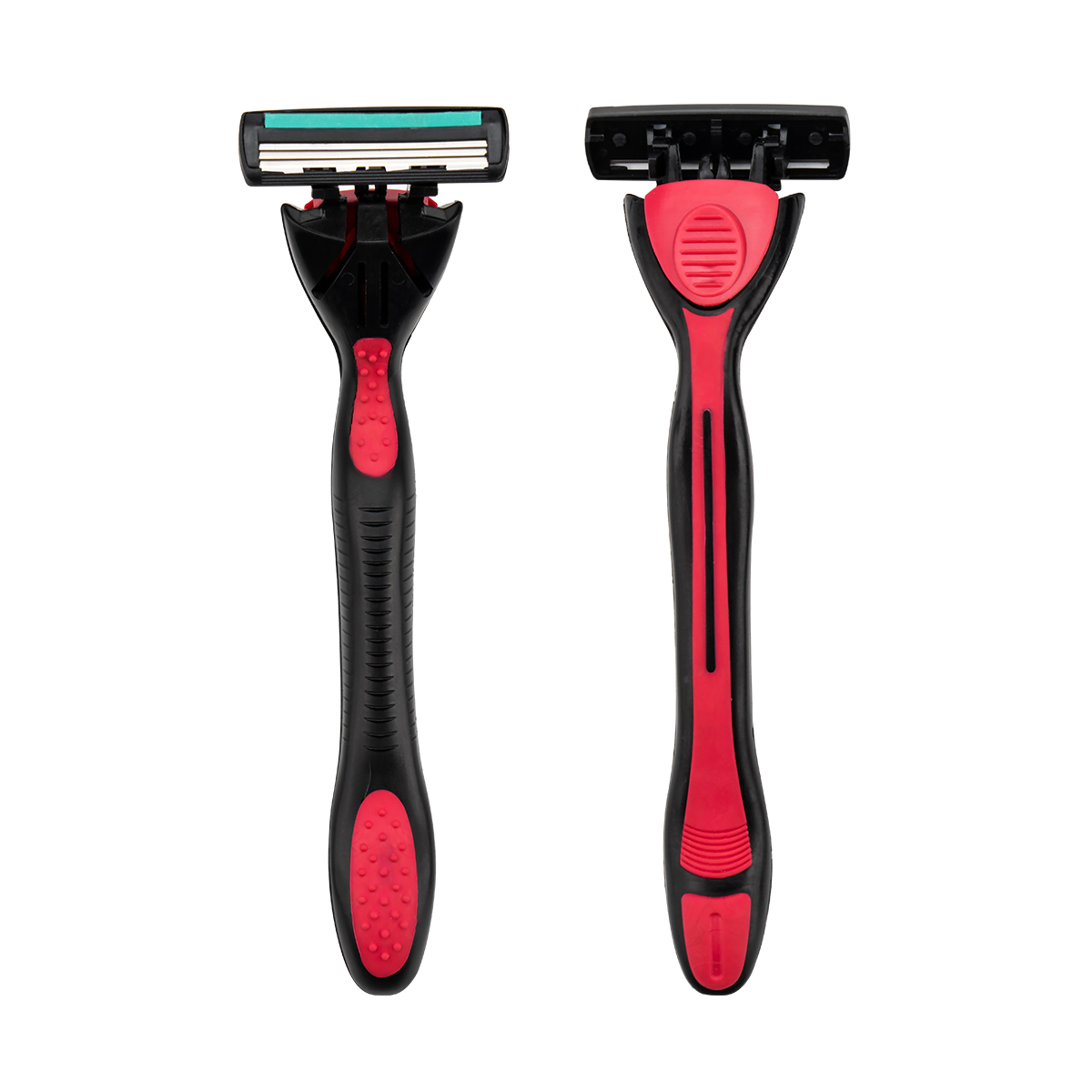

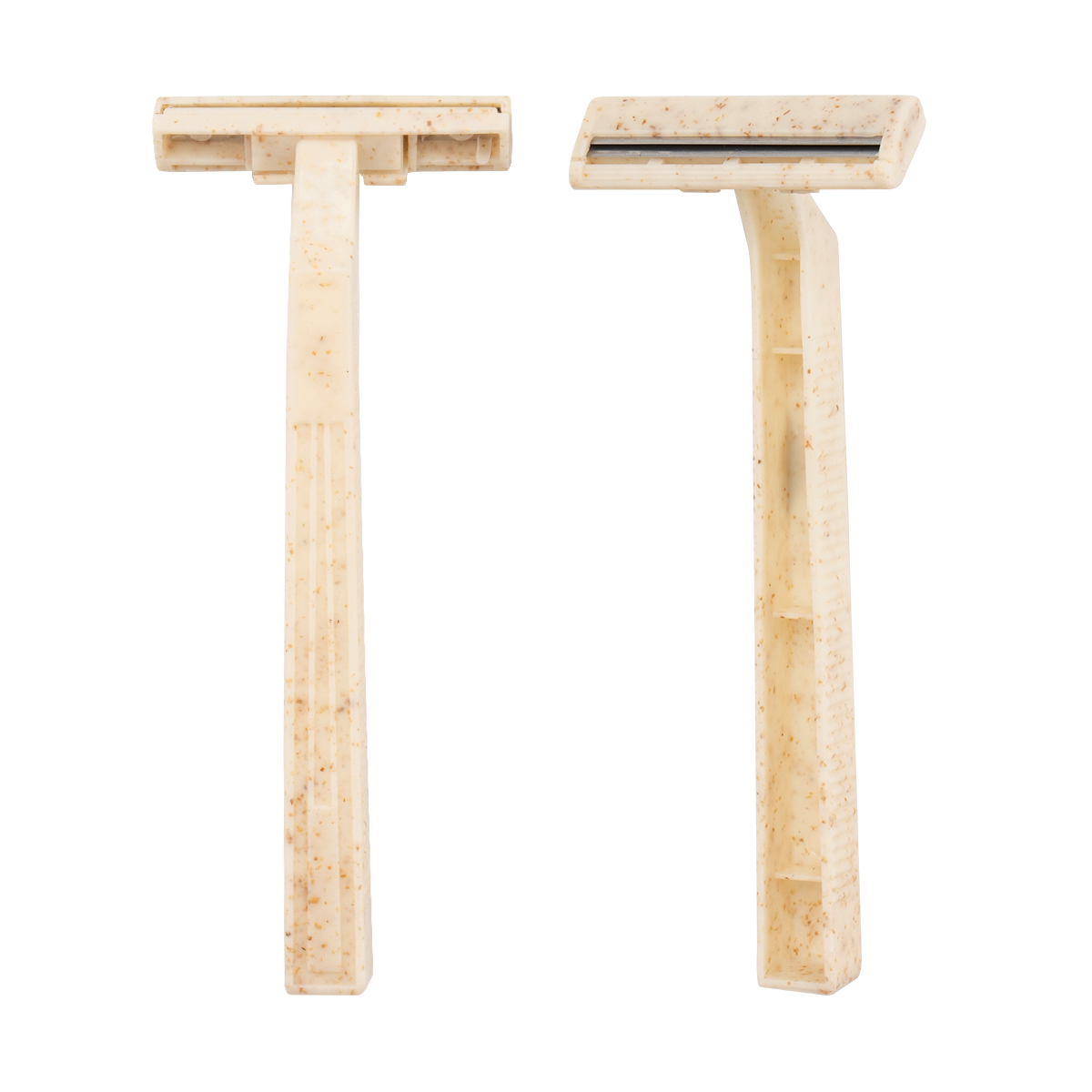

We are an industry and trade enterprise
specializing in the production of disposable razors and utility knives for more than 30 years.
What Makes a 9mm Hardware Utility Knife the Go-To Cutting Tool for Everyday Use
Content
- 1 Precision Engineering Inside a 9mm hardware utility knife
- 2 Handle Geometry and Anti-Slip Grip Zones
- 3 Auto Lock Sliders Compared to Manual Friction Sliders
- 4 Understanding the Auto-Lock Slider Channel
- 5 hardware utility knife change blade: Field Procedure Breakdown
- 6 Packaging and Distribution Configurations
- 7 Material Cutting Compatibility Reference
- 8 Where a 9mm hardware utility knife Is Used Across Industries
- 9 Storage, Transport and Everyday Carry Considerations
- 10 Custom Branding, Logo Printing and Color Configuration
- 11 Compact Dimensions Compared to a Standard 18mm Housing
- 12 Manufacturing Quality Control and Safety Testing
- 13 Material Sourcing and Housing Composition
- 14 Frequently Asked Questions
A 9mm hardware utility knife looks simple from the outside, but the internal geometry of the blade channel, the slider tension, and the steel grade used for the hardware utility knife blades determine whether the tool feels reliable after months of daily cutting. This section breaks down the engineering behind the CX107 platform, the blade replacement workflow that answers common questions such as hardware utility knife change blade and how to replace ace hardware utility knife blade, and the practical scenarios where a compact 9mm cutter outperforms a larger format knife. Every measurement referenced here reflects the design tolerances used in current production runs of this hardware utility knife family.
Blade Width
9mm
Standard snap-off segments compatible with most hardware utility knife blades on the market.
Body Length
12.1cm
Pocket-length housing sized for single-hand grip and easy desk storage.
Locking System
Auto Lock
Slider channel holds the blade at any of five extension positions.
Body Width
2.1cm
Slim profile that slides into a drawer, pencil case, or apron pocket.
Precision Engineering Inside a 9mm hardware utility knife
The housing of a hardware utility knife is molded in two symmetrical shells that snap or screw together around a central steel track. This track guides the slider that carries the blade forward and backward. On the CX107 platform the track is reinforced along its full 12.1cm length so the blade does not wobble side to side during a cutting stroke. Lateral play in the blade channel is one of the most common reasons a hardware utility knife feels unstable when cutting thick corrugated board, so the tolerance between the blade and the channel wall is kept tight during molding.
The upper handle section is shaped with a slight forward curve that mirrors the natural angle of a closed fist holding a pen-style tool. Ribbed grip zones sit at the two contact points where the thumb and index finger apply the most pressure during a cut. These ribs are raised roughly half a millimeter above the surrounding shell, enough to bite into skin for grip without becoming uncomfortable during repeated use across a full packing shift.
A viewing window is molded into the side of many hardware utility knife bodies so the remaining blade length is visible without opening the housing. Operators handling high daily cutting volume rely on this window to judge when a hardware utility knife blades change is close, rather than discovering a dull or exhausted blade mid-task.
The two housing shells are joined either with a single recessed screw near the base or with a set of internal snap tabs positioned along the seam. A screw-based closure tends to hold tighter tolerance over years of repeated opening because the fastener resists loosening from vibration, while a clip-based closure allows faster tool-free access during a hardware utility knife change blade cycle in a busy packing environment where a screwdriver is not always within reach.
Wall thickness across the shell is not uniform by accident. The section surrounding the blade channel is deliberately thicker than the section forming the upper handle curve, distributing material where lateral cutting stress concentrates while keeping the overall body light enough for extended one-hand use. This uneven wall distribution is a detail that separates a durable hardware utility knife from a lower-cost molded copy that uses a flat, uniform shell thickness throughout.
Blade Angle and Cutting Geometry
The cutting edge on a standard hardware utility knife blades strip is ground at roughly a 19 to 21 degree bevel on each face, producing a combined edge angle in the low 40 degree range. This angle balances two competing needs: an edge thin enough to slice cleanly through paper and film without tearing fibers, and an edge thick enough to resist rolling or chipping when it meets a folded seam or a staple hidden inside packing tape.
A narrower bevel closer to 15 degrees per face would cut with less resistance on single-layer material but would also dull faster and be more prone to micro-chipping against harder inclusions such as staples or plastic strapping, which is why the 19 to 21 degree range remains the practical standard for a general-purpose hardware utility knife rather than a specialty blade meant for one material only.
The tip of the blade is ground to a sharper point than the trailing edge, allowing the first contact point to pierce a surface such as tape or shrink film before the wider portion of the edge continues the cut along a straight line. This tip geometry is what allows a hardware utility knife to start a cut directly on a flat surface without needing a pre-existing edge or corner to begin from.
Blade Steel Grades Used in hardware utility knife blades Production
Not every hardware utility knife blades strip is made from the same steel. Hardness, edge retention, and corrosion resistance vary by grade, and the choice affects how often a blade segment needs to be snapped or replaced.
| Steel Grade | Typical Hardness | Best Suited Application |
| SK5 Carbon Steel | 58-60 HRC | Cardboard, kraft paper, layered packing tape |
| SK2 Carbon Steel | 56-58 HRC | General office paper, envelopes, light film |
| 420J2 Stainless Steel | 52-55 HRC | Humid or coastal environments, food-adjacent packing areas |
Hardness Comparison Across Common hardware utility knife blades Steel Grades (HRC)
Handle Geometry and Anti-Slip Grip Zones
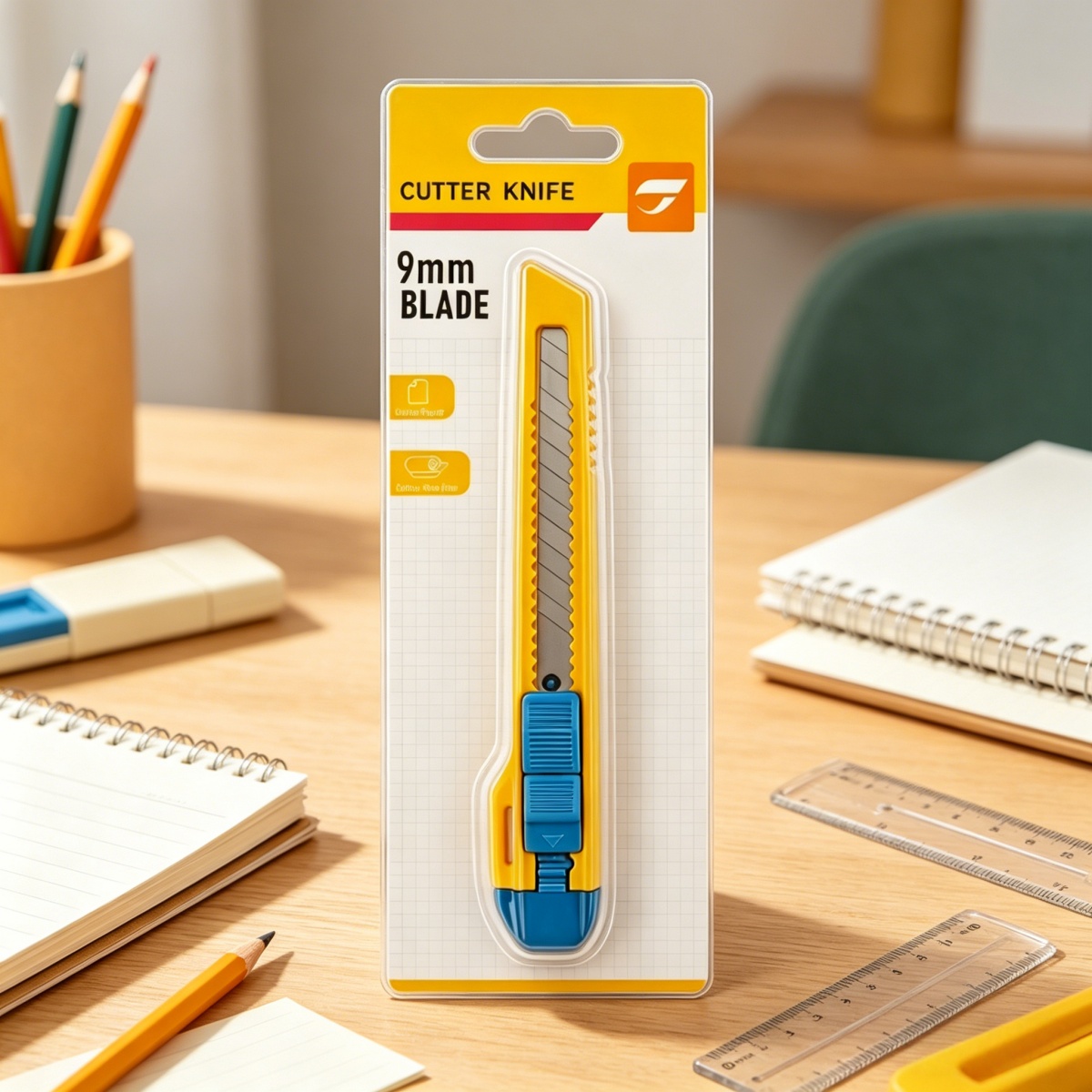
CX107 9mm hardware utility knife, retail blister pack
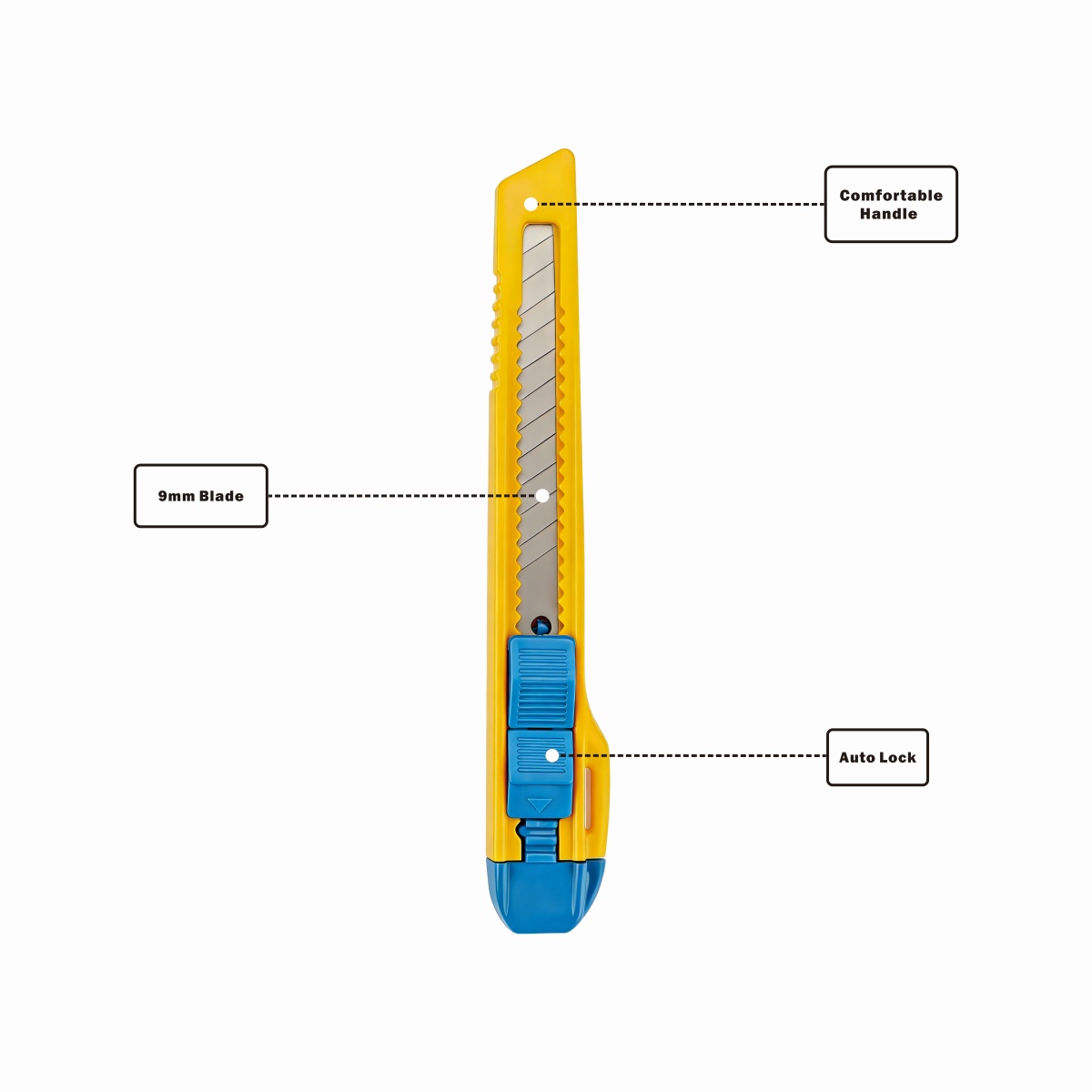
CX107 handle, blade, and Auto Lock reference points
Grip failure during a cutting stroke usually happens at the exact moment blade resistance spikes, such as when the tip catches a fold in cardboard. The saw-tooth ridges running along the spine of the yellow shell exist for this reason. They give the palm a mechanical anchor point that does not rely on friction alone, which matters once hands become slightly damp from repeated packing or classroom activity.
The lower end of the handle, shown in blue on the CX107 color scheme, is molded slightly wider than the mid-section. This flare stops the tool from sliding forward out of a closed hand during a pulling cut, a detail that is easy to overlook until a user compares a flared-base hardware utility knife against a straight-barrel one on the same task.
Color coding across the shell is functional as well as visual. Four color combinations are currently produced on this platform, alternating yellow, blue, light blue, and pink accents against black or white sliders, which allows distribution partners to separate stock by size or grade at a glance on a shelf or in a bin.
Grip diameter across the mid-section of the handle measures close to the 2.1cm body width, a dimension chosen to sit comfortably inside the curled fingers of an average adult hand without forcing the fingers to overextend. A grip diameter meaningfully larger than this tends to push the thumb away from the slider button, making single-hand blade extension awkward, while a noticeably thinner grip concentrates pressure into a smaller contact area and increases fatigue over a full shift of repeated cutting.
Auto Lock Sliders Compared to Manual Friction Sliders
Older and lower-cost utility knife designs rely on friction alone to hold the blade in place, meaning the slider is simply tight enough against the channel wall to resist light pressure. This works acceptably for very light paper cutting but becomes unreliable once the blade meets denser material, since the resistance from the cut itself can push the blade backward into the housing mid-stroke.
An Auto Lock system replaces this reliance on friction with a mechanical pin that physically seats into one of the five detents along the channel. The blade cannot retract under cutting pressure because the pin, not the friction fit, is what resists the backward force. This is the primary reason Auto Lock designs are now the standard expectation across most modern hardware utility knife platforms rather than an optional upgrade.
The trade-off with a locking system is that the user must consciously press the release button to retract the blade rather than simply pushing the slider back, adding a small deliberate step that some long-time users of older friction sliders need a short adjustment period to get used to.
Understanding the Auto-Lock Slider Channel
The slider on top of the housing moves along a stepped channel with five detents cut into the plastic. Each detent corresponds to a fixed blade extension length, from a short 6mm exposure for delicate trimming work up to a full 9mm exposure for cutting through multiple layers of corrugated board in a single stroke.
Auto Lock refers to the spring tension built into the slider button. Pressing the button disengages the pin from the current detent, and releasing it re-seats the pin into whichever detent the slider has reached. This design prevents the blade from retracting mid-cut under pressure, which is the primary safety concern with older friction-only slider knives that lack a dedicated locking pin.
Blade Retention Force Across the Five Auto Lock Positions
Retention force increases toward the fully extended position because the pin engages a deeper detent wall at maximum blade exposure, the setting most often used for thick material where accidental retraction carries the highest risk.
hardware utility knife change blade: Field Procedure Breakdown
The steps below describe the general mechanism found across most snap-off slider knives in this size class, including the workflow many people search for under how to replace ace hardware utility knife blade, since the internal channel and back-cover design are broadly similar across compact 9mm models regardless of the housing color or brand.
Step 1
Retract the Slider Fully
Push the slider back until the blade tip disappears completely inside the yellow shell. Never open the housing while any portion of the blade remains exposed.
Step 2
Open the Back Cover
Locate the small screw or clip near the base of the handle. A screw-based housing needs a small flat screwdriver, while a clip-based housing separates with firm thumb pressure along the seam.
Step 3
Remove the Spent Blade
Slide the old hardware utility knife blades strip out of the channel. If only the tip is dull, snap along the pre-scored line with pliers instead of discarding the whole strip.
Step 4
Load the Replacement Blade
Insert the new strip with the cutting edge facing the same direction as the slider travel, aligning the rear notch with the guide pin inside the channel.
Step 5
Reassemble and Test
Close the back cover, tighten the screw or press the clip until it seats flush, then extend and retract the slider through all five Auto Lock positions to confirm smooth travel.
A used blade should never be placed loose into a pocket, drawer, or waste bin without first snapping it into short segments or wrapping it, since a bare edge from a spent hardware utility knife blades strip stays sharp enough to cut skin even after it can no longer cleanly cut its intended material.
Packaging and Distribution Configurations
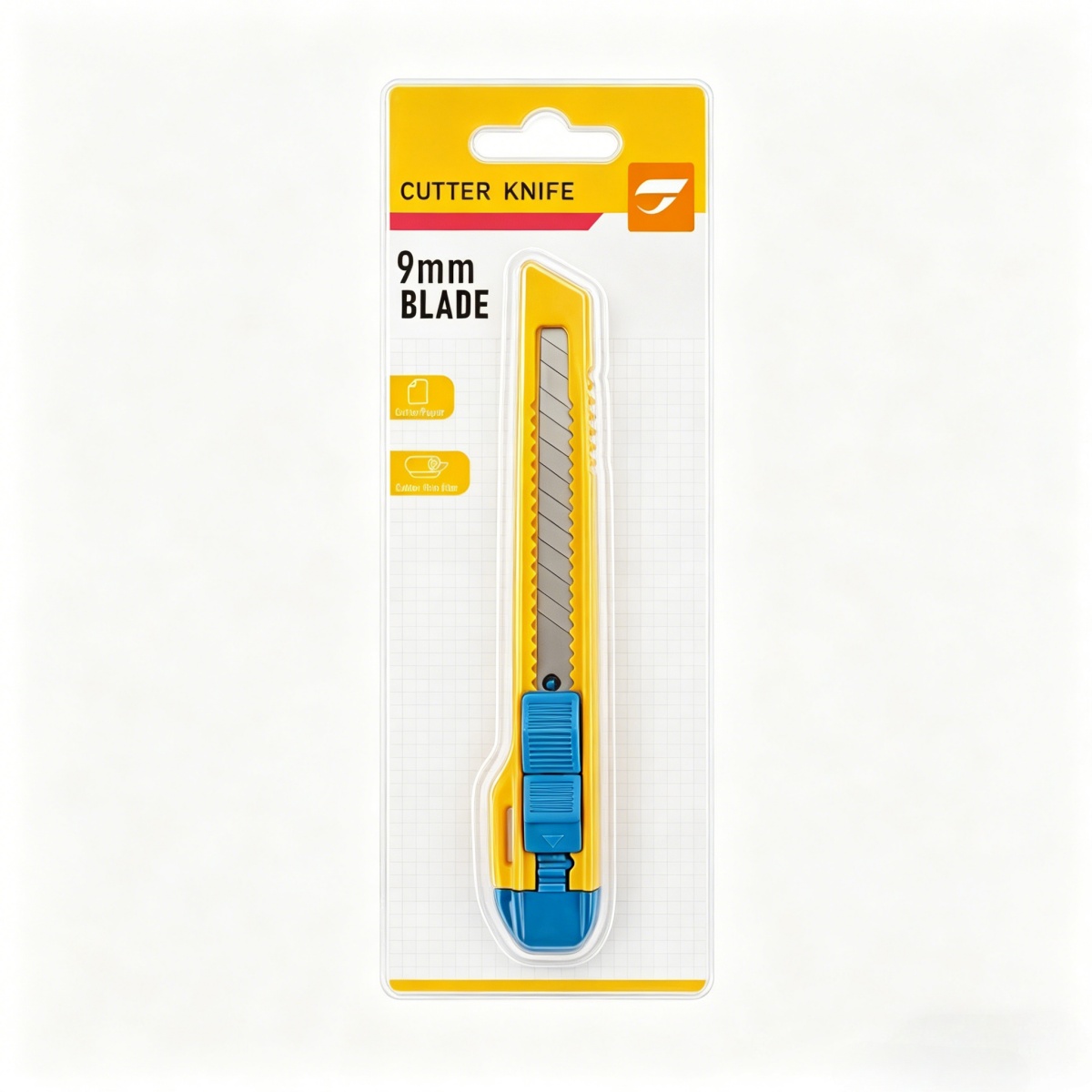
The CX107 platform ships in blister card packaging with the tool held against a printed backing card behind a molded plastic shell. This format keeps the blade fully retracted and visible for inspection while preventing the housing from opening during transit, and it allows a peg-hook style hang tab for shelf or rack display.
Bulk distribution configurations move away from individual blister cards toward polybagged units packed into an inner carton, reducing packaging material per unit for orders destined for warehouse restocking rather than direct retail display. Both formats maintain the same internal tool specification, differing only in how the finished hardware utility knife is protected and presented before it reaches an end user.
Replacement hardware utility knife blades are packed separately in small flat sleeves of five to ten strips, sized to fit inside a standard blister card pocket or a small parts bin, allowing a facility to stock spare blades independently of the tool bodies they will eventually be loaded into.
Material Cutting Compatibility Reference
A 9mm hardware utility knife is not intended for every cutting task in a facility. Matching blade extension to material thickness extends blade life and reduces the frequency of a full hardware utility knife change blade cycle.
| Material | Recommended Extension | Notes |
| Office paper, single sheets | Position 1-2 | Minimal exposure reduces edge damage on fine trimming |
| Cardboard box tape seams | Position 3 | Enough exposure to score without cutting into contents |
| Double-wall corrugated board | Position 4-5 | Full extension needed to pass through both liner layers |
| Thin plastic film or shrink wrap | Position 2 | Shorter exposure limits snagging on loose film edges |
Where a 9mm hardware utility knife Is Used Across Industries
Office and Administrative Desks
Mail rooms and reception desks use a compact hardware utility knife for opening envelopes and light parcels without the bulk of a full-size cutter, keeping the tool within a drawer alongside pens and staplers. The narrow 9mm edge is well suited to slitting an envelope flap in a single controlled motion without damaging the contents inside.
Retail and Packaging Stations
Stockroom staff rely on the auto lock feature during repetitive box opening, since a fixed blade position reduces wrist fatigue compared with a friction-only slider across an eight-hour shift. Consistent blade extension also reduces the chance of cutting too deep into product packaging beneath the outer carton.
Graphic and Print Studios
Mat cutting, stencil work, and trimming printed proofs benefit from the narrow 9mm blade width, which tracks straight lines more predictably than a wider 18mm blade on thin substrates. The lighter body also reduces hand strain during long sessions of detailed trimming work.
Educational and Craft Settings
Supervised classroom projects use the light 2.1cm body for smaller hands, paired with the auto lock so an instructor can visually confirm the blade is secured before a student begins cutting. The blade viewing window further allows a teacher to check blade condition before handing the tool to a student.
Warehousing and Logistics
Pickers carry a hardware utility knife clipped to a lanyard or apron for fast carton opening, where the slim housing avoids catching on shelving during walking routes between bins. Quick access supports high-volume order fulfillment where seconds saved per carton accumulate across a shift.
Home Improvement and DIY
Wallpaper trimming, gasket cutting, and flooring underlay work call for a sharp, replaceable edge, with hardware utility knife blades swapped mid-project rather than sharpened by hand. The compact size also makes the tool easy to carry inside a small home toolbox alongside other hand tools.
Storage, Transport and Everyday Carry Considerations
The fully retracted length of 12.1cm allows a hardware utility knife to sit flat inside most desk drawer organizers, tool pouches, and apron pockets without protruding past the opening. The rounded top of the handle avoids catching on fabric linings when the tool is pulled out quickly during repetitive tasks.
For facilities transporting tools between work areas, the blister card packaging doubles as a temporary storage sleeve during transit, keeping the blade retracted and the slider mechanism protected from dust or debris until the tool is unpacked at its destination station.
When a hardware utility knife is stored for extended periods between uses, retracting the blade fully and engaging the lowest lock position reduces spring tension on the slider mechanism, helping the Auto Lock detents maintain consistent engagement when the tool returns to active use.
Custom Branding, Logo Printing and Color Configuration
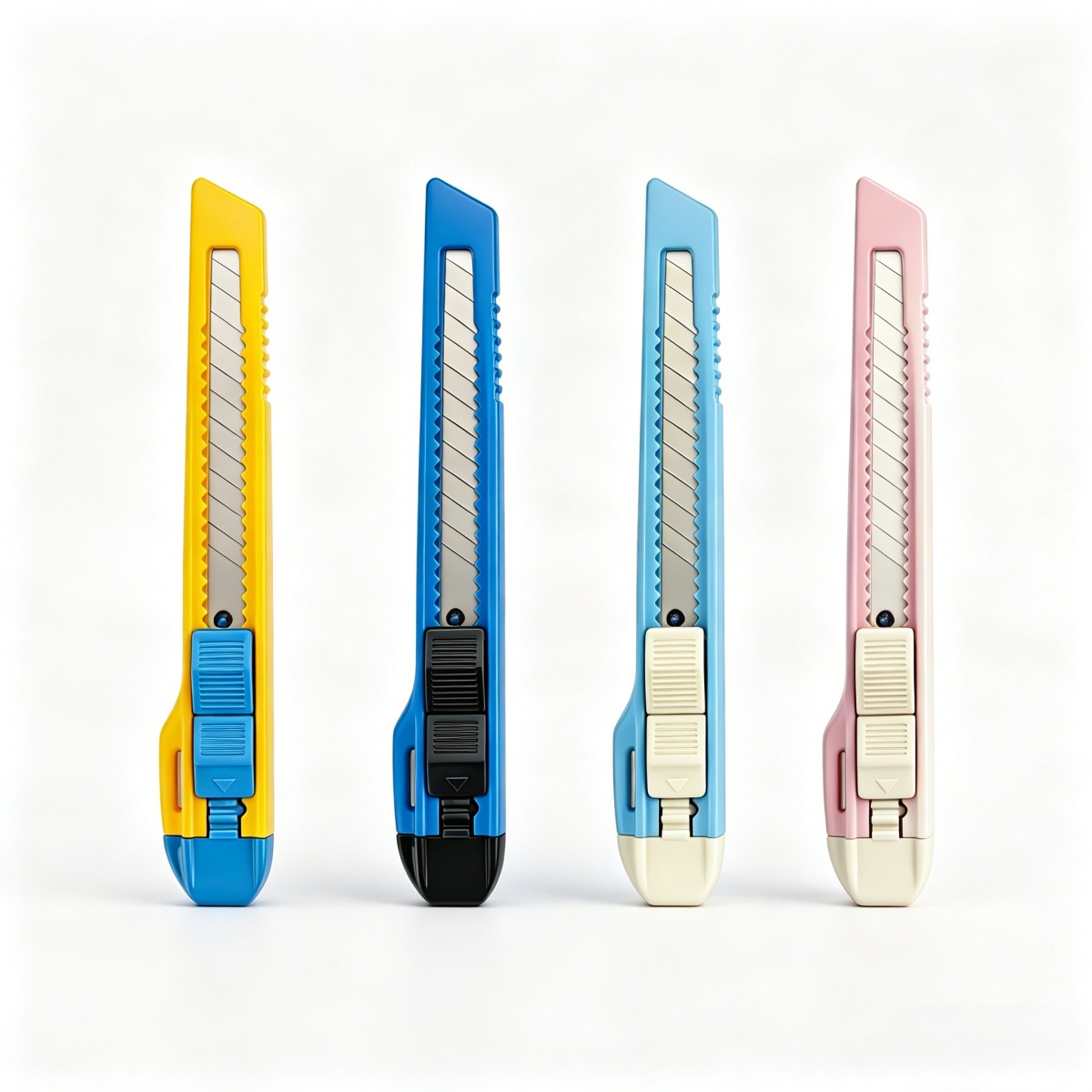
Available shell colors: yellow, blue, light blue and pink
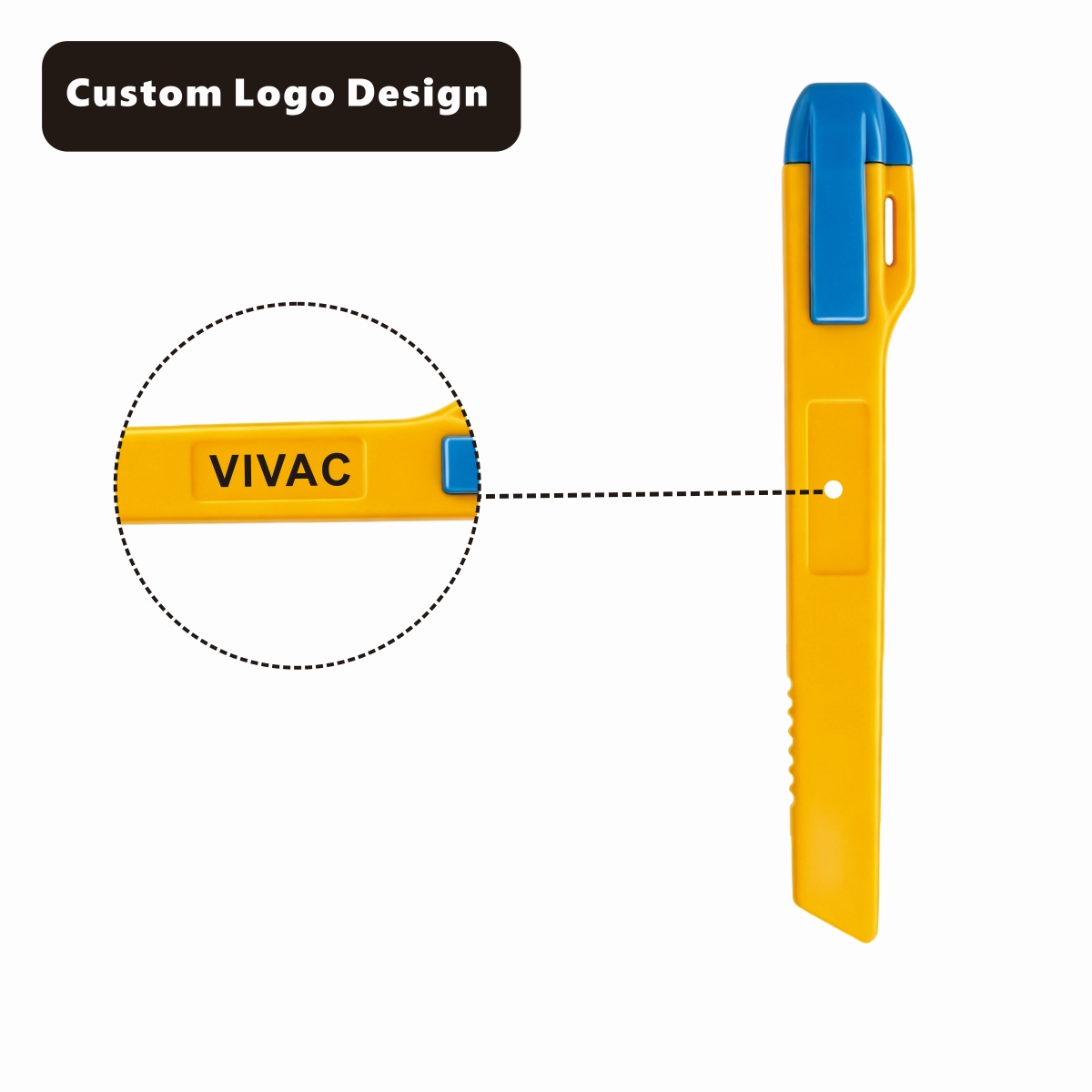
Custom logo printed on the CX107 handle
Pad printing or laser engraving on the flat section near the slider allows a company name or short wordmark to sit permanently on the shell without affecting grip texture. Because the print area sits above the ribbed section, the logo stays legible even after months of handling.
Color configuration is handled at the injection molding stage rather than through painting, so the yellow, blue, light blue, and pink shell colors hold up under repeated cleaning without chipping. Slider and base accent colors can be matched or contrasted against the main shell color depending on the ordering party's preference for a coordinated or two-tone appearance.
Compact Dimensions Compared to a Standard 18mm Housing
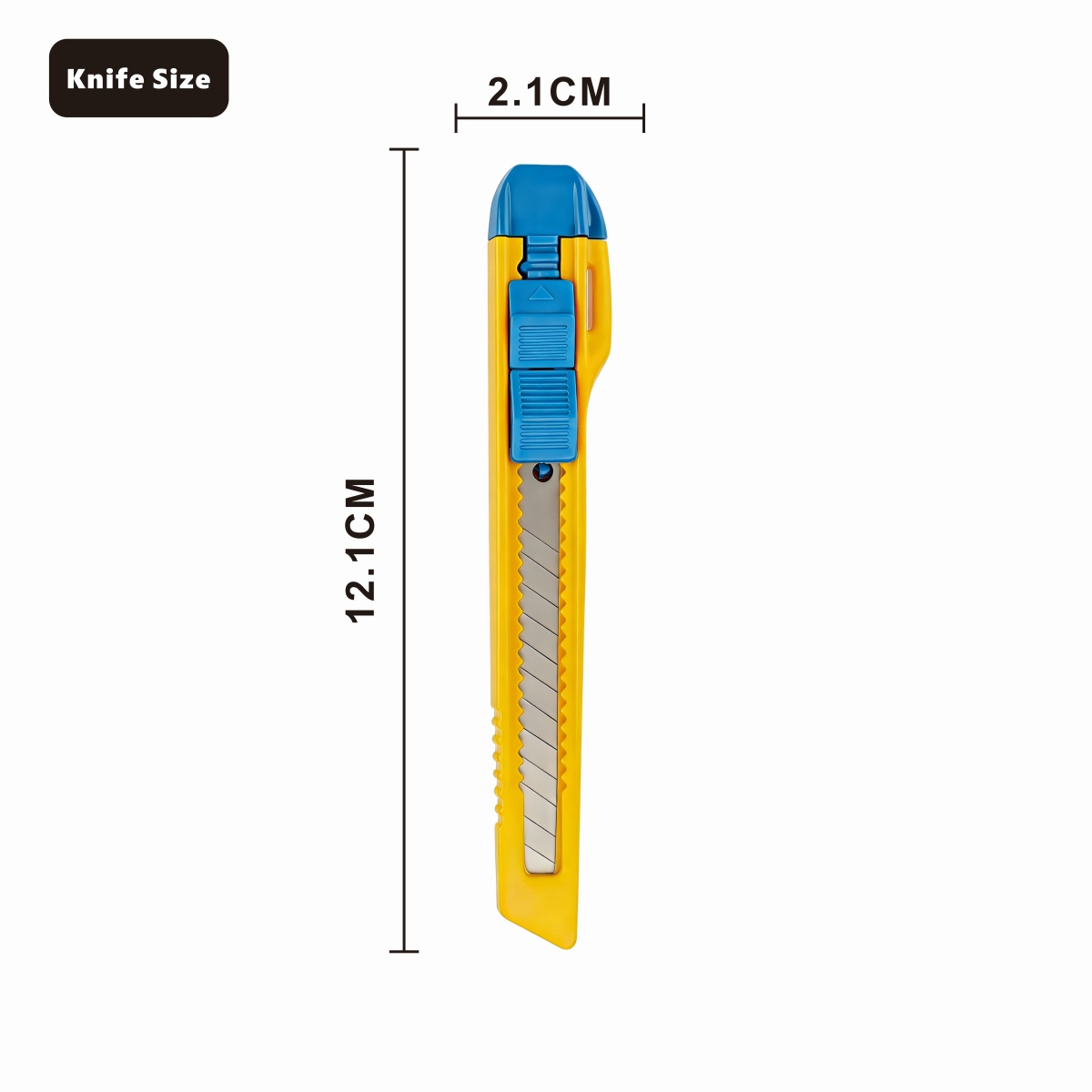
CX107 dimensions: 12.1cm length, 2.1cm width

CX107 in use during a hand-craft cutting task
| Attribute | 9mm Compact Model | 18mm Standard Model |
| Net weight | Approx. 18g | Approx. 45g |
| Blade segments per strip | 8 segments | 13-16 segments |
| Maximum blade exposure | 9mm | 18mm |
| Auto lock positions | 5 positions | 4-6 positions depending on housing length |
| Pocket or apron carry | Well suited | Bulkier, better suited to a belt sheath |
Net Weight Comparison: 9mm Compact Model vs 18mm Standard Model (grams)
Manufacturing Quality Control and Safety Testing
Each production batch of hardware utility knife blades passes through a sharpness verification stage where a sample strip from the batch is drawn across a calibrated test material to confirm cutting resistance falls within the accepted range. Strips outside tolerance are pulled from the batch before packing.
Housing shells undergo a slider tension check where the auto lock button is cycled through its full travel repeatedly to confirm the pin seats cleanly in every detent without binding. A housing that shows uneven resistance during this cycling test is separated for rework rather than shipped.
Assembled units are also checked for blade play by holding the housing steady while gently pressing the exposed tip from the side, confirming the channel tolerance keeps lateral movement within a fraction of a millimeter across the full extension range.
Material Sourcing and Housing Composition
The outer shell of the CX107 platform is molded from ABS plastic, chosen for its impact resistance and its ability to hold fine surface detail such as the ribbed grip texture and printed logo area without the material becoming brittle under repeated flexing near the slider channel.
Internal components including the locking pin and spring are produced from a harder engineering plastic or light metal alloy depending on the production run, selected specifically for fatigue resistance since these small parts cycle through thousands of extension and retraction movements over the working life of a single housing.
Blister packaging trays are formed from clear PET or PVC sheet, chosen to keep the tool visible for pre-purchase inspection while providing enough rigidity to protect the housing corners during stacking and shipping between distribution points.
Frequently Asked Questions
How often should hardware utility knife blades be replaced?
Replace or snap the blade once cutting resistance noticeably increases or the edge begins tearing rather than slicing cleanly through the target material, which for daily packaging use is often every one to two weeks.
Is the hardware utility knife change blade process the same across brands?
The core mechanism of retracting the slider, opening a back cover or clip, and sliding the strip along the channel is common across most compact 9mm models, though screw placement and clip style vary by housing design.
Can the same steps be used for how to replace ace hardware utility knife blade style tools?
Yes, the general sequence of retract, open, swap, and reseat applies to nearly any push-slider utility knife in this width class, since the internal channel geometry follows the same basic snap-off blade standard.
Does the auto lock feature wear out over time?
The locking pin and detents are molded from the same reinforced plastic as the housing shell, and testing during production confirms the mechanism holds consistent tension through repeated cycling before units are packed.
Which color option is best for identifying blade grade at a glance?
Facilities running mixed inventory often assign one shell color per steel grade, such as reserving the pink and white combination for stainless blades and the yellow and blue combination for standard carbon steel blades.
What causes a hardware utility knife to feel loose after months of use?
Looseness usually traces back to a partially stripped housing screw or worn clip tabs rather than the blade channel itself, and checking the back cover fasteners is the first step before assuming the slider mechanism has failed.
Can a 9mm hardware utility knife be used on thicker material meant for an 18mm blade?
A 9mm blade can score or partially cut thicker double-wall board but will require more passes and places more stress on the shorter exposed edge, so a wider 18mm model remains the better tool for consistently thick material.
Recommended Product
Recommended News

Keep In Touch
 No. 2-2, Oufu Road, Zhangting Town, Yuyao City, Ningbo City, Zhejiang, China.
 +86-574-87560886/87560055
 +86-574-87560885
Copyright © Ningbo Chuangxin Cutting-Tool Manufacture Co., Ltd.
