

 English
 中文简体
中文简体 русский
 Español


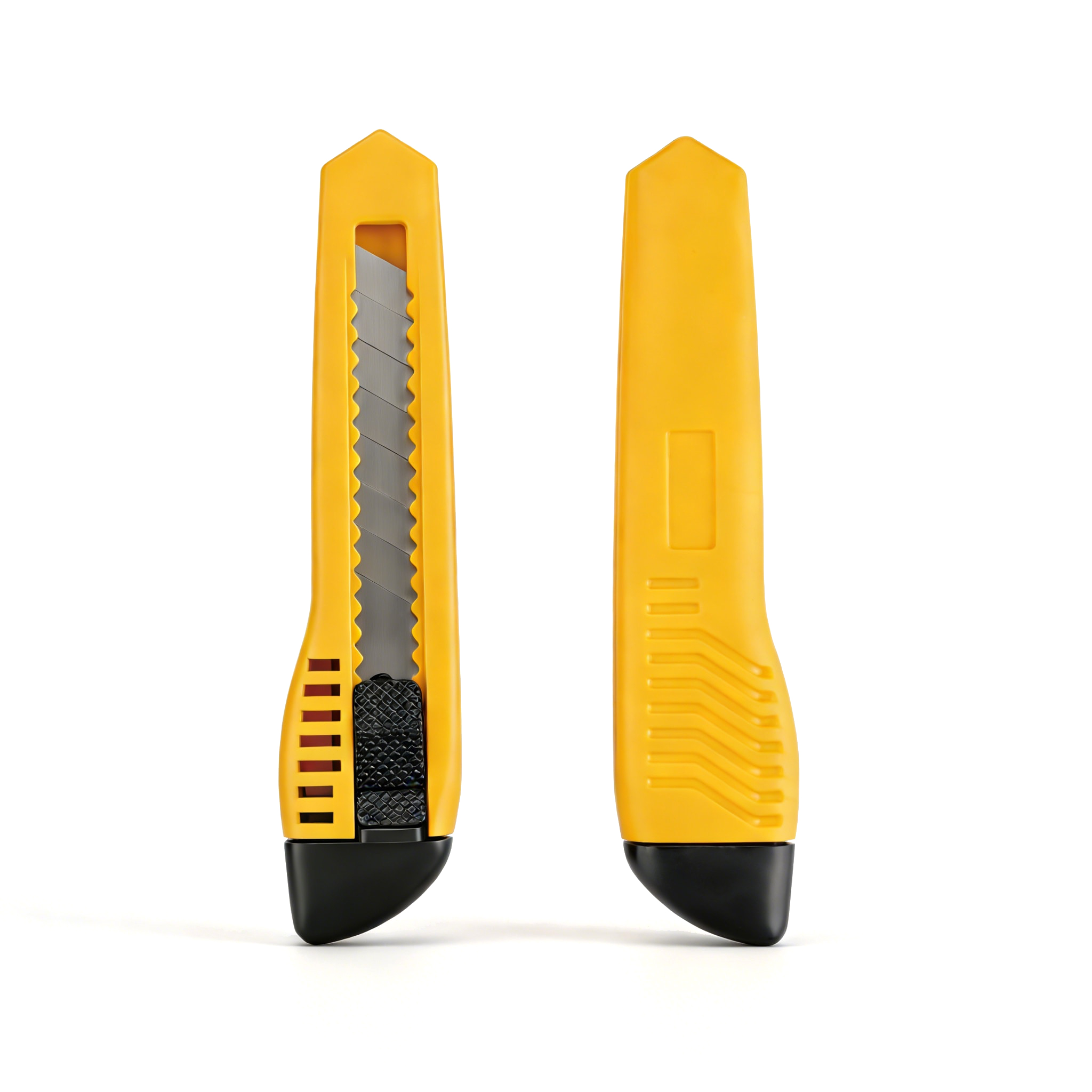
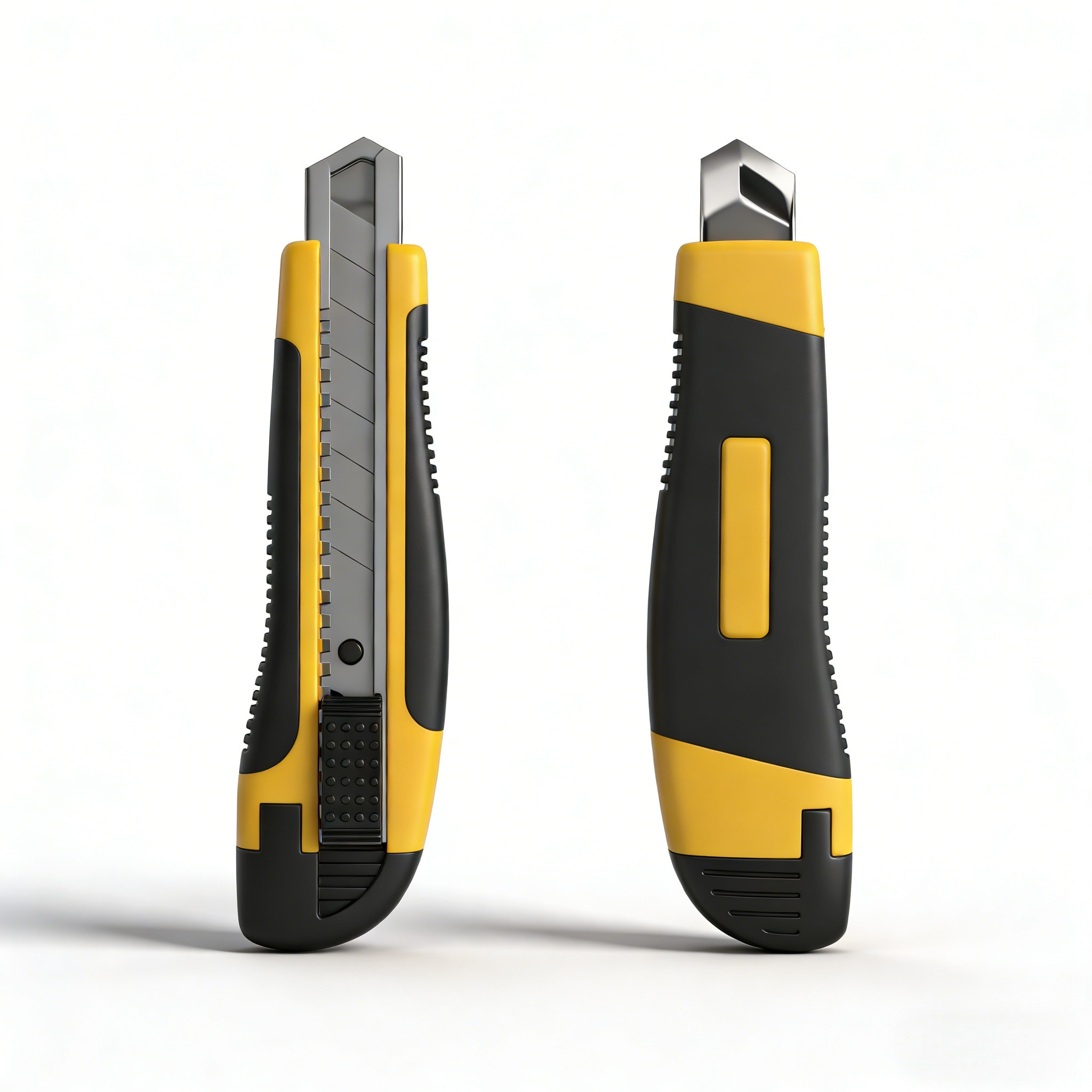
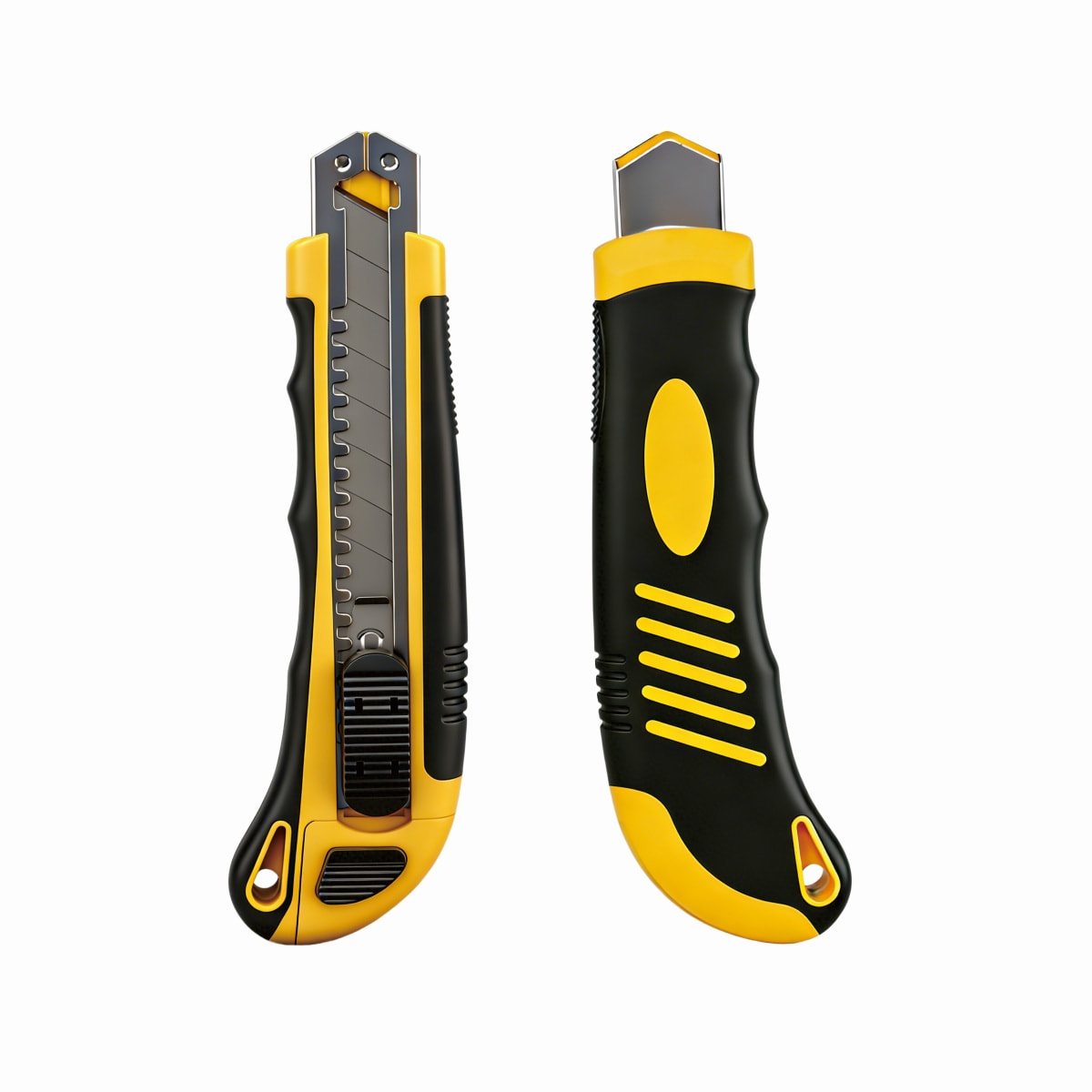
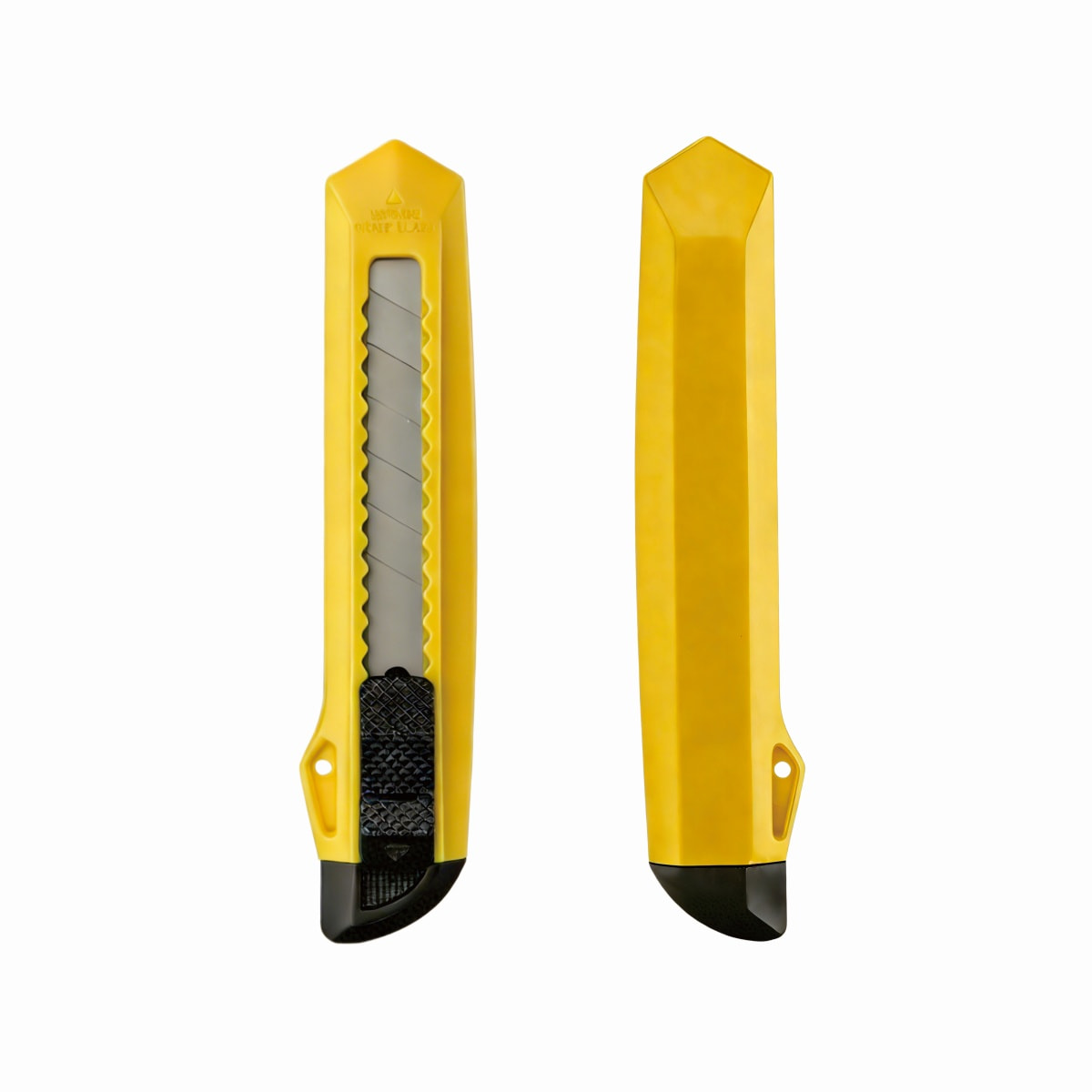

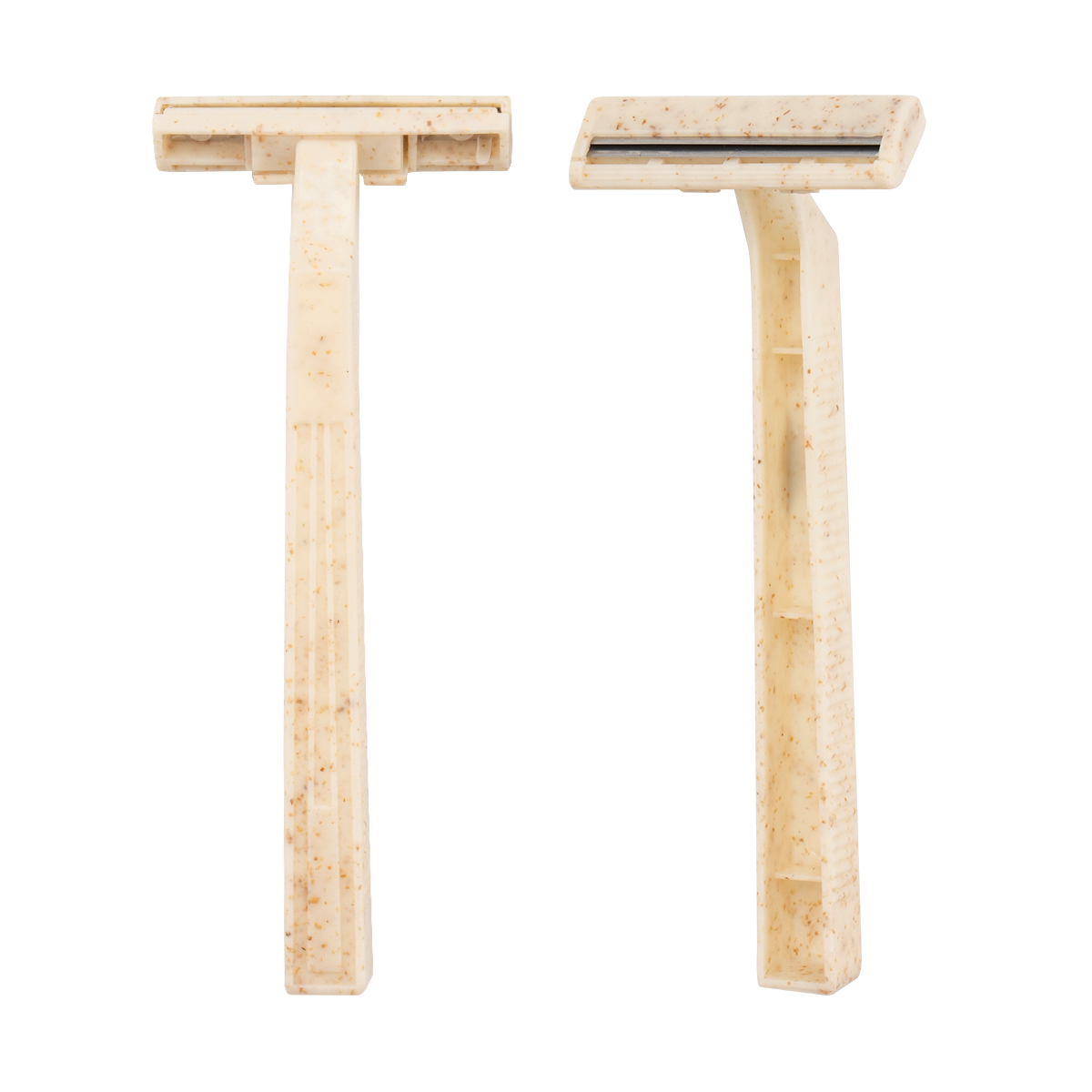

We are an industry and trade enterprise
specializing in the production of disposable razors and utility knives for more than 30 years.
What Makes a Heavy Duty Utility Knife With an 18mm Blade Worth Choosing
Content
- 1 Blade Metallurgy: What Makes an 18mm Blade Cut Cleanly
- 2 Anatomy of a Heavy Duty Cutter Knife
- 3 The Snap-Off Blade Segmenting System
- 4 Autolock: Engineering a Lock That Works With One Thumb
- 5 Metal Guide Rail vs. Plastic Channel
- 6 Compliance, Standards, and Everyday Safety on Shared Sites
- 7 Grip Geometry and Handle Comfort
- 8 Heavy Duty vs. Standard Utility Knives
- 9 From Steel Coil to Finished Tool: How These Knives Are Built
- 10 Where an 18mm Heavy Duty Knife Earns Its Keep
- 11 Color Coding, Custom Branding, and Fleet Management
- 12 Maintenance: Keeping the Rail and Lock Smooth
- 13 Durability Under Repeated Extension and Retraction
- 14 Choosing the Right Configuration
A cutting tool only earns the label heavy duty utility knives once every part of it — the steel, the housing, the lock, the rail — has been engineered to survive thousands of repeated cuts without losing accuracy. This section walks through the mechanical reasoning behind an 18mm blade platform built around autolock, metal guide rail, and snap-off blade construction, and shows how each part contributes to a tool that performs consistently on a job site, in a warehouse, or on a production line.
Blade Metallurgy: What Makes an 18mm Blade Cut Cleanly
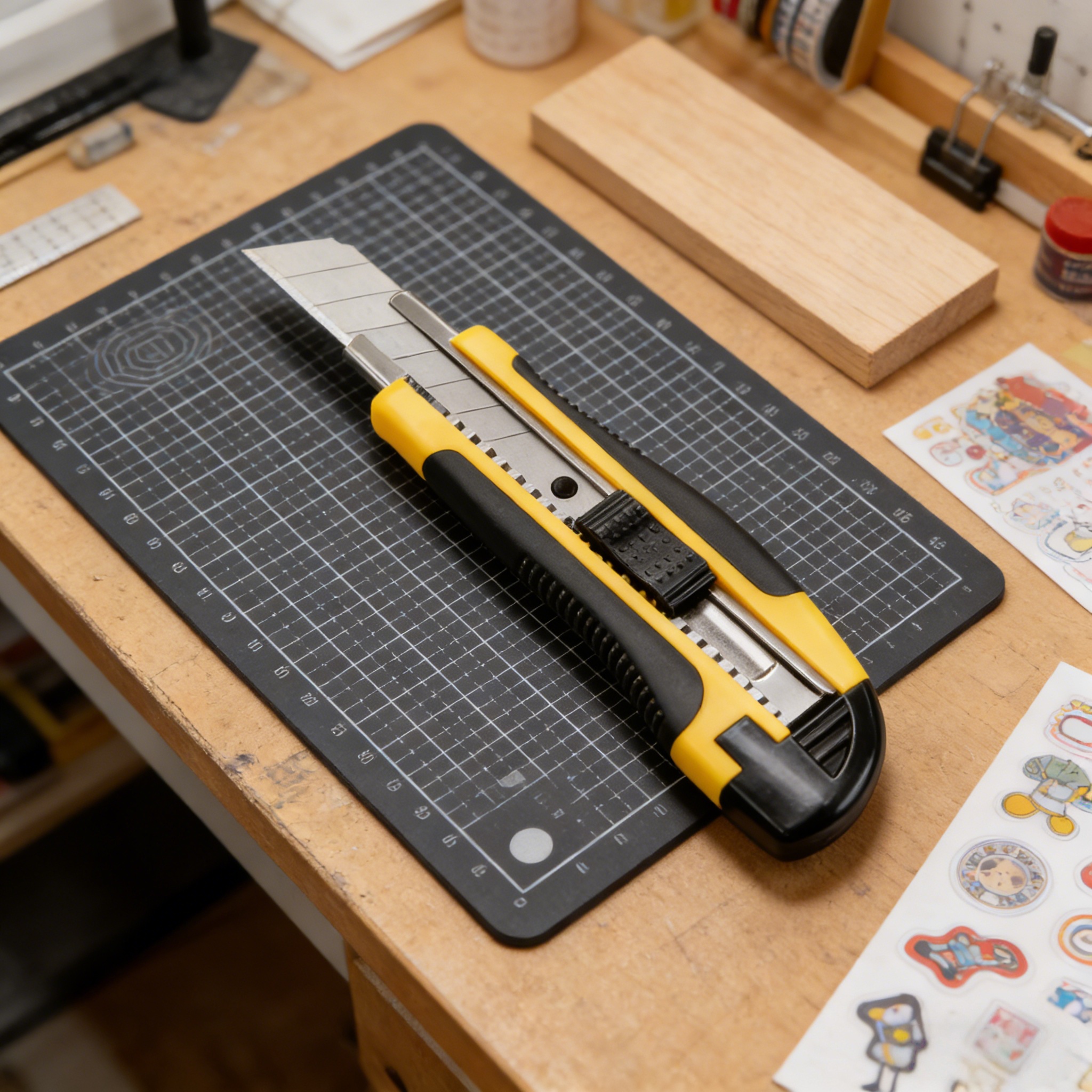
The cutting performance of any cutter knife begins with the steel, not the housing. Utility blades are typically rolled from high-carbon tool steel, and the exact alloy determines how long an edge holds before it needs to be snapped or replaced. Three families of steel dominate the category, and each behaves differently under repeated load.
Hardness alone does not tell the whole story. A blade that is hardened too aggressively becomes brittle and chips at the tip the first time it meets a staple hidden inside a carton or a nail head under carpet edging. Manufacturers balance hardness against toughness through the tempering step that follows hardening, holding the steel at a controlled temperature long enough to relieve internal stress without softening the edge. That balance is why two blades stamped from the same alloy can behave differently depending on how carefully the tempering cycle was controlled during production.
SK5 carbon steel
58–60 HRC
A fine-grain steel that takes a sharp bevel and resists micro-chipping when the 18mm blade meets layered corrugate or laminate flooring underlay.
SK2 carbon steel
55–58 HRC
Slightly softer than SK5, which makes it more forgiving on twisting cuts through rope, strapping, and coated textiles.
65Mn spring steel
50–55 HRC
A more flexible alloy chosen for economy blades; it bends rather than snaps cleanly, which is why premium snap-off blade segments avoid it.
Relative edge hardness by steel grade (Rockwell C scale)
Values reflect commonly published Rockwell C ranges for each alloy family; hardness within a batch varies with heat-treatment and tempering.
An 18mm blade milled from SK5 or SK2 stock gives a heavy duty tool the reach to score through double-wall corrugate in a single pass, trim carpet tackless strip, or open strapped pallets without re-gripping mid-cut. Width matters as much as hardness: a wider blade resists lateral flex, which keeps the cut line straight even when the material fights back.
| Blade width | Typical rigidity | Common use case |
| 9mm | Light | Envelopes, film, single-layer paper |
| 12mm | Moderate | Retail unboxing, light carton work |
| 18mm | High | Double-wall corrugate, flooring, strapping, leather |
| 25mm | Very high | Insulation board, dense foam, thick rubber matting |
Anatomy of a Heavy Duty Cutter Knife
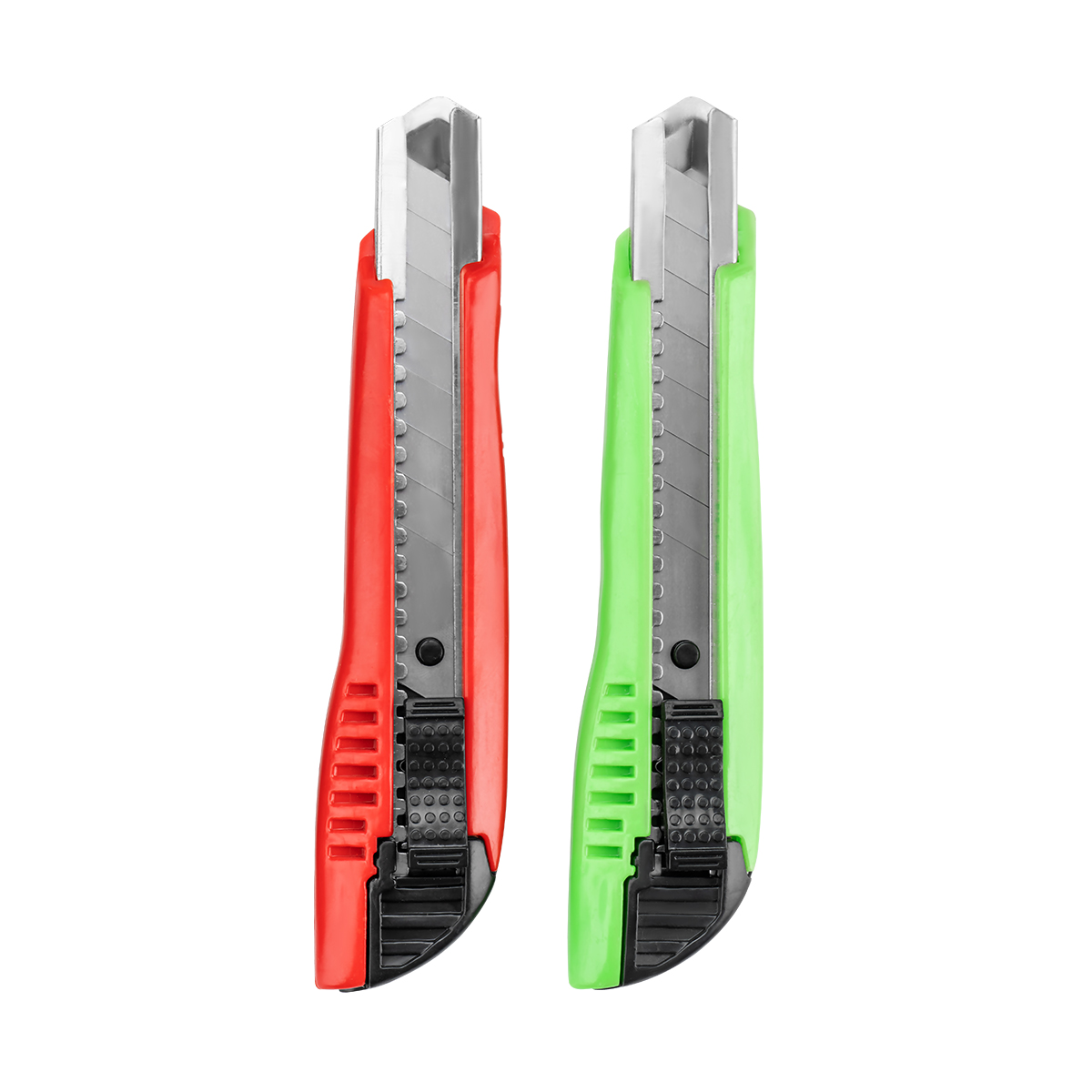
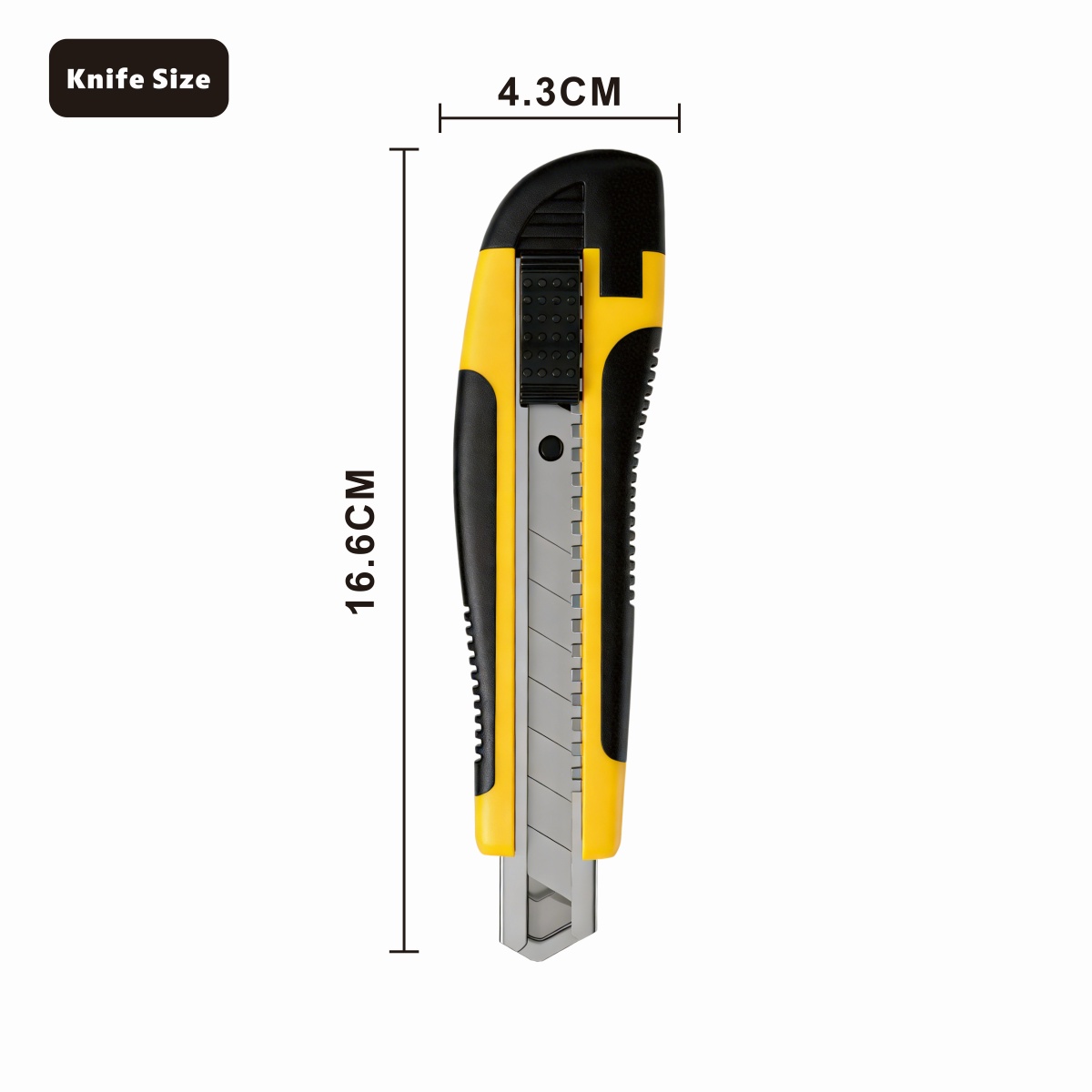
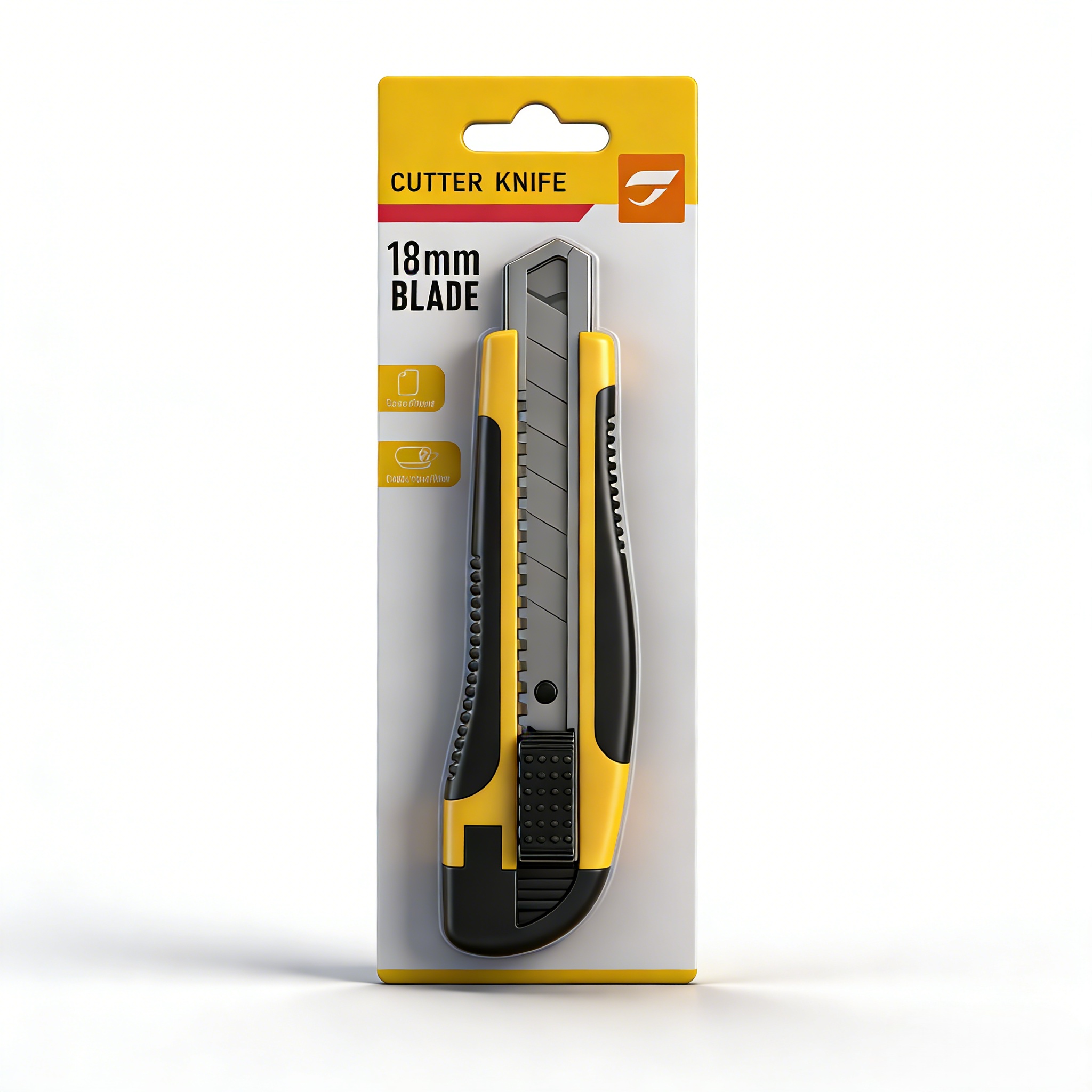
Pull the housing apart on any well-built cutter knife and four structural systems appear in the same order every time: an outer grip shell, an internal steel rail, a spring-loaded lock, and a blade carriage. On this platform the overall footprint measures 16.6CM in length and 4.3CM across the widest part of the grip — proportions chosen so the hand closes around the tool without the thumb overreaching for the lock.
Why the shell is molded in two densities
The outer shell is dual-injected in a rigid polymer and a softer rubberized compound. The rigid layer holds the tool's shape under clamping force; the rubberized layer sits exactly where the palm, thumb, and fingertips make contact, so grip does not depend on squeezing harder as hands tire.
Why the carriage rides on metal, not plastic
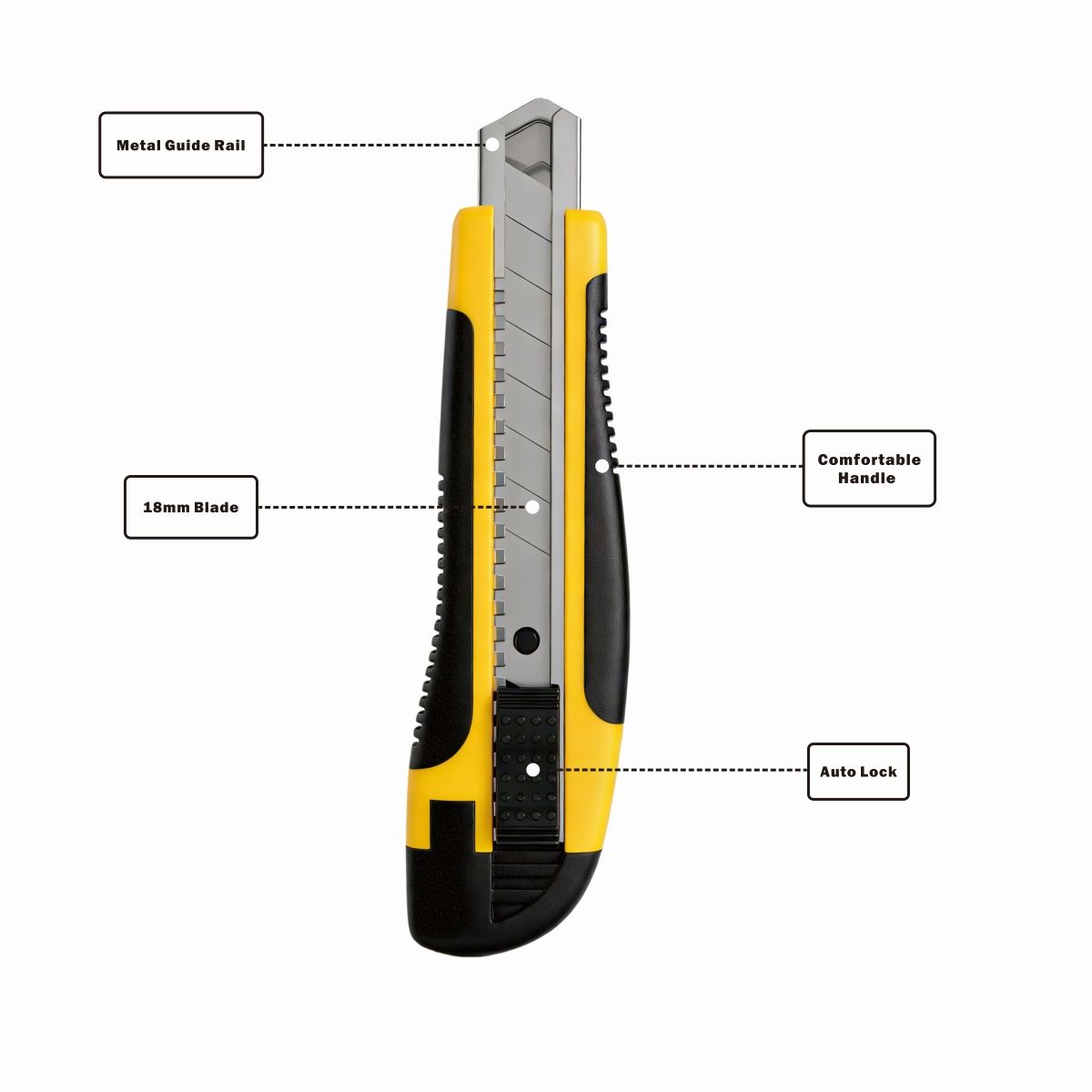
A plastic channel deforms slightly every time the blade carriage slides, and that deformation compounds over months of use until the blade begins to wobble mid-cut. A metal guide rail does not deform under normal working loads, so cut depth stays consistent on cut one thousand the same way it did on cut one.
The Snap-Off Blade Segmenting System
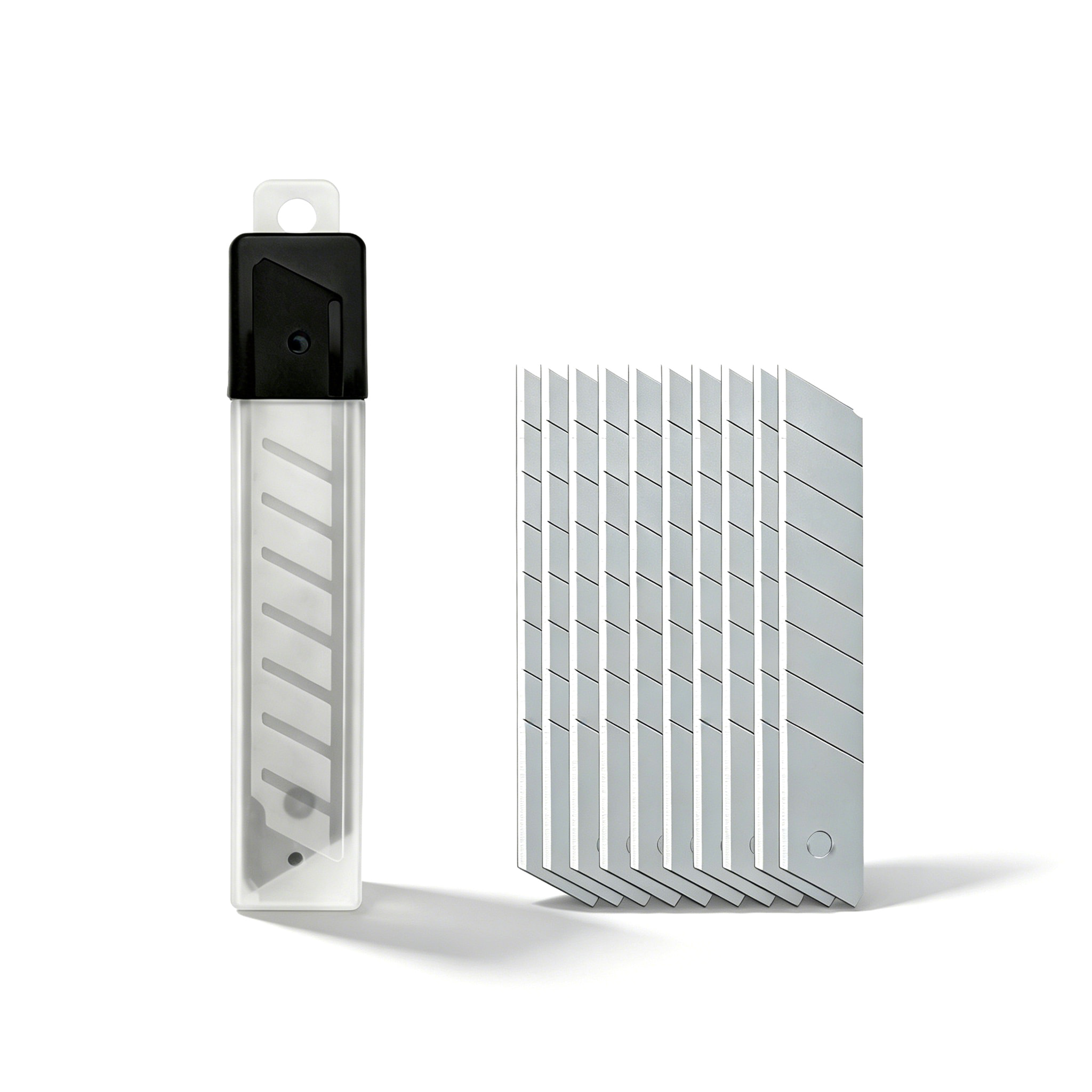
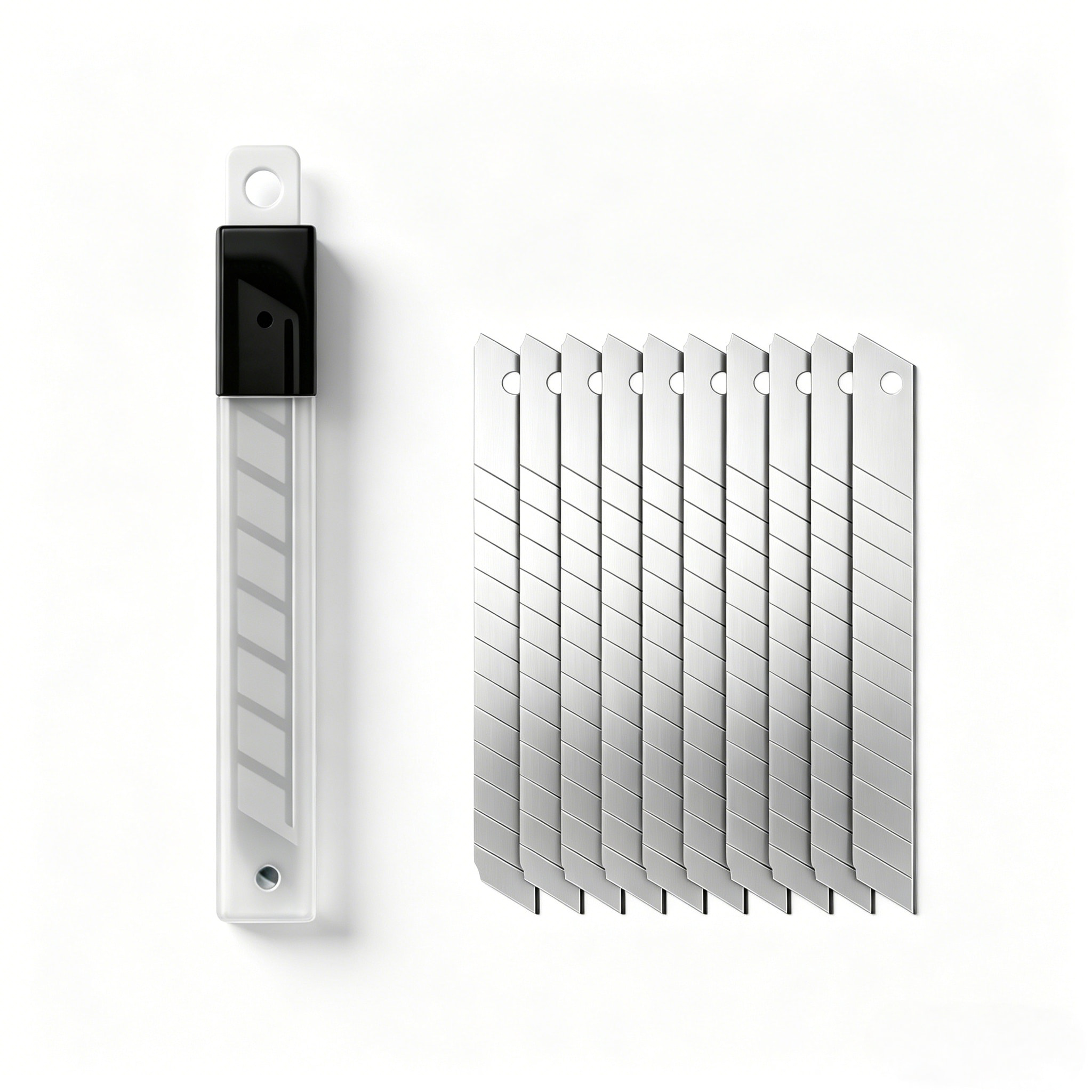
Rather than sharpening a dull edge, a snap-off blade is designed to be shortened. Manufacturing presses a row of shallow score lines across the width of the strip during production, spaced evenly along its length. Each segment behind the working tip is a full, unused edge waiting in reserve.
Cut until resistance increases
A change in drag through the material is the clearest signal that the exposed segment has lost its edge — waiting for visible dullness wastes clean segments behind it.
Retract the carriage fully
Sliding the blade back into the housing before snapping keeps fingers clear of the exposed segment and lines the score groove up with the housing's built-in snap point.
Snap along the score line
A clean, firm break along the pre-scored groove leaves a fresh, square tip with no burr, ready to extend and lock for the next cut.
Dispose of the segment safely
Spent segments still carry a working edge on the trailing side; a dedicated blade-disposal slot or sealed container keeps them out of general waste.
The advantage over a fixed, single-edge blade is straightforward arithmetic: a strip with eight or nine segments delivers eight or nine fresh edges from one piece of steel, so the tool spends more time cutting and less time waiting on a replacement blade to be found and fitted.
Why segmenting keeps a working edge available longer
Segmented snap-off blade edge Single fixed edge, resharpened by hand
Conceptual illustration, not a laboratory measurement — it shows why a segmented edge avoids the repeated sharp-to-dull swing of a single edge that is re-honed between uses.
Autolock: Engineering a Lock That Works With One Thumb
A blade that can creep forward or snap back unexpectedly is the single most common cause of hand injury with any utility blade. The autolock mechanism on this platform solves that with a spring-loaded slider carrying a row of internal teeth that mesh directly into notches machined along the metal guide rail.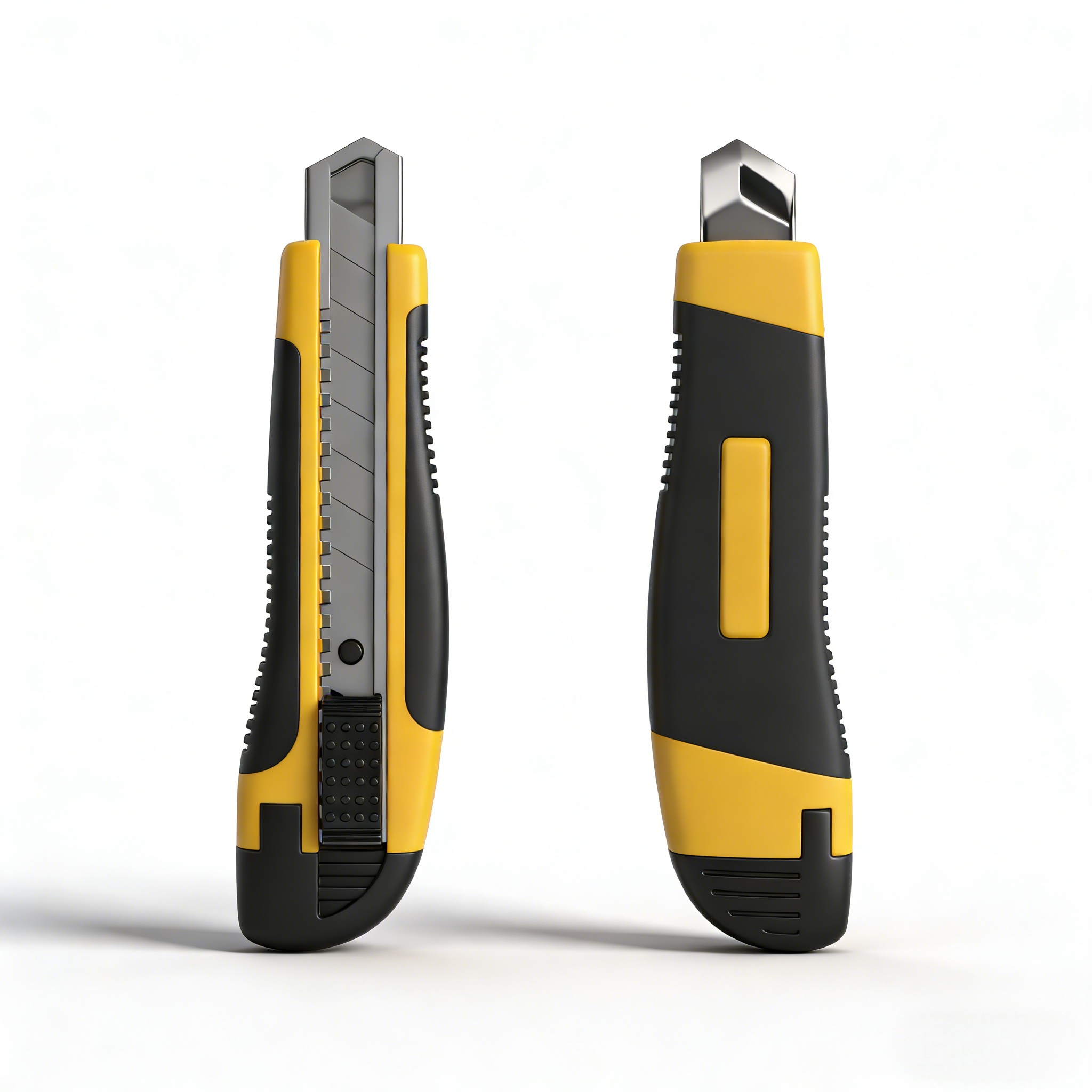
Locks at any extension
The teeth engage at every notch along the rail, not only at the fully extended position, so the blade can be set to exactly the depth a material needs and held there.
Releases with deliberate pressure
Disengaging the slider takes a clear, intentional push from the thumb — enough force that an accidental bump against a pocket or belt will not release it.
Holds fully retracted
The same mechanism locks the carriage when the blade is fully withdrawn, so the tool travels in a bag or apron pocket with the edge sealed inside the housing.
This is the detail that separates a genuine heavy duty utility knives platform from a disposable box cutter: the lock is not an afterthought bolted onto a simple slider, it is machined into the same rail system that keeps the blade straight during the cut itself.
Metal Guide Rail vs. Plastic Channel
Housing material is where cost-cutting shows up first in lower-tier cutting tools. A side-by-side look at how each channel type behaves under repeated use explains why the rail matters more than the color of the handle.
| Characteristic | Plastic channel | Metal guide rail |
| Lateral play after heavy use | Increases over time | Stays minimal |
| Behavior under side-load | Can flex or crack | Resists deformation |
| Compatibility with autolock teeth | Notches wear down | Notches hold their shape |
| Heat tolerance in hot storage | Can warp | Unaffected |
Where a tool circulates between several people during a shift, its safety features get tested far more often than on a single desk or workbench. Two behaviors matter more than any single spec sheet number: how predictably the blade locks, and how clearly the tool signals its own state — extended or retracted — at a glance.
The yellow-and-black housing common across this category is not only a factory default color; it follows the same high-visibility logic used on hand tools generally, making the tool easy to spot on a cluttered bench, in a tool bag, or dropped on a job site floor. Combined with an autolock that fully seals the blade when retracted, this reduces two of the most common causes of avoidable cuts: reaching blind for a tool and picking one up without checking whether the blade is exposed.
Visual state at a glance
Because the carriage and lock slider sit on the same visible face of the housing, a person can tell whether the blade is extended or retracted without touching the tool — useful when picking up a knife someone else set down mid-task.
Predictable behavior under stress
A lock that behaves the same way every single time, without occasionally slipping or requiring extra force, is what allows a person to build muscle memory around it — and muscle memory is what actually prevents accidents during a fast-paced task.
Grip Geometry and Handle Comfort
A comfortable handle is not simply a soft one. The grip on this tool tapers slightly near the blade end so the thumb and forefinger can pinch for fine, controlled cuts, then widens through the middle so the palm can wrap around it for cuts that need more downward force, before narrowing again at the heel to sit naturally against the base of the hand.
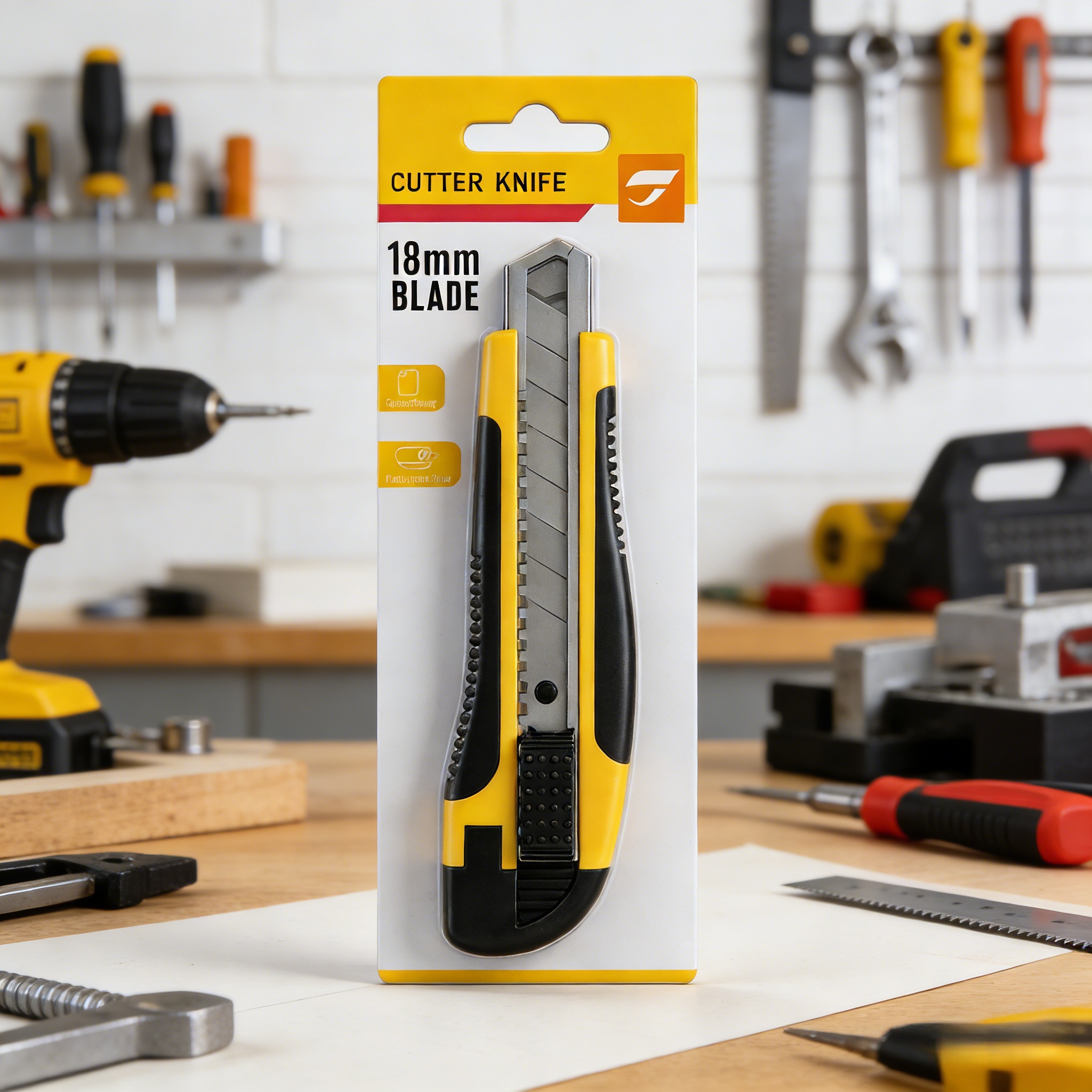
Rubberized ribbing runs along both sides of the shell exactly where the thumb rests during locking and where the fingers curl during cutting. This is a deliberate zone, not decoration spread evenly across the tool — grip texture concentrated where it is needed keeps the rest of the shell smooth enough to slide cleanly in and out of a tool pouch.
Where grip texture is concentrated
Heavy Duty vs. Standard Utility Knives
Not every task calls for the heavier platform, and understanding where the two categories diverge helps match the right tool to the right task instead of over-building for light work or under-building for demanding material.
| Feature | Standard utility knife | Heavy duty utility knives |
| Blade width | 9mm–12mm | 18mm and above |
| Guide rail | Molded plastic channel | Metal guide rail |
| Locking system | Friction slider or none | Toothed autolock |
| Housing construction | Single-density plastic | Dual-density shell with rubberized grip zones |
| Best suited for | Light, occasional cutting | Repeated, demanding daily use |
From Steel Coil to Finished Tool: How These Knives Are Built
Consistency across a production run comes from process discipline, not luck. The path from raw material to a finished cutter knife follows a fixed sequence, and each stage exists specifically to catch a failure mode before it reaches the next one.
1
Coil rolling and hardening
Raw carbon steel is rolled to the target thickness, then heat-treated to bring the alloy to its rated hardness band before it ever meets a stamping press.
2
Blanking and edge grinding
The strip is cut to the 18mm profile and the leading edge is ground to a consistent bevel angle so every segment cuts the same way as the last.
3
Score-line pressing
Evenly spaced score grooves are pressed across the strip, defining where each snap-off blade segment will separate cleanly.
4
Housing injection molding
The dual-density shell is molded around the metal guide rail insert, locking the rail into position before the lock mechanism is fitted.
5
Assembly and lock calibration
The autolock slider is seated against the rail and tested through its full range to confirm it engages cleanly at every notch.
6
Function and finish inspection
Each unit is cycled through extension, locking, and retraction before packaging to confirm smooth travel with no binding along the rail.
Where an 18mm Heavy Duty Knife Earns Its Keep
Blade width and rail rigidity only matter in the context of what the tool is actually asked to cut. The applications below share one requirement: a clean, controlled cut through material that would overwhelm a light-duty pocket blade.
Packaging & logistics
Opening double and triple-wall corrugate cartons, slicing strapping tape, and breaking down pallet wrap without nicking the goods inside.
Flooring & interiors
Scoring vinyl and laminate flooring, trimming carpet edges tight against a wall, and cutting underlay to size on site.
Construction
Scoring gypsum board along a straight edge, trimming house wrap and vapor barrier, and cutting insulation batts to fit.
Leather & textile work
Following a pattern edge through heavier hides and canvas where a light blade would drag or wander off the line.
Warehouse operations
Breaking down shrink film and banding on incoming pallets quickly, then locking the blade away between uses.
Electrical & cabling
Slitting outer cable jacket and conduit sleeving where a controlled, shallow cut depth protects the conductors underneath.
 Color Coding, Custom Branding, and Fleet Management
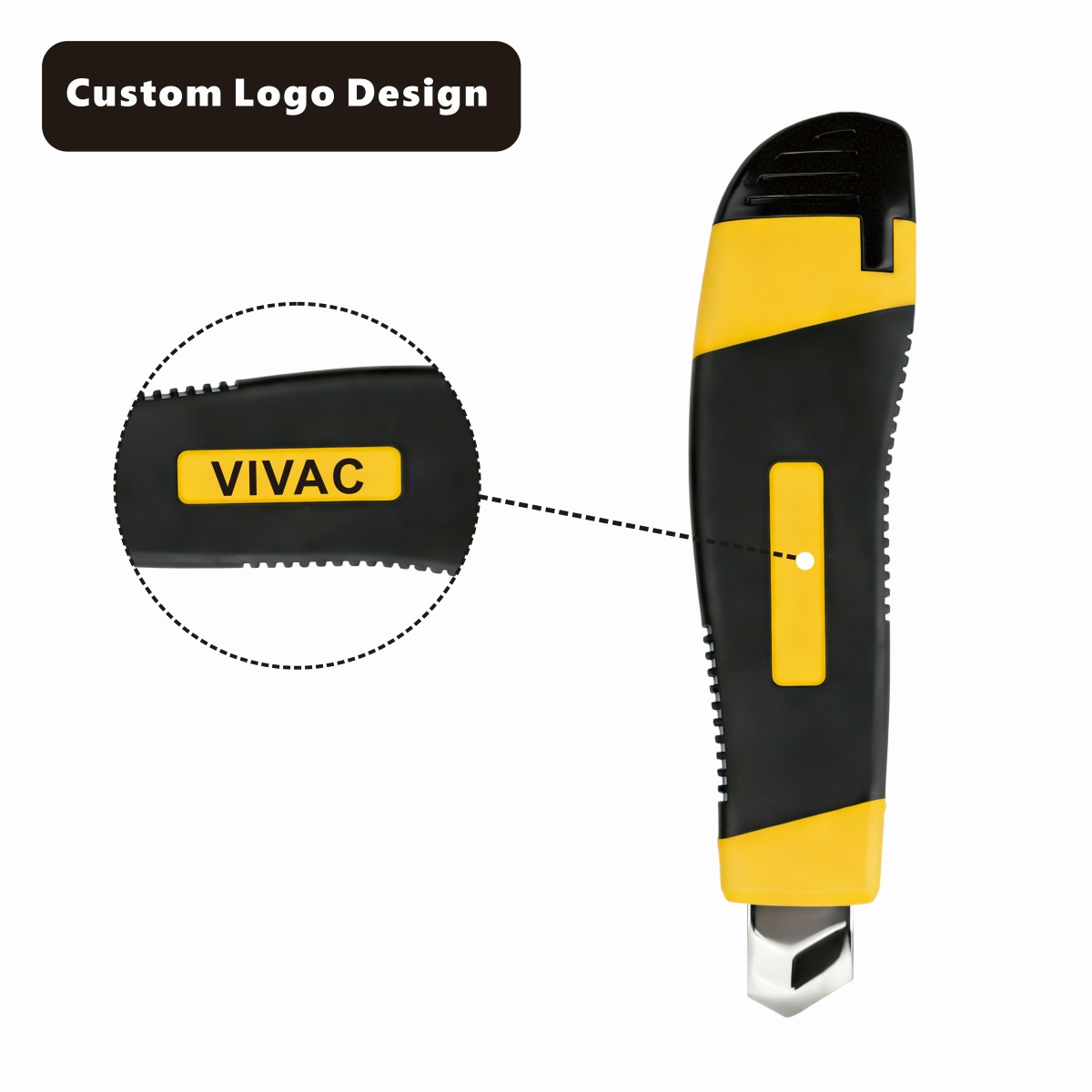
On a site or in a facility where dozens of these tools circulate between crews, telling one from another matters as much as how well any single unit cuts. The same platform is offered across yellow, blue, green, and all-black housings, which turns color into a simple management system rather than a cosmetic choice.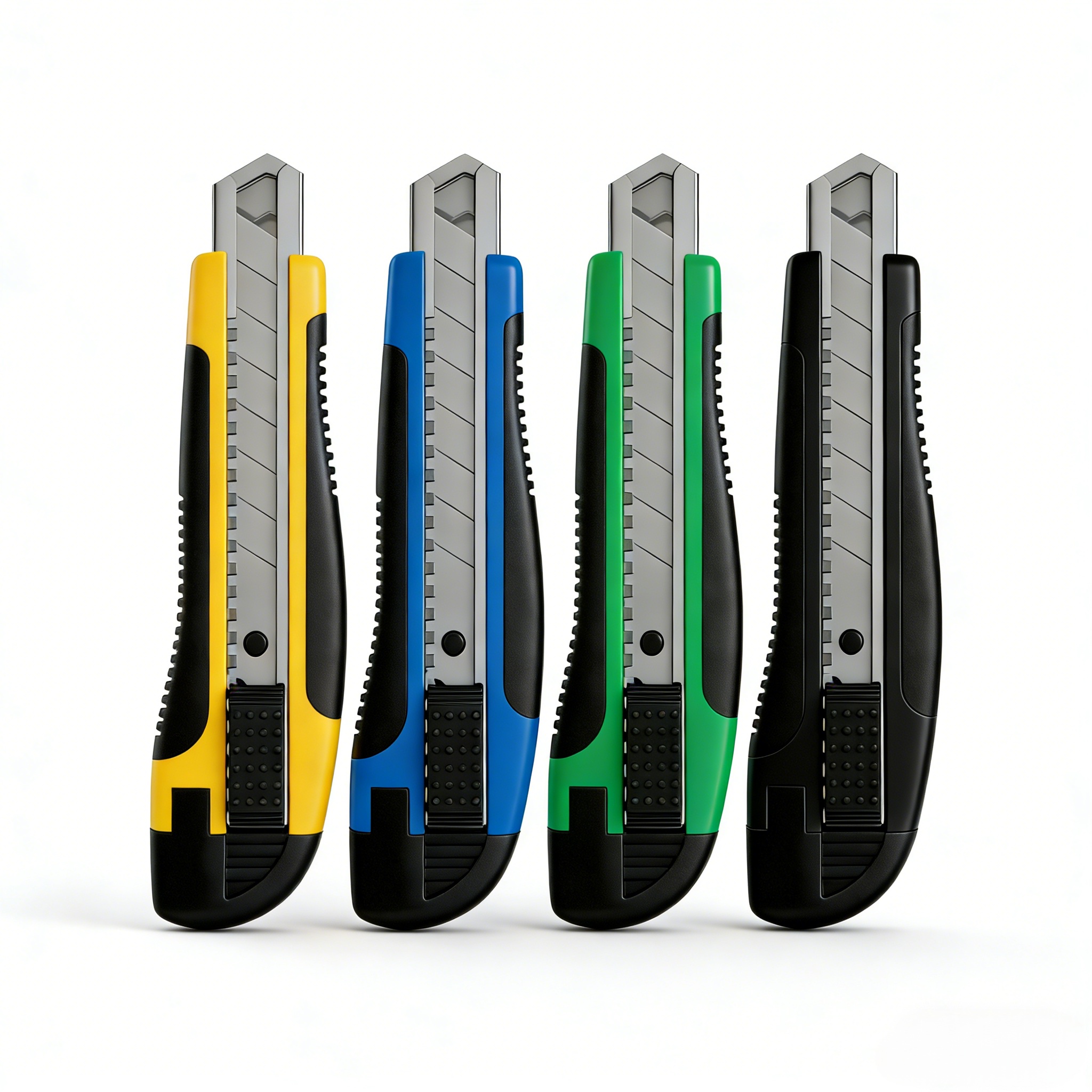
Assign colors by crew or shift
A yellow tool tray, blue for the next shift, and green for a specialist team keeps borrowed tools finding their way back to the right hands.
Add a logo without losing grip texture
The custom logo panel sits on the smooth section of the shell, away from the ribbed thumb and palm zones, so branding never comes at the cost of hold.
 Maintenance: Keeping the Rail and Lock Smooth
A metal-railed tool needs very little upkeep, but the small amount it does need pays off in years of smooth extension and reliable locking.
Clear debris from the rail channel
Dust from gypsum board or carpet fiber can pack into the open rail; a quick brush-out after heavy use keeps the carriage sliding freely.
Check the lock through its full range
Extend and retract fully every so often to confirm the autolock teeth are still engaging cleanly at each notch along the rail.
Retire segments before they force the cut
If a segment is dragging instead of slicing, snap it forward rather than pushing harder — forcing a dull edge is what leads to slipped cuts.
Store with the blade locked and retracted
Locking the carriage fully closed before the tool goes back into a pouch or drawer protects both the edge and whatever else shares that space.
Is an 18mm blade too wide for everyday tasks?
No — an 18mm blade extends only as far as the autolock allows, so it works equally well for a short, shallow cut through a single layer of paper as it does for a deep cut through dense board. The extra width shows its value when the material gets thicker, not when it forces a longer cut on thin material.
How many usable segments does a snap-off blade strip typically have?
Most 18mm snap-off strips carry eight to ten segments, though the exact count depends on the strip length and the spacing between score lines set during manufacturing.
Can the autolock be released accidentally in a pocket or pouch?
The slider is set to require deliberate thumb pressure along the direction of the rail, which is a different motion than the incidental pressure a pocket or pouch applies, so casual contact does not disengage it.
Does a metal guide rail add much weight to the tool?
The rail insert is a thin stamped steel channel rather than a solid bar, so it adds structural rigidity without meaningfully changing how the tool balances in the hand.
What is the difference between SK5 and SK2 blades in daily use?
SK5 holds a sharp edge slightly longer thanks to its higher hardness, while SK2 gives up a small amount of edge retention in exchange for a bit more flexibility on twisting or angled cuts.
Can the housing color or logo panel be customized for a specific order?
Yes — the shell is available in multiple base colors, and the dedicated logo panel on the grip can carry a custom design without altering the rubberized grip zones around it.
Why does the blade sometimes feel like it drags even before it looks dull?
Drag often builds up from resin or adhesive residue picked up while cutting tape, foam, or coated cardboard rather than from the edge itself wearing down — wiping the exposed segment clean restores smooth cutting before a fresh segment is needed.
Is a wider 18mm blade harder to control for detail cuts?
Control comes from how far the blade is extended, not the width of the strip itself — keeping the autolock set to a short extension gives the same fine control as a narrower blade while still leaving the full 18mm width available when a deeper cut is needed.
Durability Under Repeated Extension and Retraction
The part of a utility knife that fails first is rarely the blade — it is the mechanism that moves the blade. Every extension and retraction cycles the autolock teeth against the rail notches, and every cut applies a small twisting force to the carriage as it travels the channel. A tool built around a stamped metal rail spreads that force across a hardened surface instead of a molded plastic wall, which is why the lock still engages crisply after months of daily cycling rather than gradually loosening into a slider that merely rests in place.
This is also why blade wobble is a better early warning sign than a dull edge. A dull segment is solved in seconds by snapping to the next one; play in the carriage is a sign the housing itself is wearing, and no amount of fresh blade steel will fix a cut line that drifts because the rail no longer holds the blade square to the material.
Choosing the Right Configuration
Matching the tool to the job comes down to three questions: how thick and layered is the material, how often will the blade need to be advanced or retracted mid-task, and how many hands will the tool pass through in a day.
Cutting dense or layered material regularly — an 18mm blade with SK5 steel keeps the edge sharp through more cycles before a segment needs to be snapped.
Passing the tool between several people — a locking autolock mechanism and a color-coded housing reduce both injury risk and the time spent tracking down a borrowed tool.
Using the tool for extended stretches — a tapered, dual-density handle keeps grip fatigue lower over a full shift than a straight, single-material housing.
Standardizing tools across a site or facility — a shared housing platform with a custom logo panel keeps every unit easy to identify at a glance.
Every design decision described above — the steel grade, the rail, the lock, the handle taper — exists to answer one practical question: will this tool still cut straight and lock safely on its ten-thousandth use, not just its first. That is the standard a genuine heavy duty utility knives platform is built to meet.
Recommended Product
Recommended News

Keep In Touch
 No. 2-2, Oufu Road, Zhangting Town, Yuyao City, Ningbo City, Zhejiang, China.
 +86-574-87560886/87560055
 +86-574-87560885
Copyright © Ningbo Chuangxin Cutting-Tool Manufacture Co., Ltd.
