

 English
 中文简体
中文简体 русский
 Español


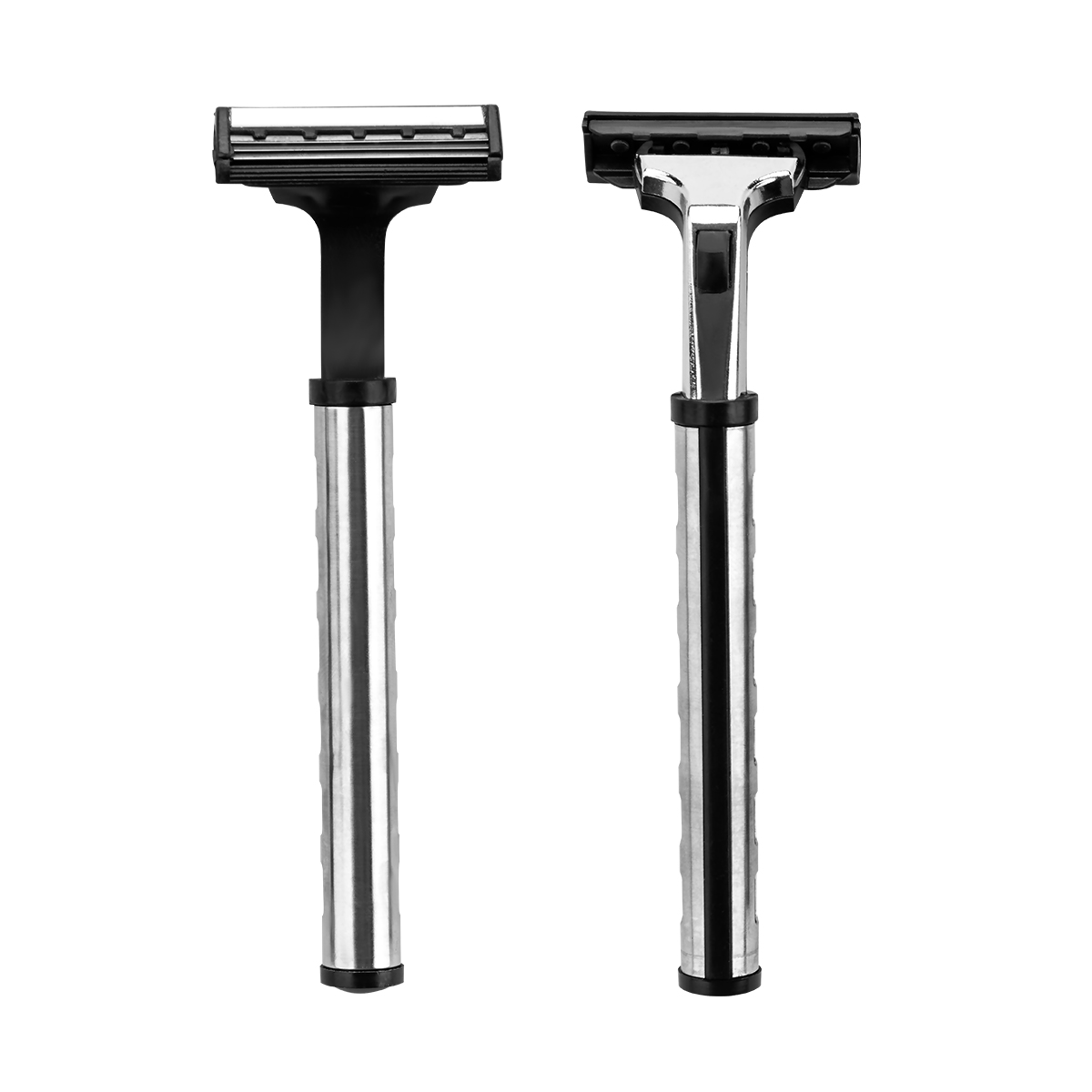
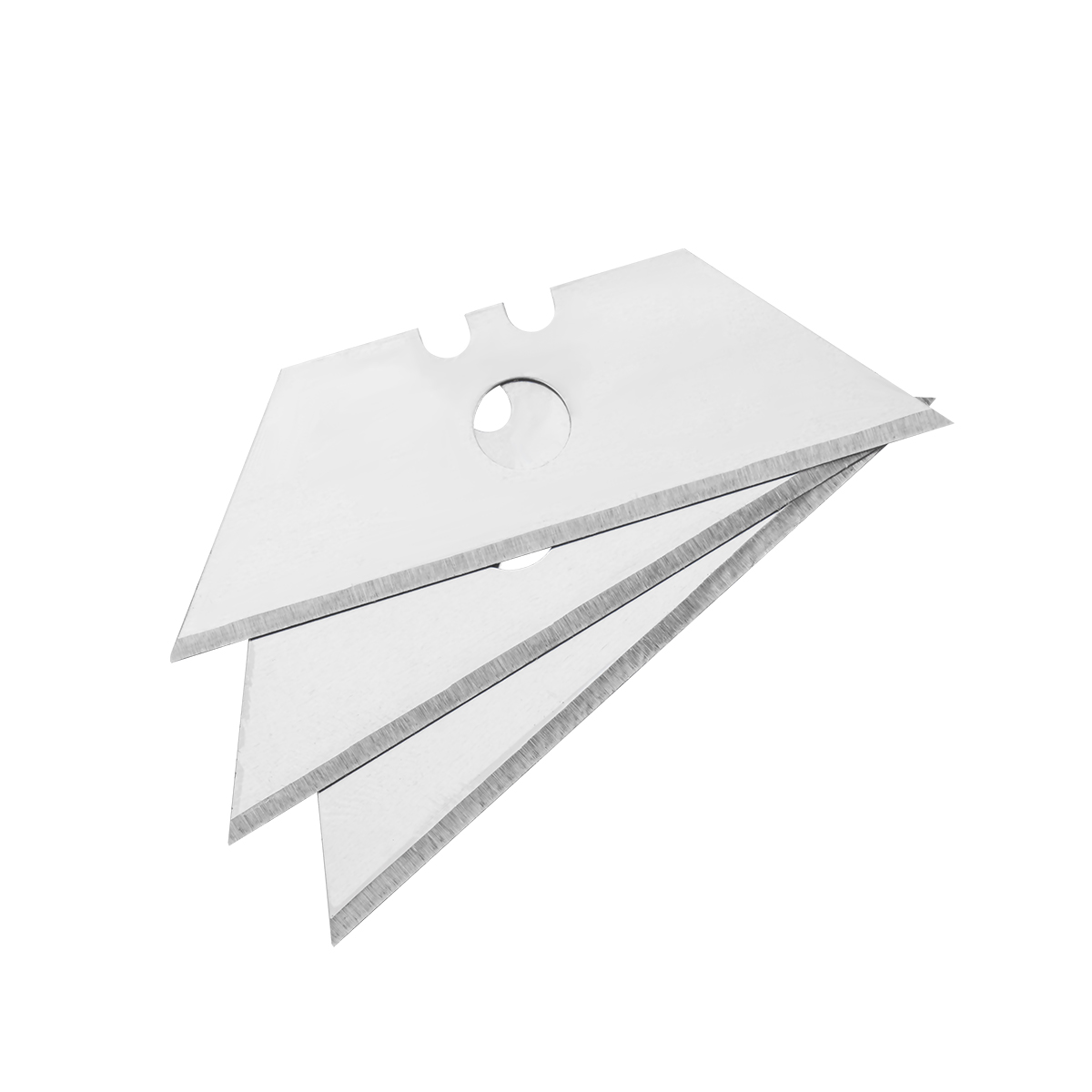
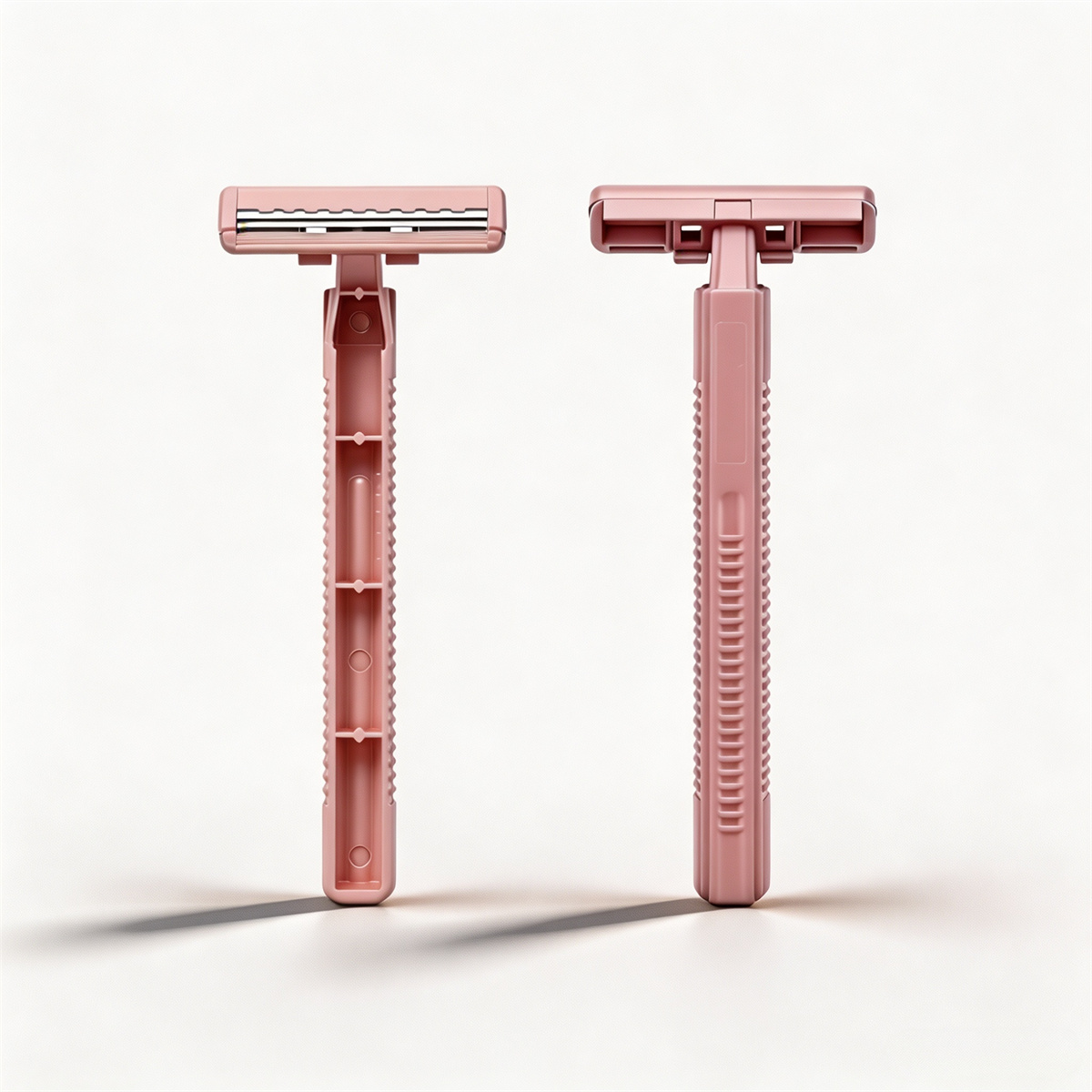
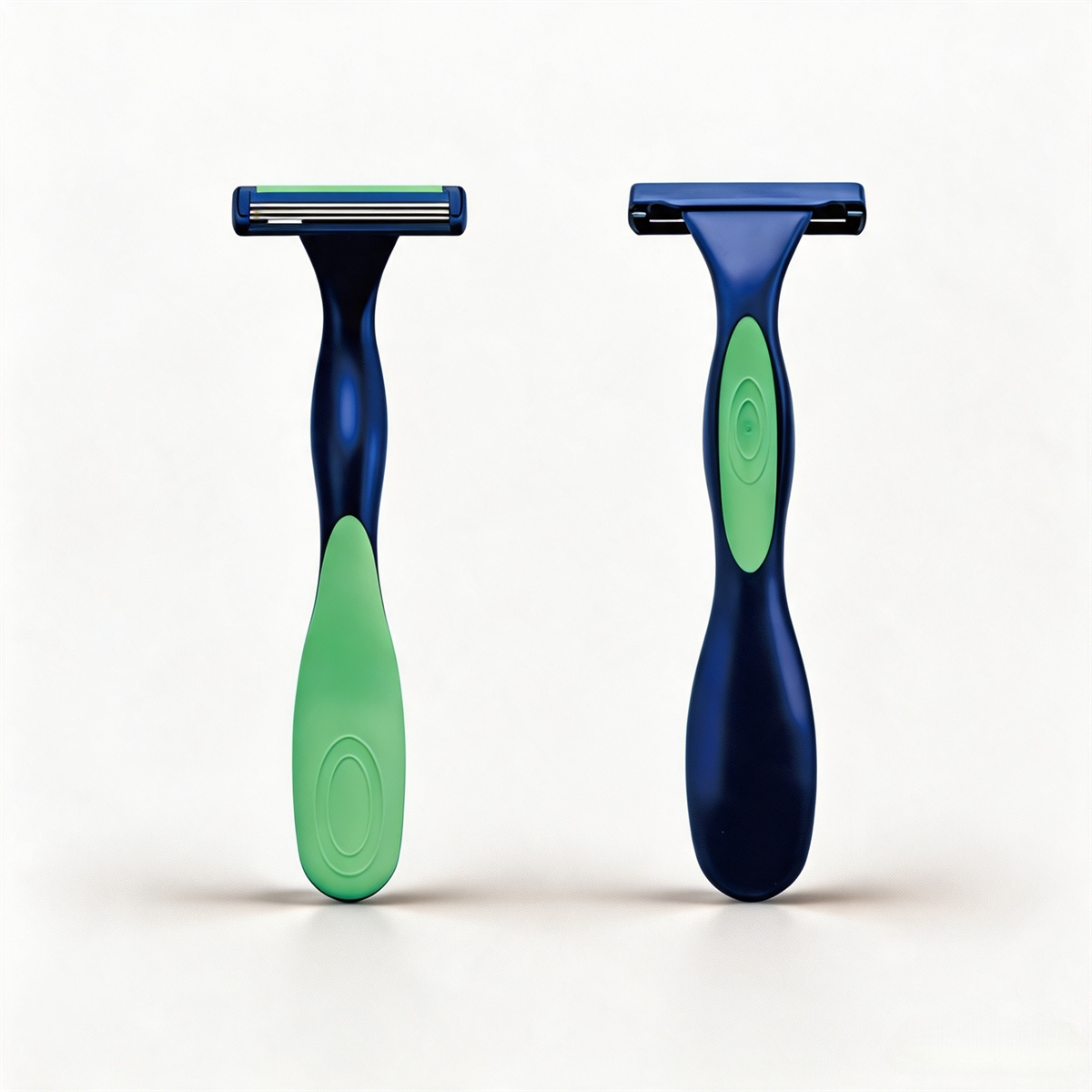
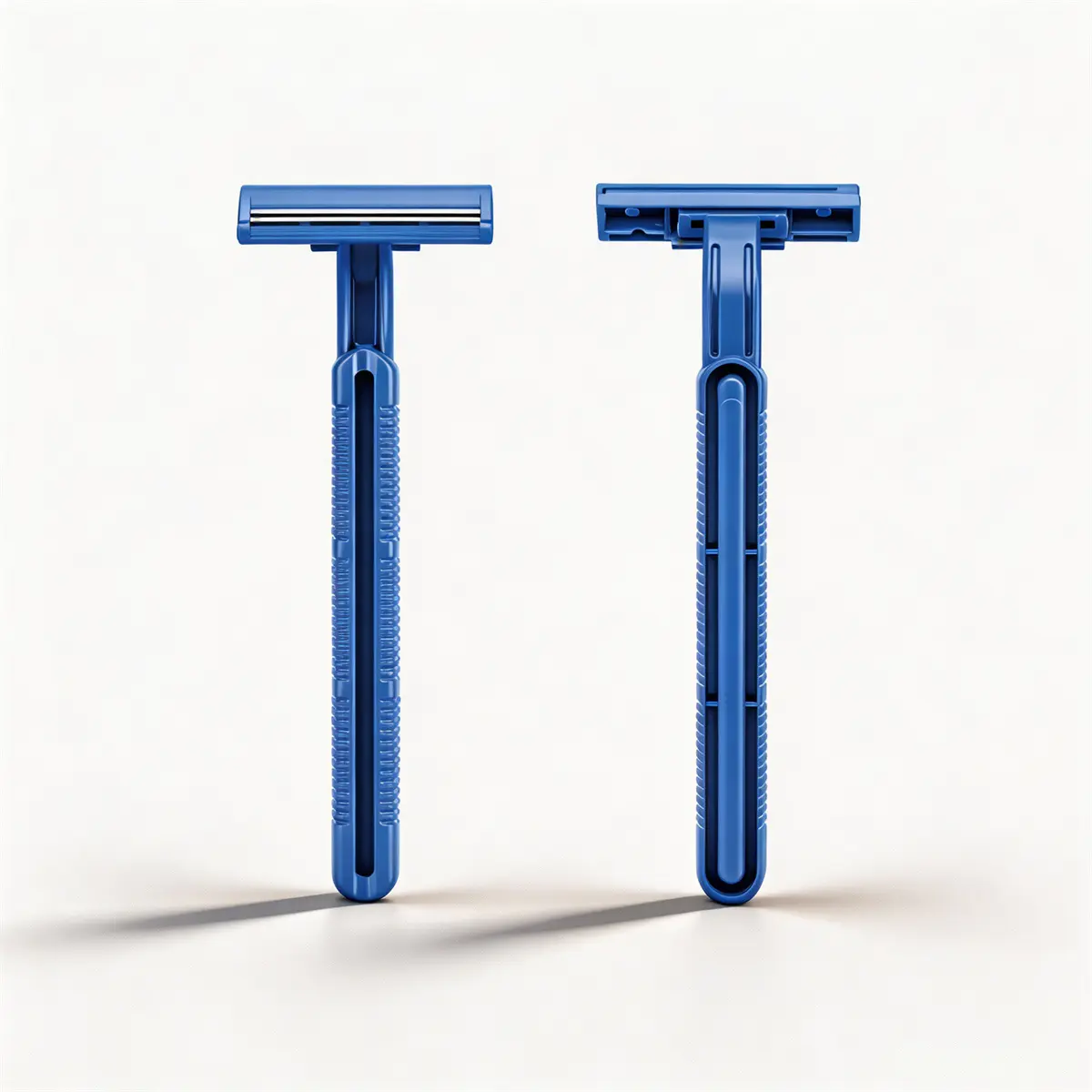
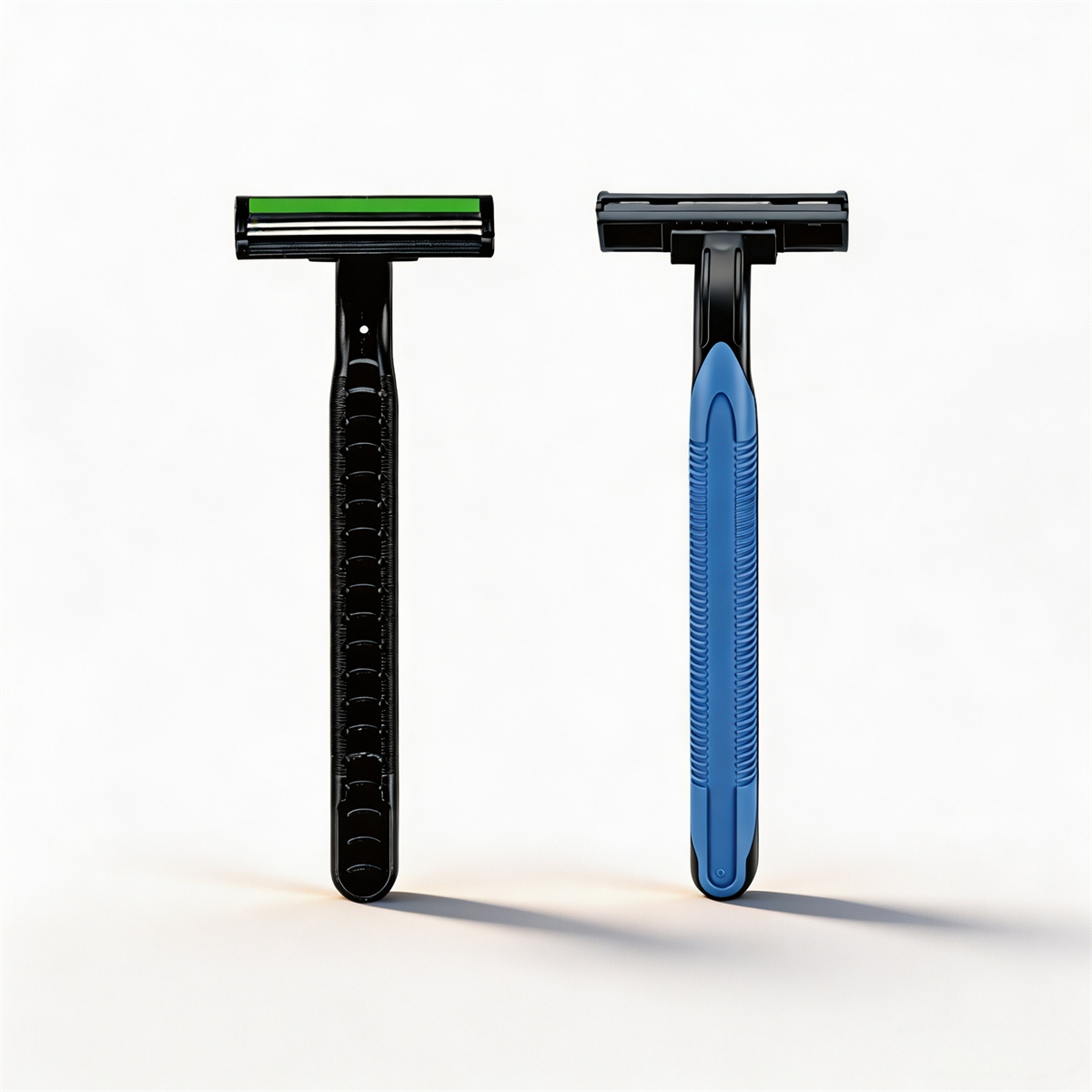
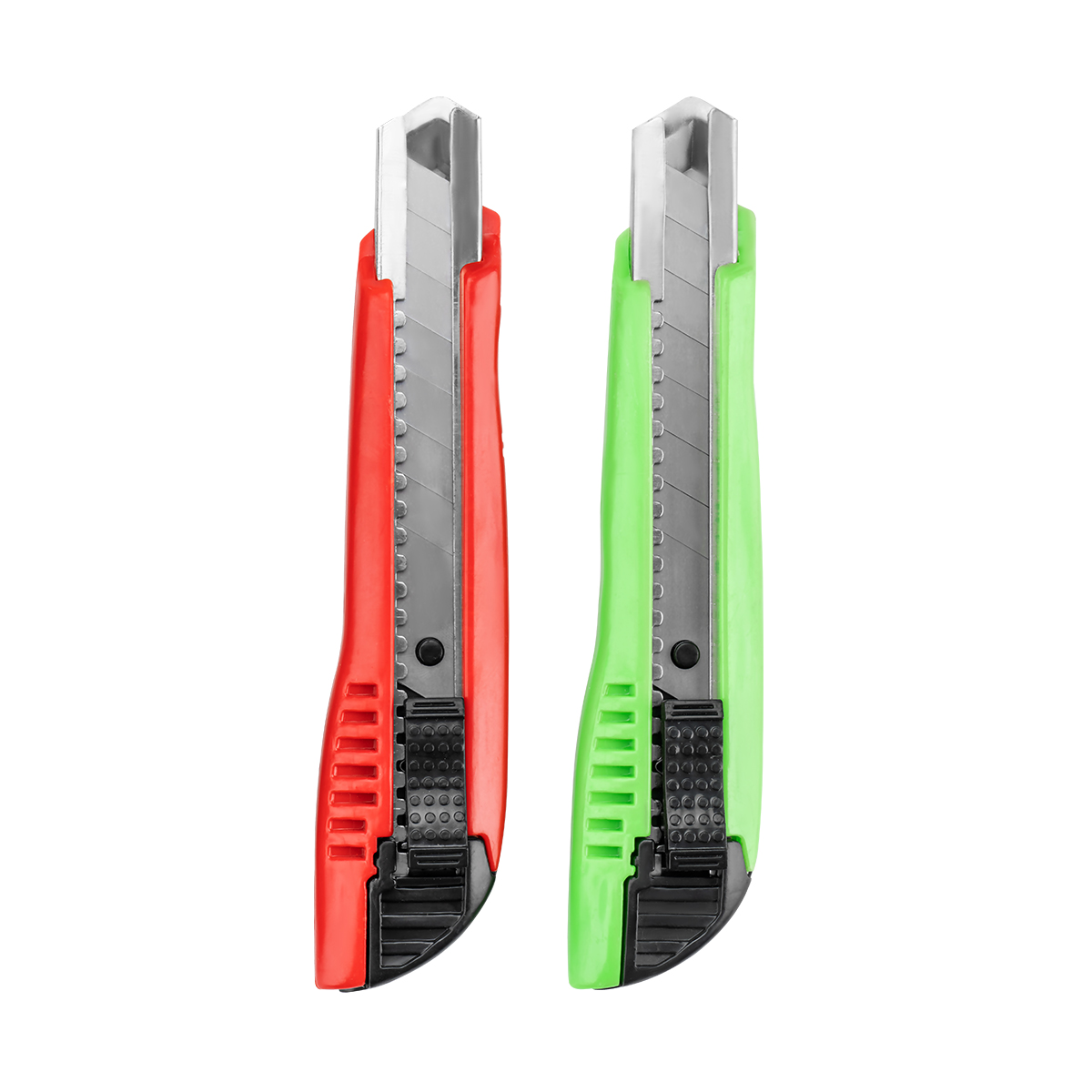
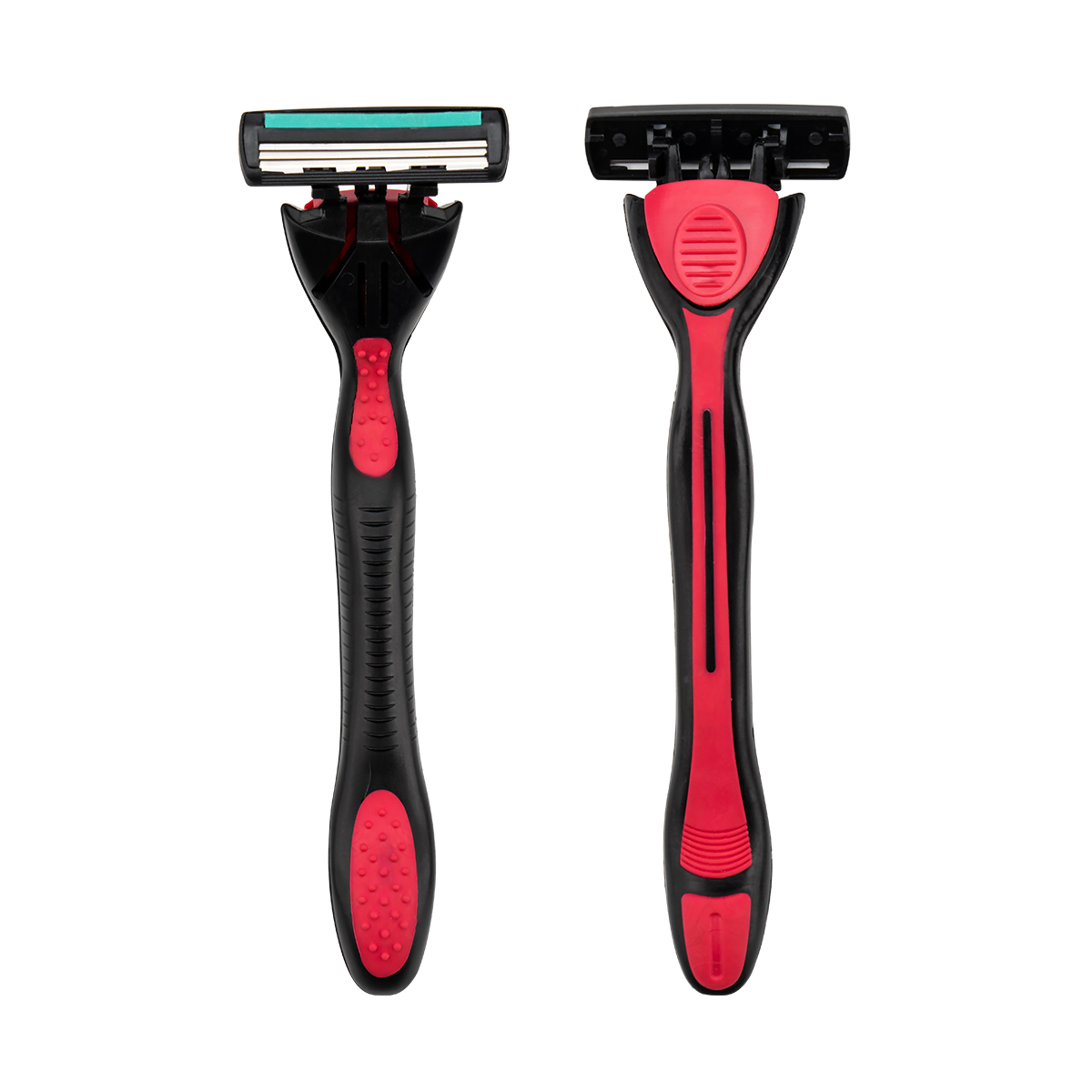

We are an industry and trade enterprise
specializing in the production of disposable razors and utility knives for more than 30 years.
How Long Do Disposable Razors Really Last Before You Should Replace Them
Content
- 1 Anatomy of a Disposable Razor: What Sits Behind the Blade
- 2 Blade Configuration Compared
- 3 How Long Does a Disposable Shaving Razor Actually Last?
- 4 How Many Times Can You Actually Use a Disposable Razor Before It Dulls?
- 5 Five Signs a Disposable Razor Needs Replacing
- 6 Is It Okay to Reuse a Disposable Razor?
- 7 Is Shaving Every 2 Days Too Much for Your Skin?
- 8 Precision Sizing: Dimensions That Matter
- 9 Handle Design and Color Variants
- 10 Personalization Options for Distinct Identity
- 11 Material Selection and Production Quality Focus
- 12 Building a Shaving Routine That Protects Your Skin
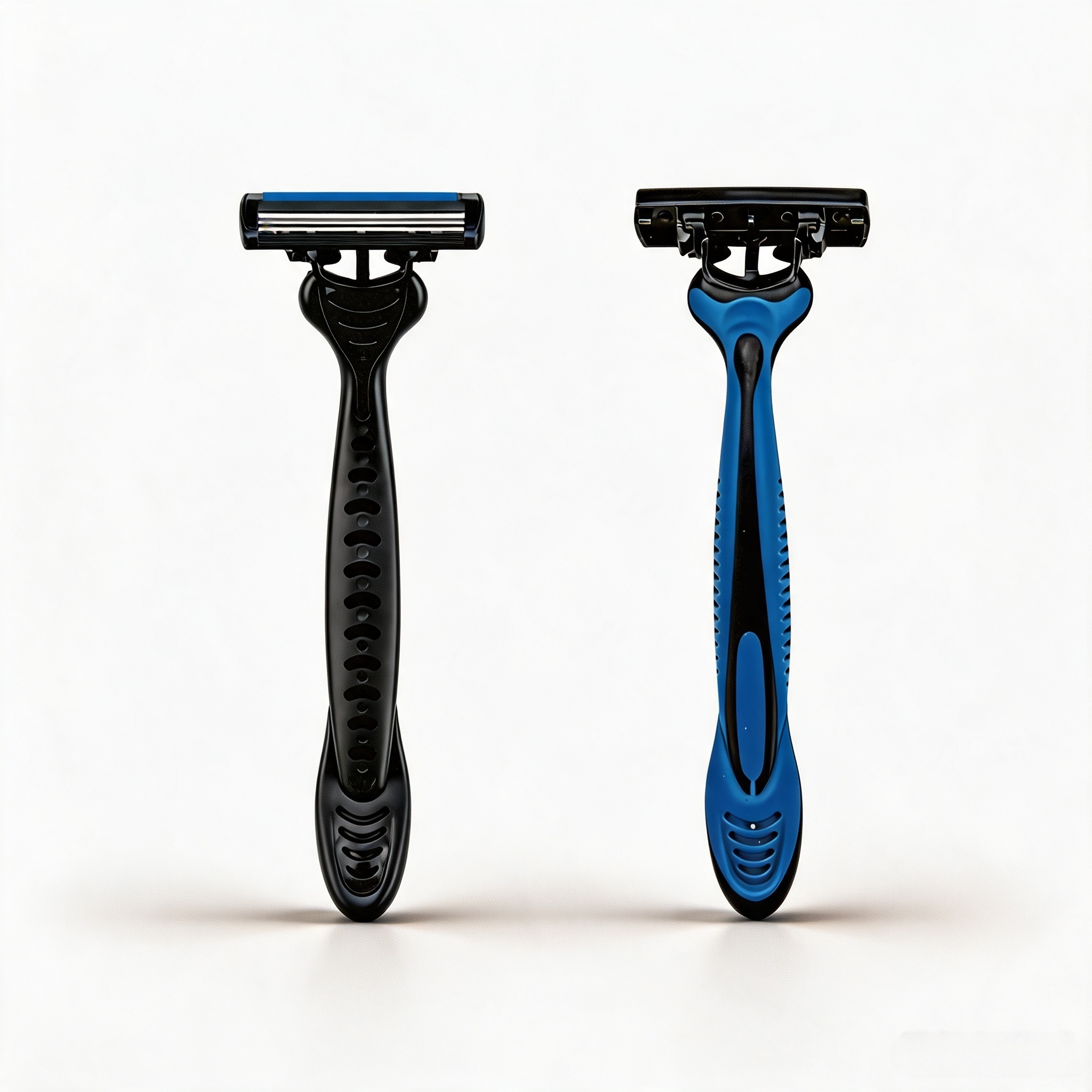
A Disposable Razor looks simple from the outside, yet every curve of the handle, every millimeter of blade spacing, and every strip of lubricant on the head is the result of measured engineering. For anyone who shaves daily, or once every two days, understanding what happens inside a Disposable Shaving Razor changes how long it lasts, how comfortable it feels, and how much irritation ends up on the skin afterward.
3
Blades per cartridge on standard triple-blade models
5–7
Average shaves before performance drops noticeably
12.9cm
Typical overall length of a full-size handle
4.3cm
Standard cartridge head width
Anatomy of a Disposable Razor: What Sits Behind the Blade
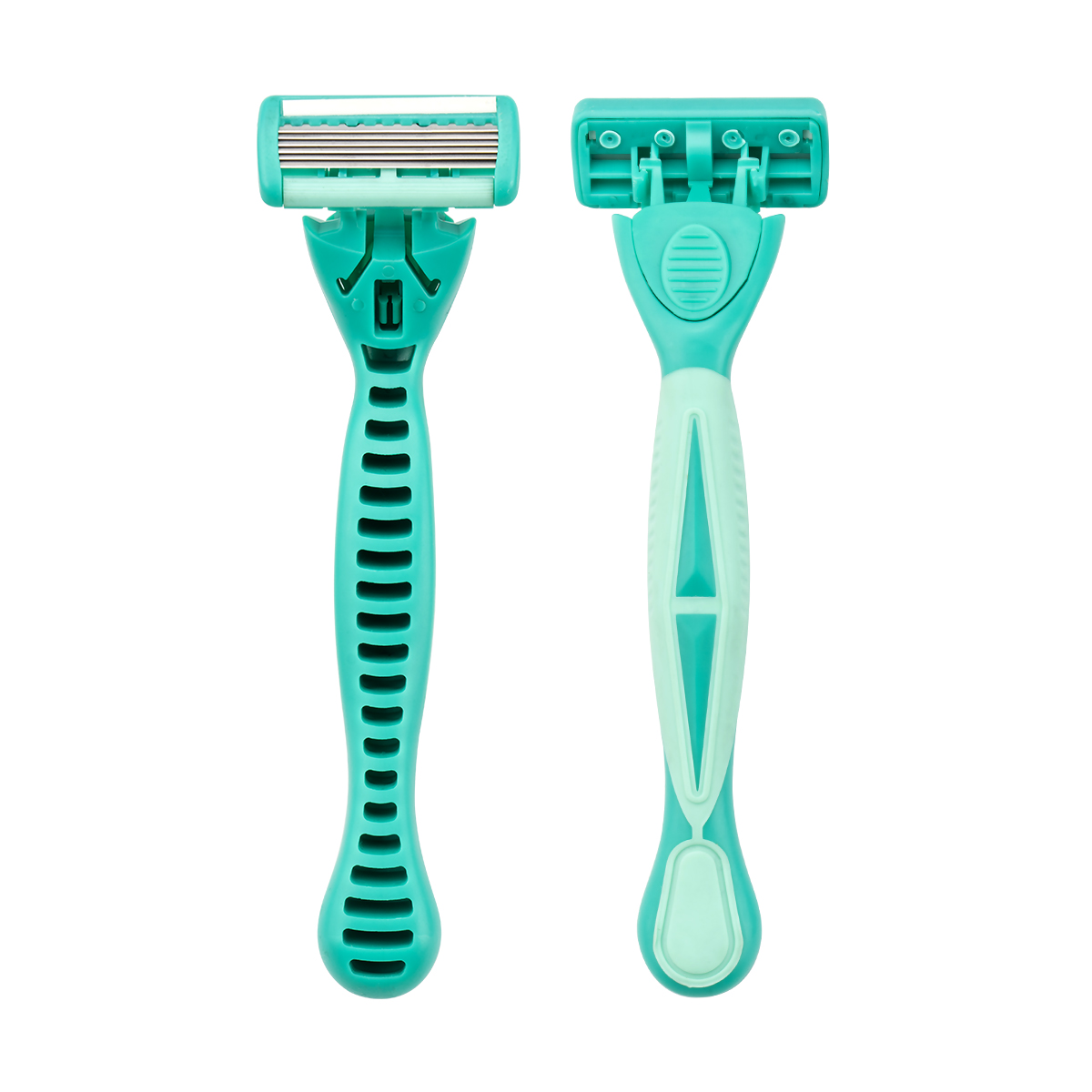
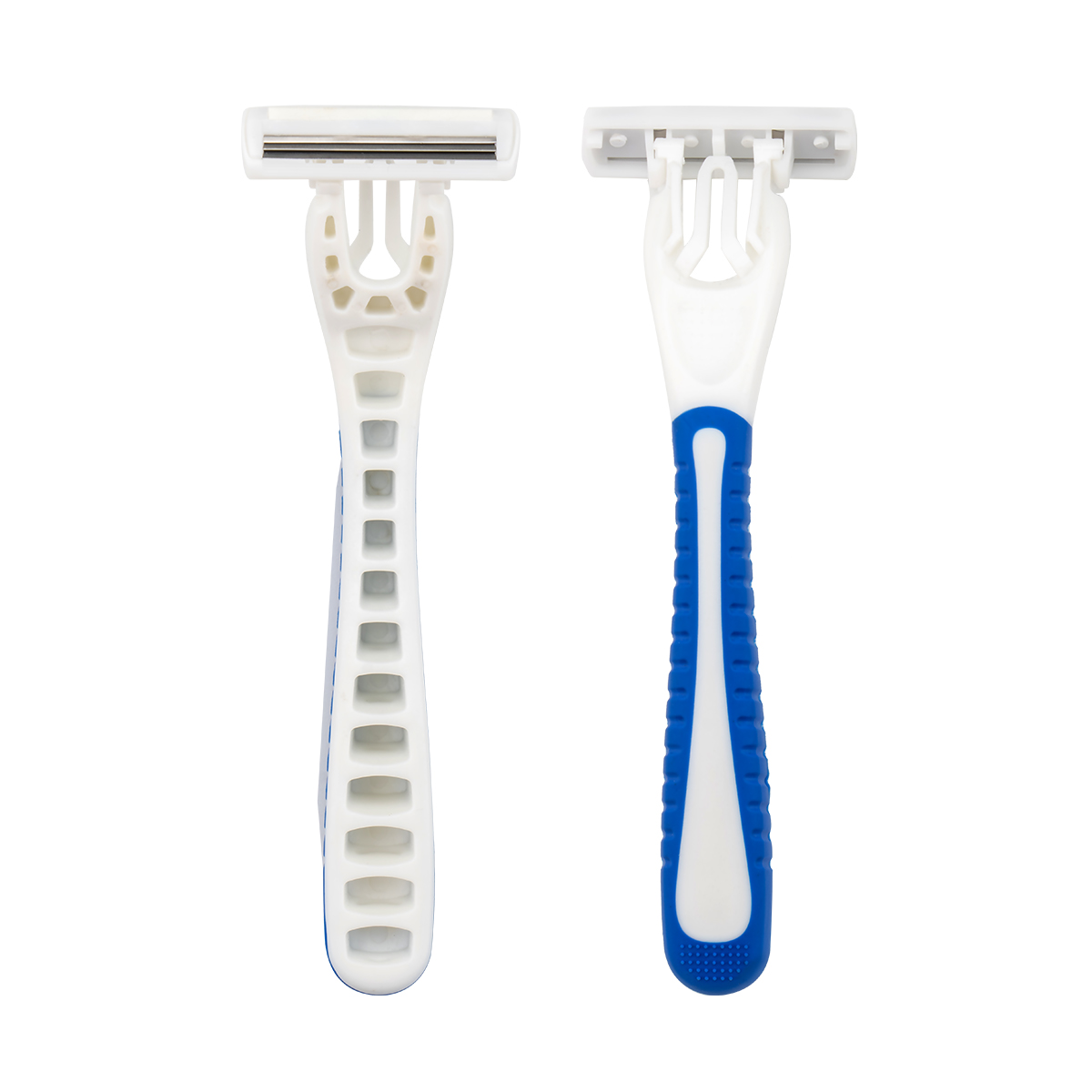
A Disposable Shaving Razor is not a single piece of plastic with a blade glued on top. The cartridge houses individually mounted blades separated by microscopic gaps, a pivoting neck that flexes with facial contours, and a lubricating strip positioned above the top blade. Each part performs a distinct function, and removing any one of them changes the entire shaving experience.
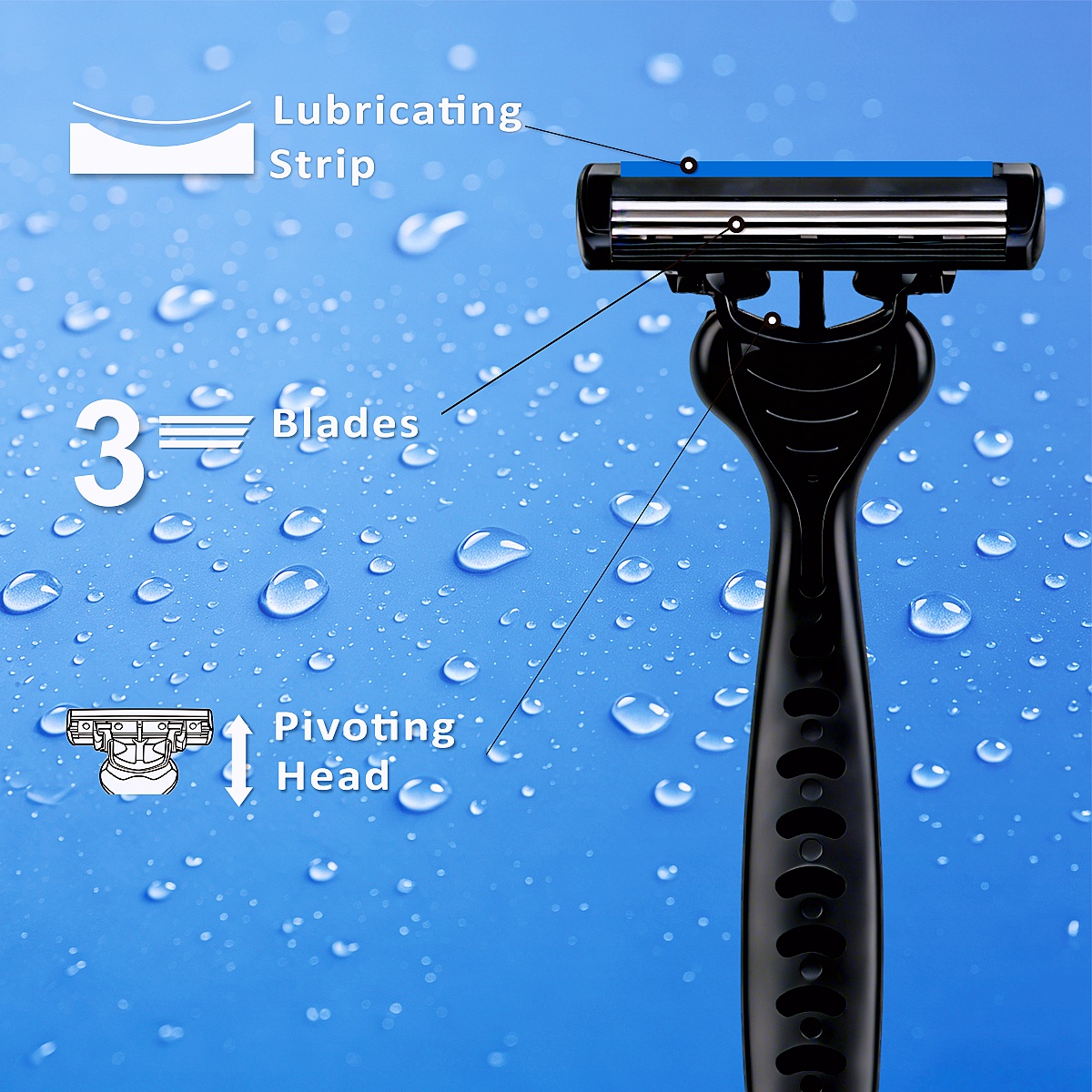 Lubricating strip, triple-blade array, and pivoting head working together on a single cartridge.
Lubricating Strip
Positioned directly above the blade edges, this strip activates with water and releases a thin conditioning layer that reduces drag between the metal and the skin surface. It is the first part of the cartridge to visibly fade, which is itself a useful indicator of remaining life.
Triple Blade Array
Three blades set at a slight stagger allow the first blade to lift the hair while the following two complete the cut below skin level. This staged action reduces the number of passes needed over the same patch of skin.
Pivoting Head
The head rotates on a small hinge so the blade plane follows the jawline, neck curve, and cheekbone without the user needing to constantly reposition the wrist. Less manual adjustment means fewer nicks.
Ribbed Handle Grip
Rows of textured cutouts along the handle keep the razor stable in a wet hand. Grip failure mid-stroke is one of the more common causes of accidental cuts, so this detail carries more weight than its appearance suggests.
Blade Configuration Compared
Not every Disposable Razor uses the same blade count, and the difference is not just marketing. More blades change the closeness of the cut, the number of passes required, and how the cartridge holds up over repeated use.
| Blade Configuration | Passes Needed | Closeness | Skin Sensitivity Fit | Typical Cartridge Life |
| Single Blade | 3–4 passes | Moderate | Sensitive skin, coarse hair | 3–4 shaves |
| Twin Blade | 2–3 passes | Good | Normal skin, daily use | 4–5 shaves |
| Triple Blade | 1–2 passes | Close | Normal to thick hair | 5–7 shaves |
How Long Does a Disposable Shaving Razor Actually Last?
Lifespan is rarely a fixed number. Beard density, water temperature, and how the cartridge is stored between uses all shift the count up or down. The chart below reflects an average pattern gathered across common usage groups, measured in comfortable shaves before the blade edge starts pulling instead of cutting.
Average number of comfortable shaves per cartridge, grouped by beard density.
How Many Times Can You Actually Use a Disposable Razor Before It Dulls?
The blade edge does not fail all at once. Sharpness degrades gradually with each pass across skin and stubble, and the rate of decline speeds up once the metal edge starts to fold rather than slice. Tracking that curve helps explain why the sixth or seventh shave often feels noticeably rougher than the first.
Relative blade sharpness across nine consecutive shaves without replacement.
Five Signs a Disposable Razor Needs Replacing
Waiting for a blade to feel obviously dull usually means several uncomfortable shaves have already happened. Watching for earlier signals keeps skin irritation to a minimum.
Pulling Sensation
Hair bends before it cuts, instead of slicing cleanly on contact.
Faded Lubricating Strip
The coloured strip turns pale or disappears, meaning the conditioning layer is spent.
Redness After Shaving
Mild irritation appearing minutes after a shave that did not happen with a fresh cartridge.
Visible Corrosion
Small dark specks or rust-like marks along the blade edge from moisture exposure.
Extra Passes Needed
Areas that once cleared in one stroke now require three or four repeated passes.
Is It Okay to Reuse a Disposable Razor?
Reusing a Disposable Razor across several shaves is standard practice and not a departure from how the product is meant to be used. The cartridge is built to survive a handful of sessions; the real variable is how it is treated between them.
1
Rinse Immediately After Use
Run warm water through the blade gaps right after shaving to clear trapped hair and soap residue before it dries in place.
2
Shake Off Excess Water
Water left sitting between blades speeds up oxidation far faster than air alone.
3
Store Head-Up and Dry
Standing the razor upright in open air, away from a closed shower caddy, prevents the damp micro-climate that dulls blades faster.
4
Inspect Before Each Use
A quick look for corrosion or a bent blade takes seconds and avoids an uncomfortable surprise mid-shave.
Is Shaving Every 2 Days Too Much for Your Skin?
There is no universal answer, because skin response depends on hair growth rate, skin thickness, and how well the shaving routine itself is managed. A shaving interval that suits one person's skin can leave another person with persistent redness.
| Skin Type | Suggested Frequency | Key Consideration |
| Normal / Resilient | Every 1–2 days | Minimal reaction; standard triple-blade cartridge suits most routines |
| Sensitive / Reactive | Every 2–3 days | Benefits from a fresher blade each time and a slower, single-direction stroke |
| Prone to Ingrown Hairs | Every 3 days | Longer intervals reduce repeated stress on the same follicles |
| Thick / Fast-Growing Hair | Daily | Shorter stubble each session lowers the pressure needed to cut cleanly |
Precision Sizing: Dimensions That Matter
Handle length and head width are not arbitrary numbers. A handle that is too short loses leverage across the jawline, while a head that is too wide struggles to follow smaller curves around the nose and ears.
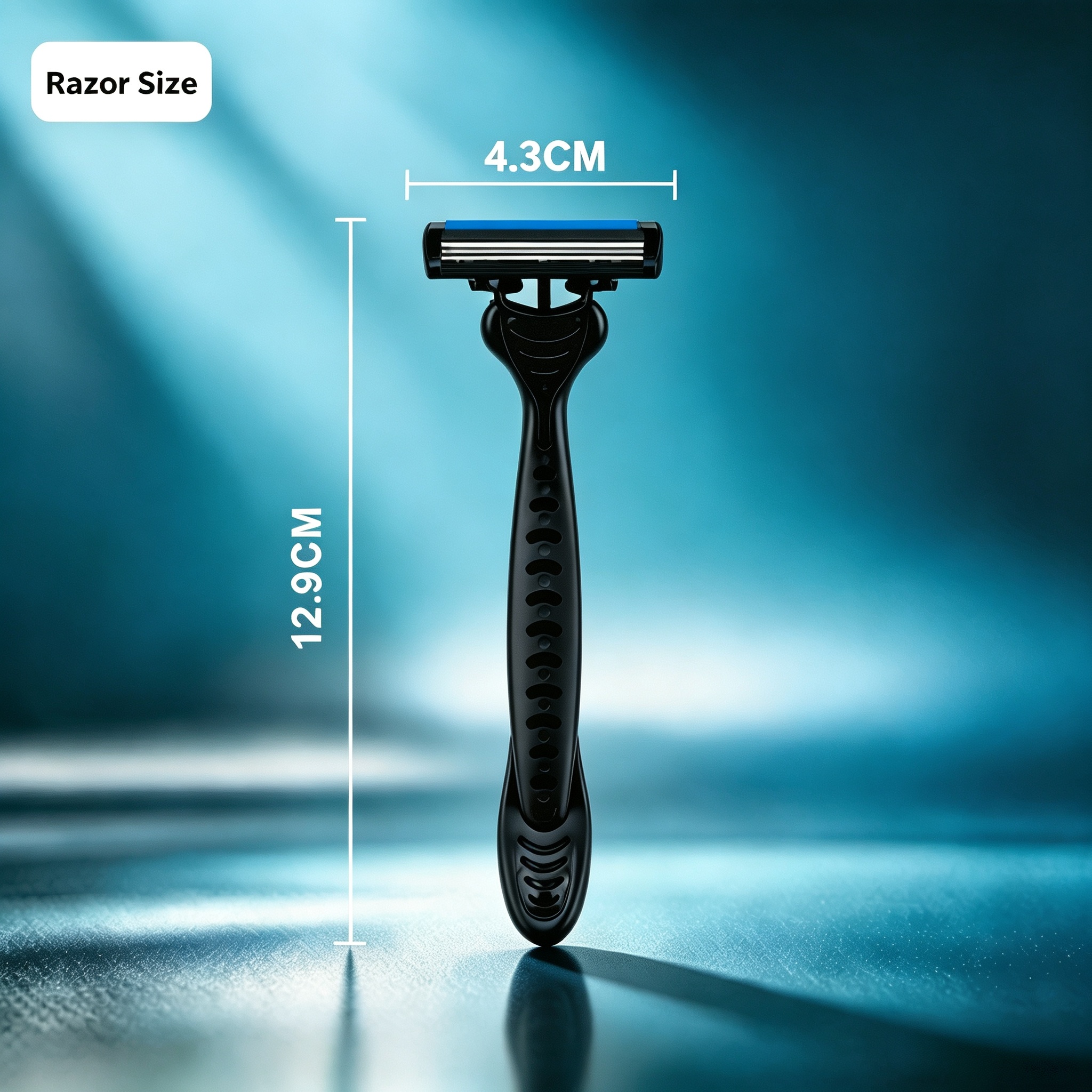 Standard measurements: 12.9cm overall length, 4.3cm cartridge width.
| Specification | Measurement |
| Overall Length | 12.9 cm |
| Cartridge Head Width | 4.3 cm |
| Blade Count | 3 blades |
| Head Movement | Pivoting, single-axis |
| Lubrication | Single top-mounted strip |
Handle Design and Color Variants
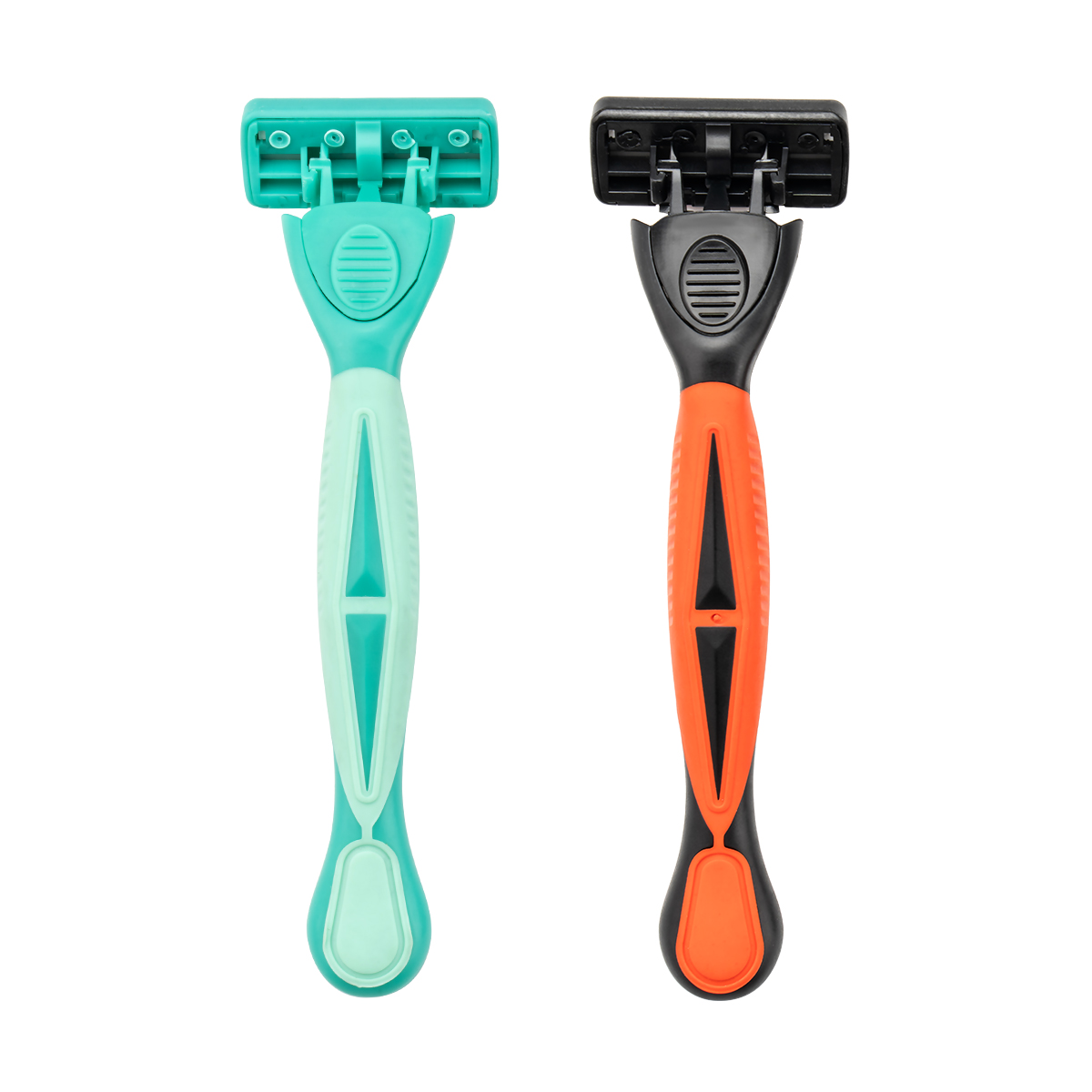
Color is often the first thing noticed, but the handle shape underneath does the actual work. A contoured waist near the middle of the handle gives fingers a natural resting point, while the wider base keeps the razor from slipping out of a soapy hand.
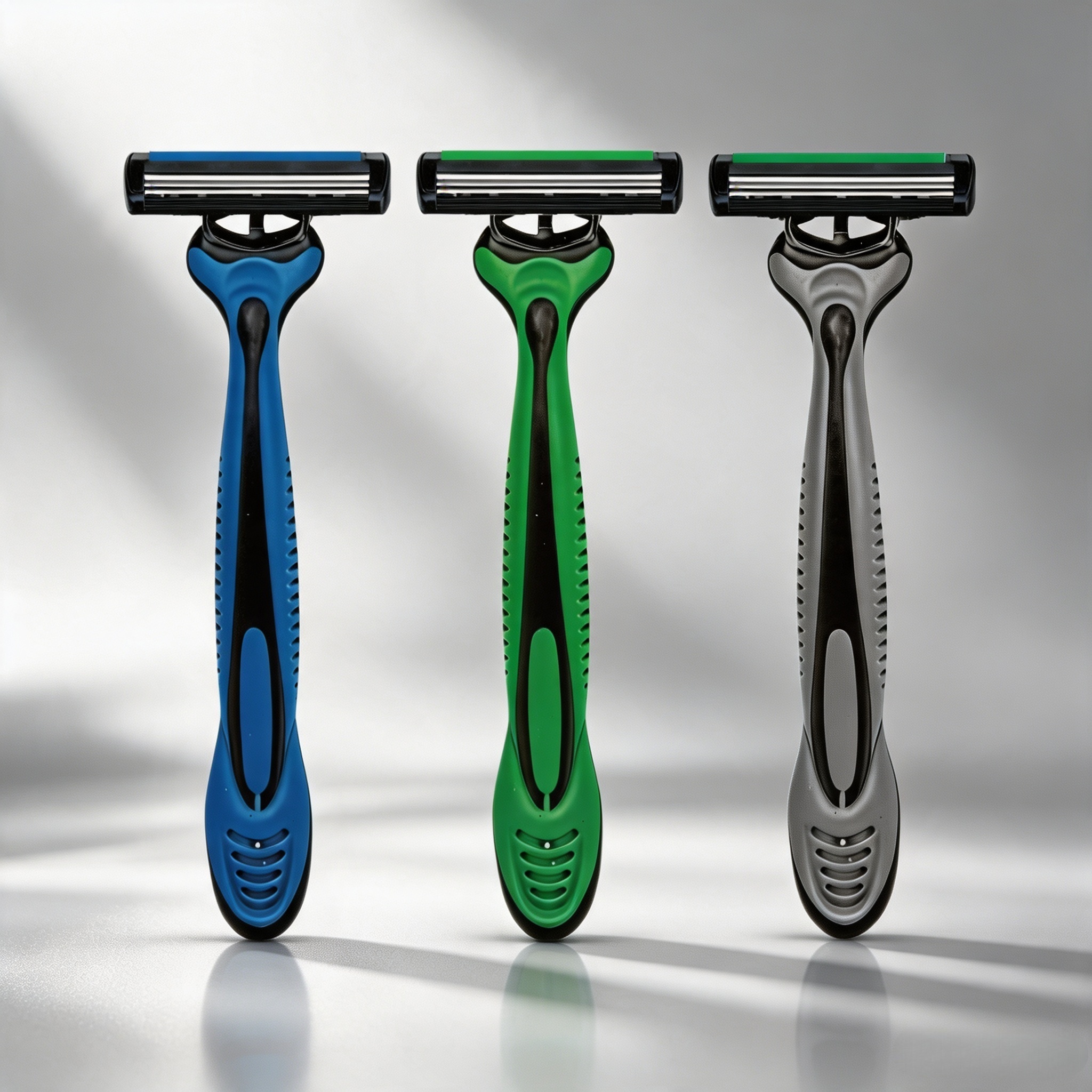 Identical cartridge and grip engineering across blue, green, and gray handle finishes.
Contoured Waist
A narrower midsection lines up with where the index finger naturally rests during a downward stroke.
Wide Rubberized Base
The lower third widens slightly and carries raised ribbing, adding stability when the razor rests on a wet surface.
Matte Finish
A non-glossy surface reduces the slick feel that glossy plastic develops once wet.
Personalization Options for Distinct Identity
The flat oval section just below the cartridge head offers enough surface area for a short printed name or short text, without interrupting the pivoting mechanism or blade alignment. This space is commonly used for a personal name, a short message, or a distinct identifying mark.
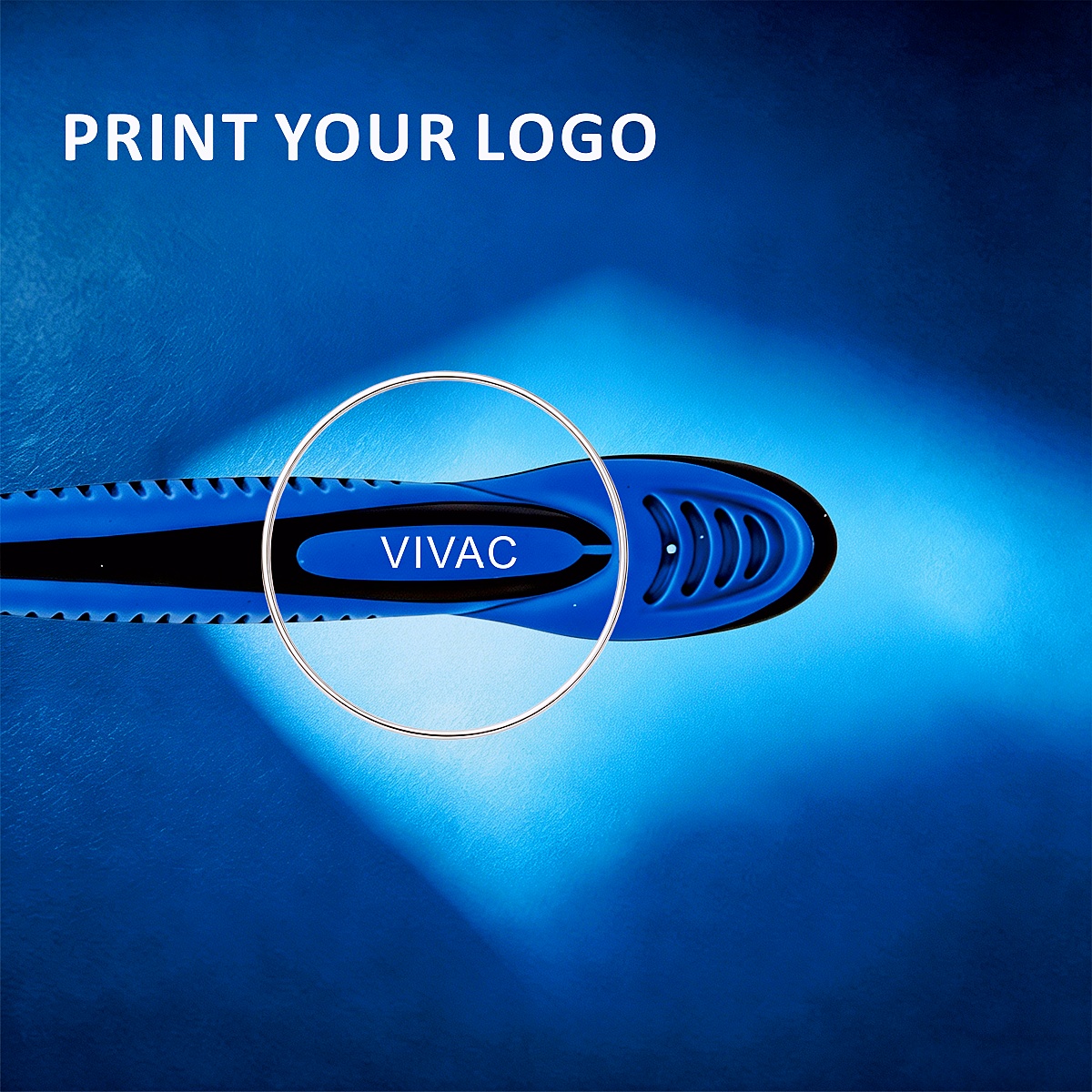 A dedicated flat surface near the head allows for clean, legible printed text.
Printed text in this area typically uses a heat-transfer or pad-printing method, both of which hold up under repeated rinsing in warm water. The print sits on a recessed, matte section specifically so friction from handling does not wear the lettering away after a few weeks of normal use.
Material Selection and Production Quality Focus
The handle body is molded from ABS plastic, chosen for its resistance to cracking when dropped on a hard bathroom floor, while the soft-touch overlay uses a separate rubber compound applied through dual-injection molding. Blades are stamped from stainless steel and coated with a thin polymer layer that slows corrosion during storage.
Quality checks on a finished cartridge typically include a flex test on the pivoting neck, a corrosion-resistance soak, and a visual inspection of blade alignment under magnification. Handles are tested for grip retention using a controlled wet-surface trial, checking that the textured sections perform as intended rather than just looking textured.
Building a Shaving Routine That Protects Your Skin
The razor itself is only part of the outcome. Warm water softens hair shafts before the first pass, which lowers the force the blade needs to apply. Moving the razor in the direction hair naturally grows, rather than against it, reduces the chance of hair bending back into the follicle after being cut. Finishing with a splash of cool water helps close pores that opened during the warm-water phase, leaving less opportunity for bacteria to settle into freshly shaved skin.
None of these habits require additional products beyond what is already in most bathrooms, yet together they extend how comfortable each shave feels and how long a single Disposable Razor stays usable before replacement becomes necessary.
How long do disposable razors last?
Most cartridges hold a usable edge for five to seven shaves under normal beard density, though heavier hair growth or poor drying habits can shorten that to three or four.
How many times can you actually use a disposable razor?
Sharpness declines gradually rather than dropping off suddenly, so the honest answer depends on watching for pulling, redness, or extra passes rather than counting a fixed number.
Is shaving every 2 days too much?
For resilient, normal skin this interval is generally fine; sensitive skin or a tendency toward ingrown hairs usually benefits from stretching the gap slightly longer.
Is it okay to reuse a disposable razor?
Yes, provided it is rinsed thoroughly, dried between uses, and inspected for corrosion or bent blades before each session.
Recommended Product
Recommended News

Keep In Touch
 No. 2-2, Oufu Road, Zhangting Town, Yuyao City, Ningbo City, Zhejiang, China.
 +86-574-87560886/87560055
 +86-574-87560885
Copyright © Ningbo Chuangxin Cutting-Tool Manufacture Co., Ltd.
