

 English
 中文简体
中文简体 русский
 Español


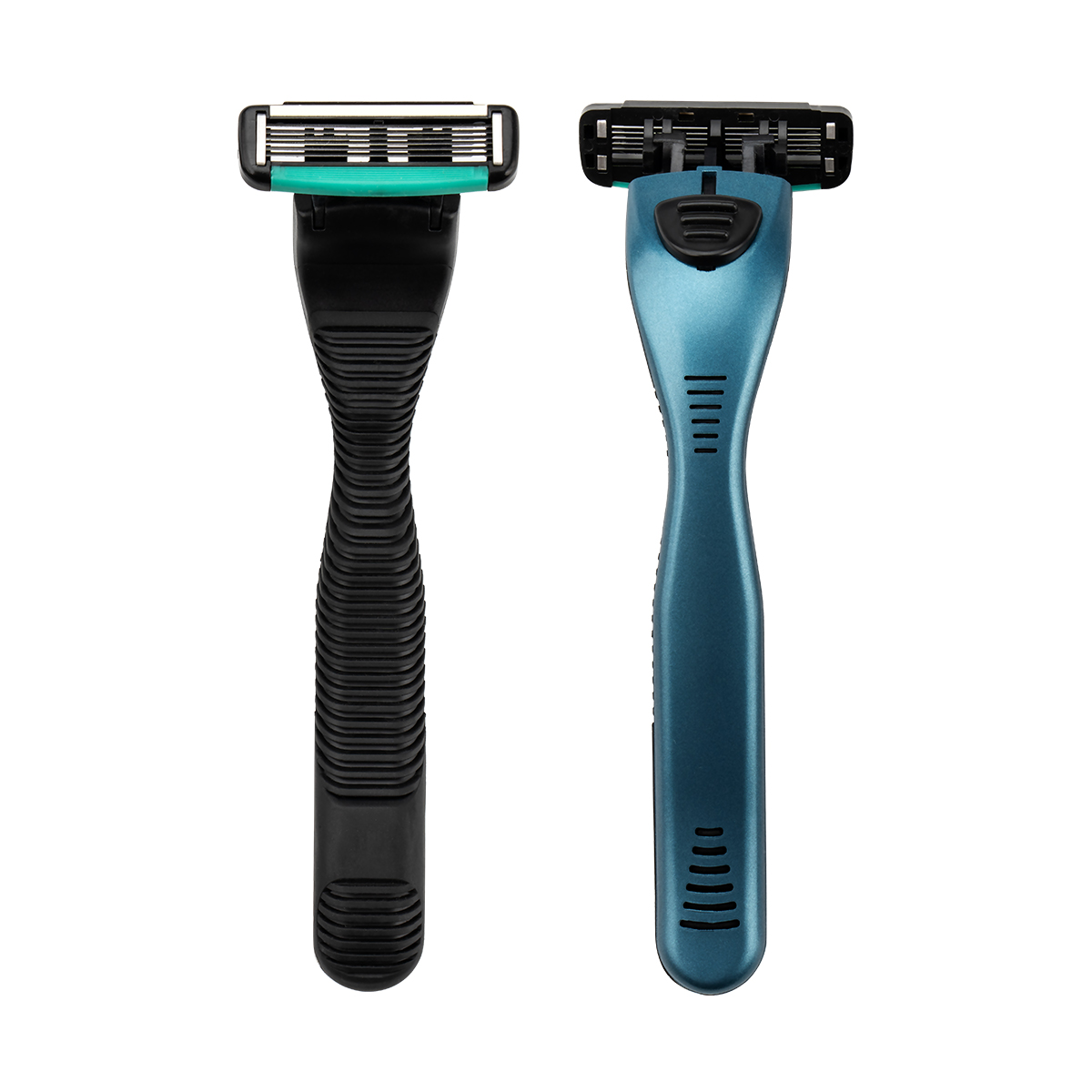
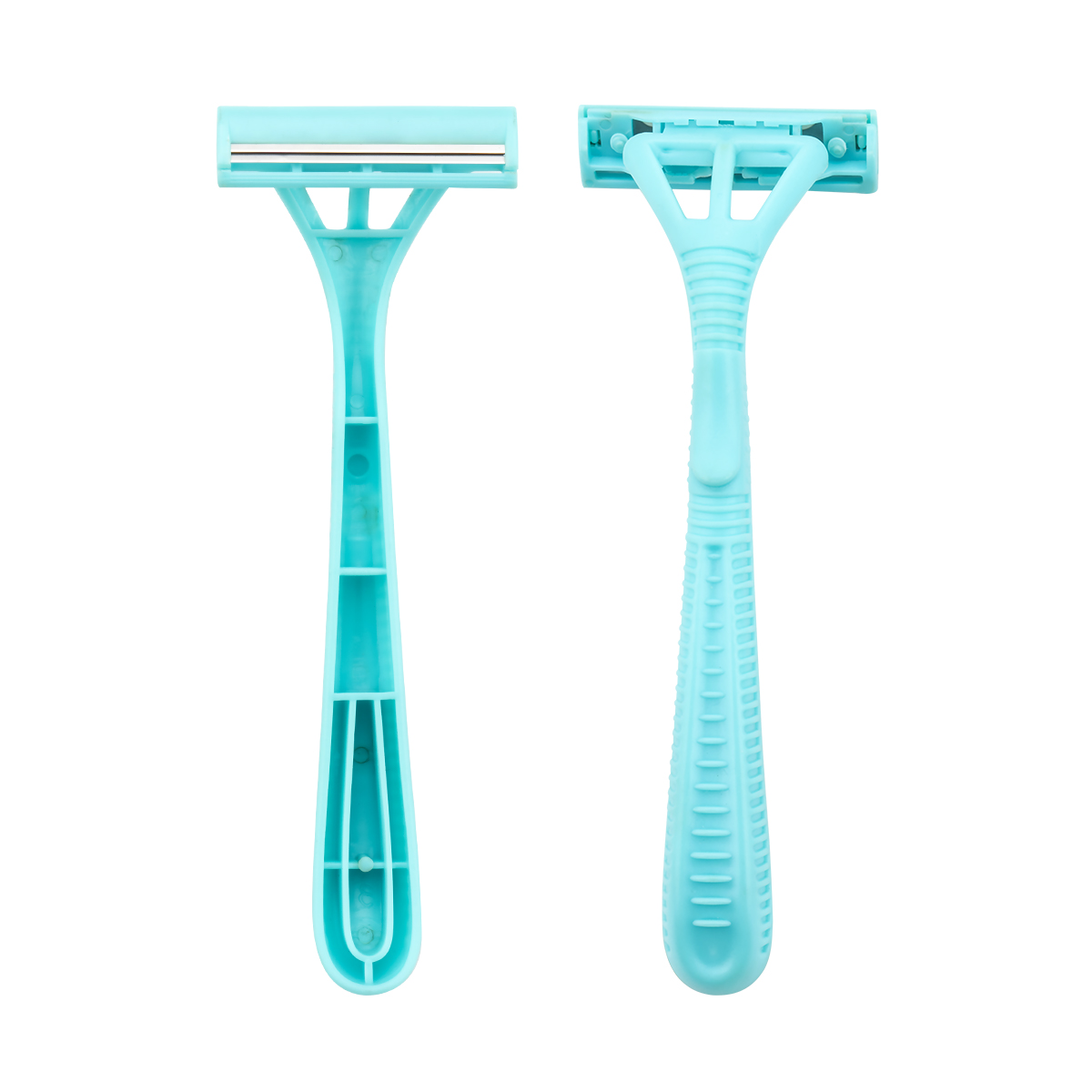
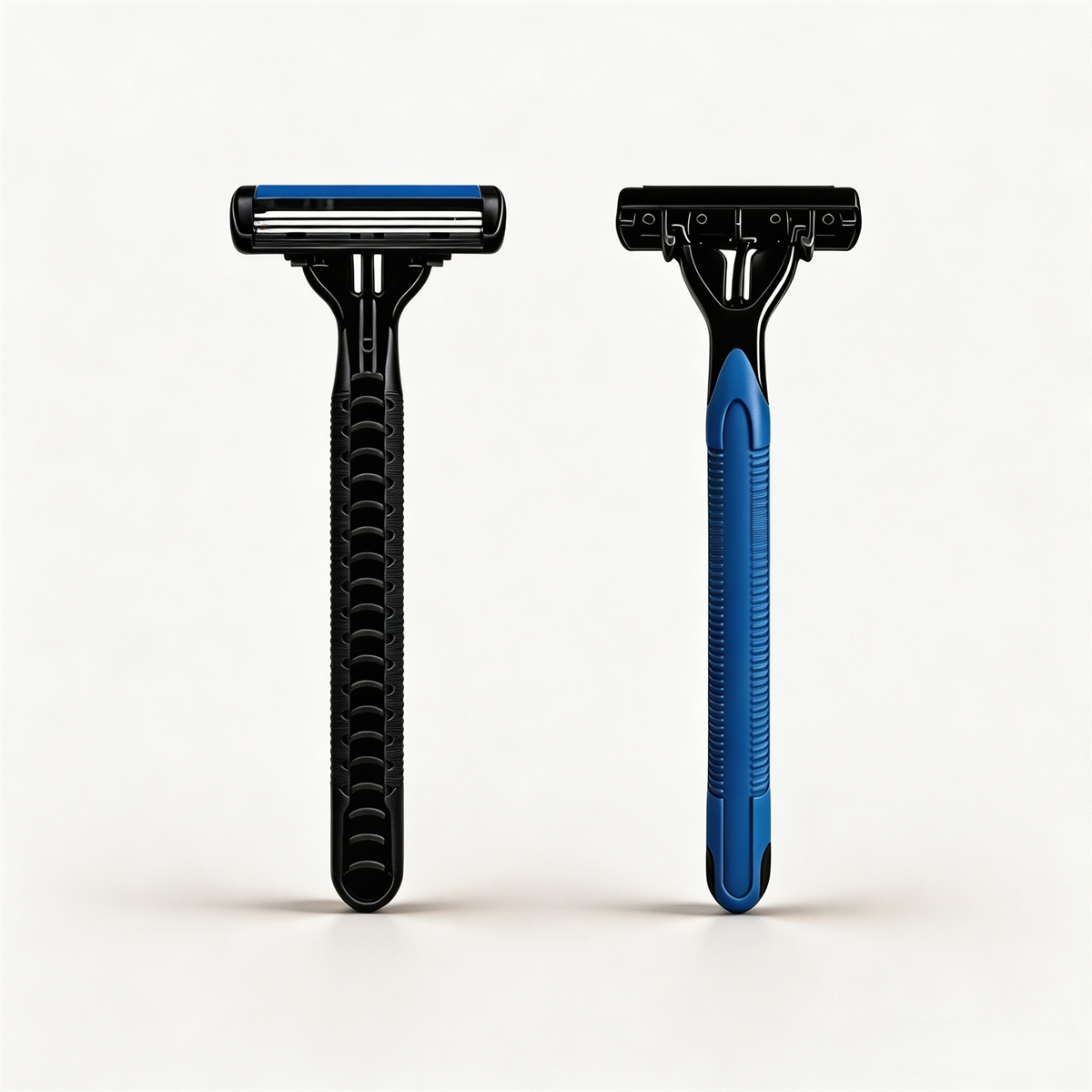
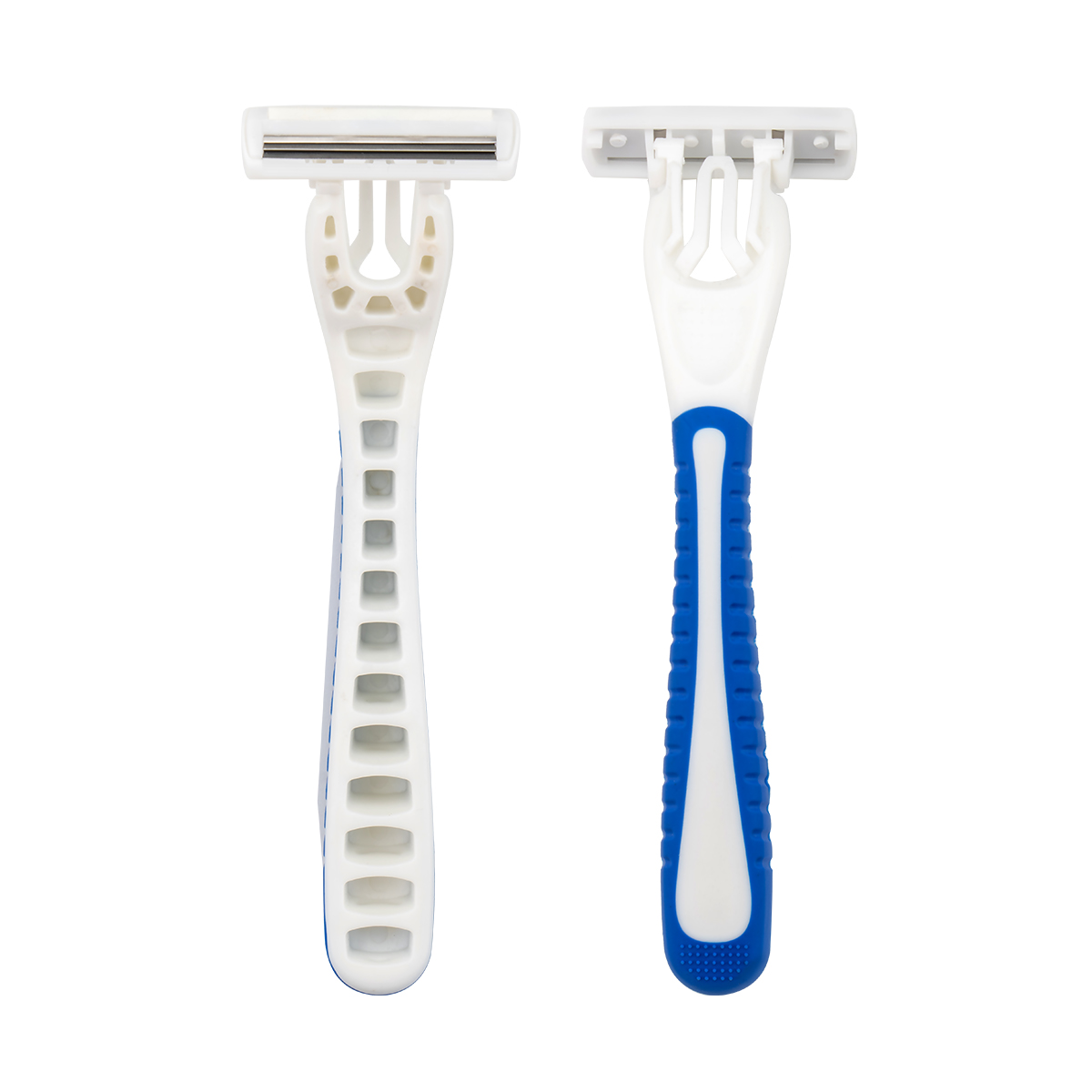
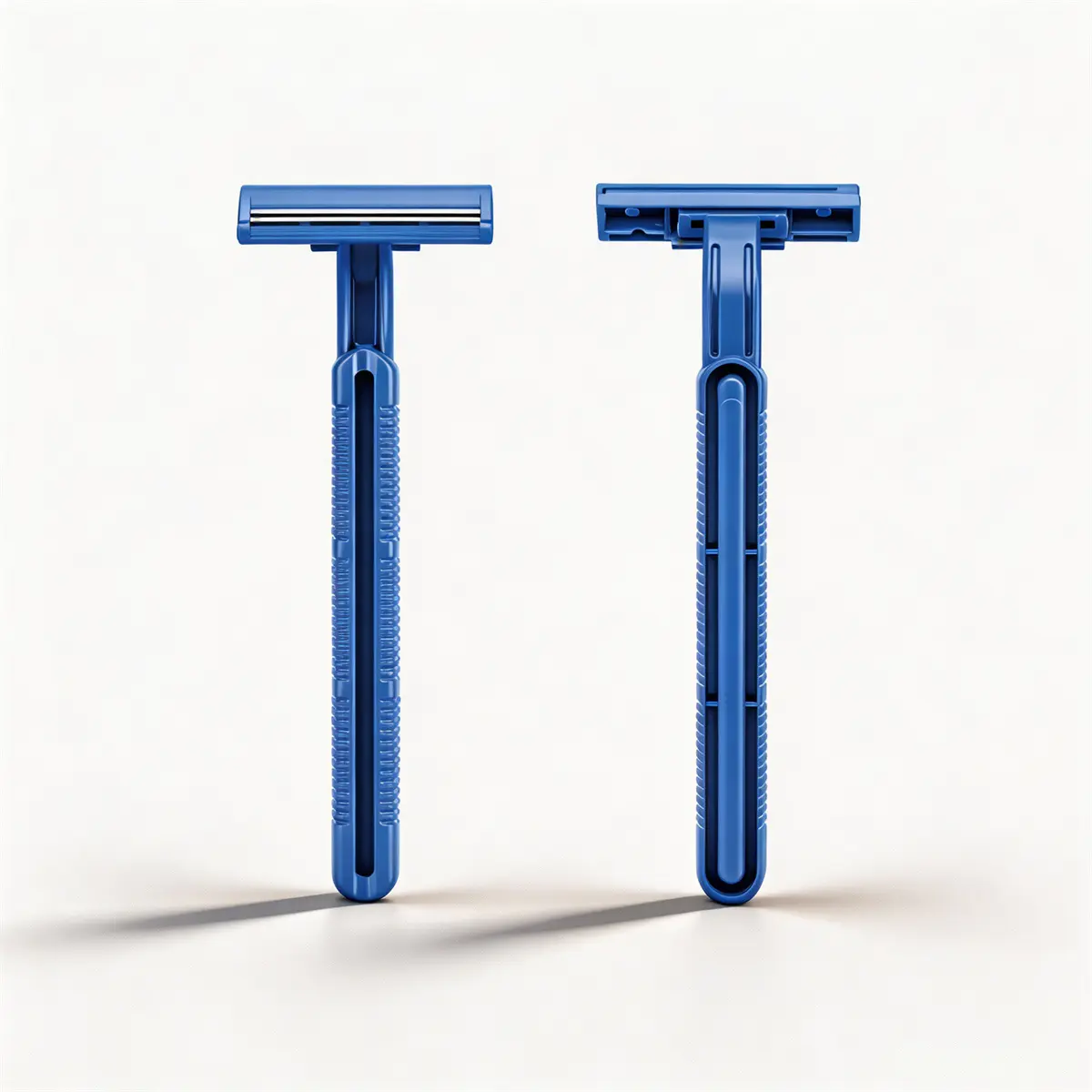
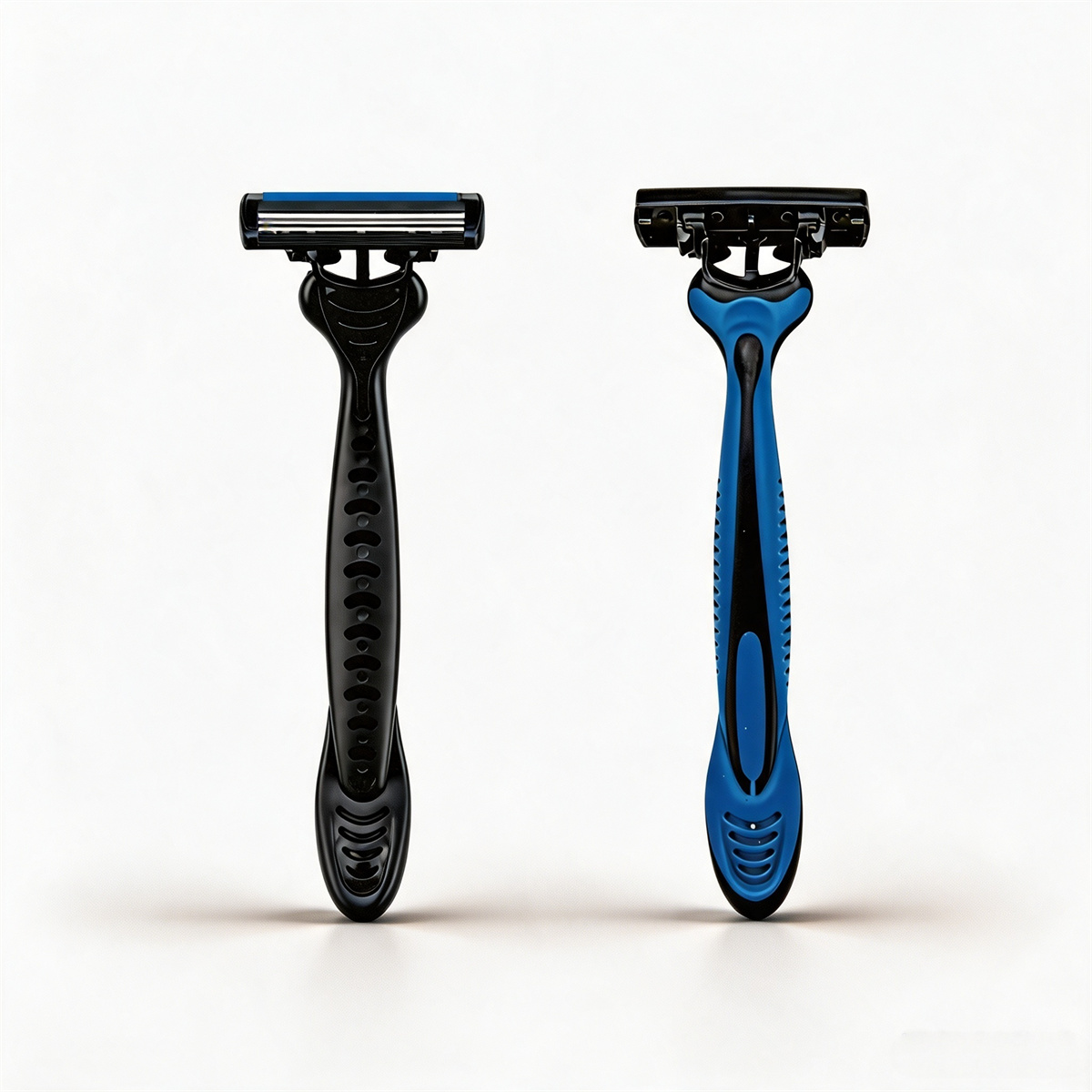
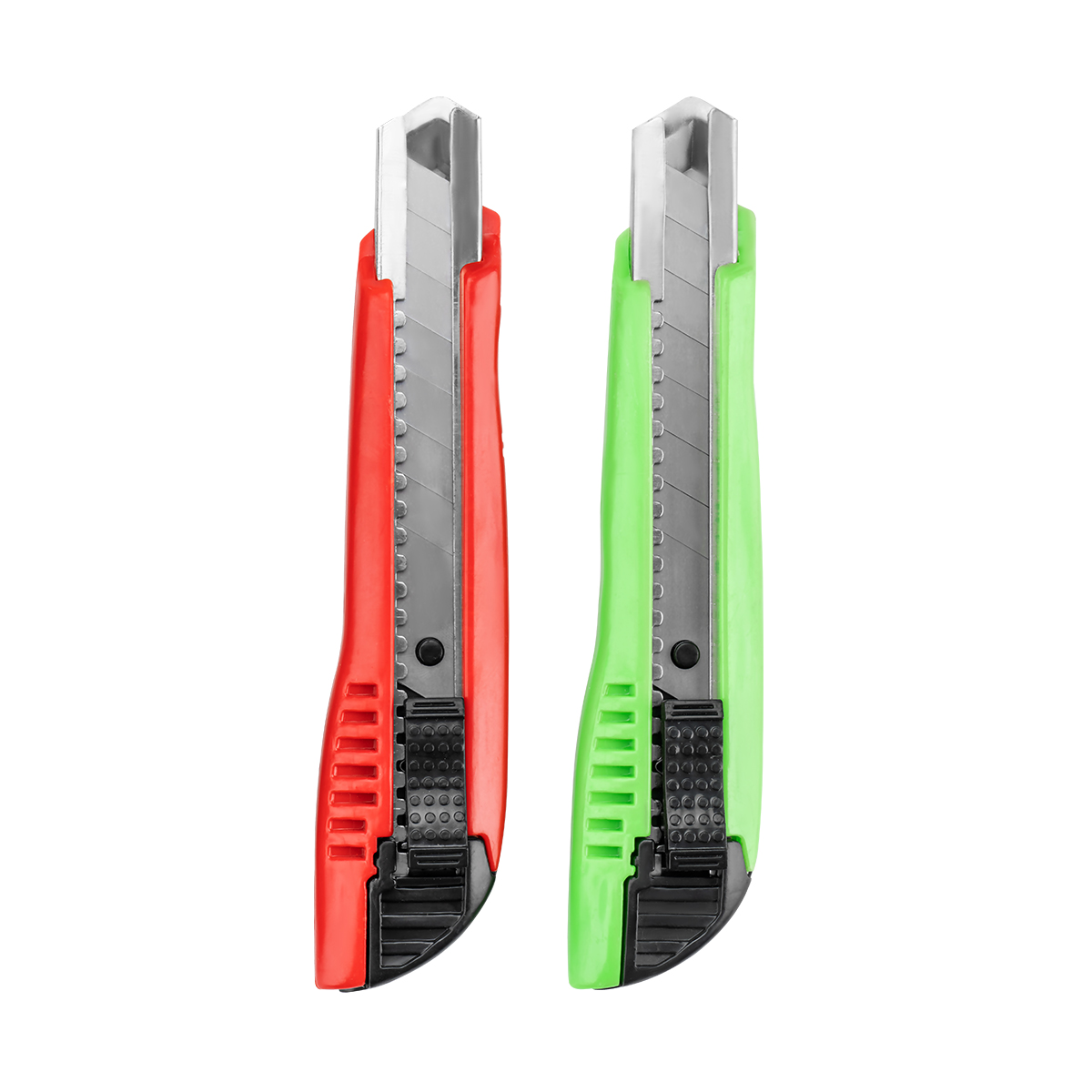
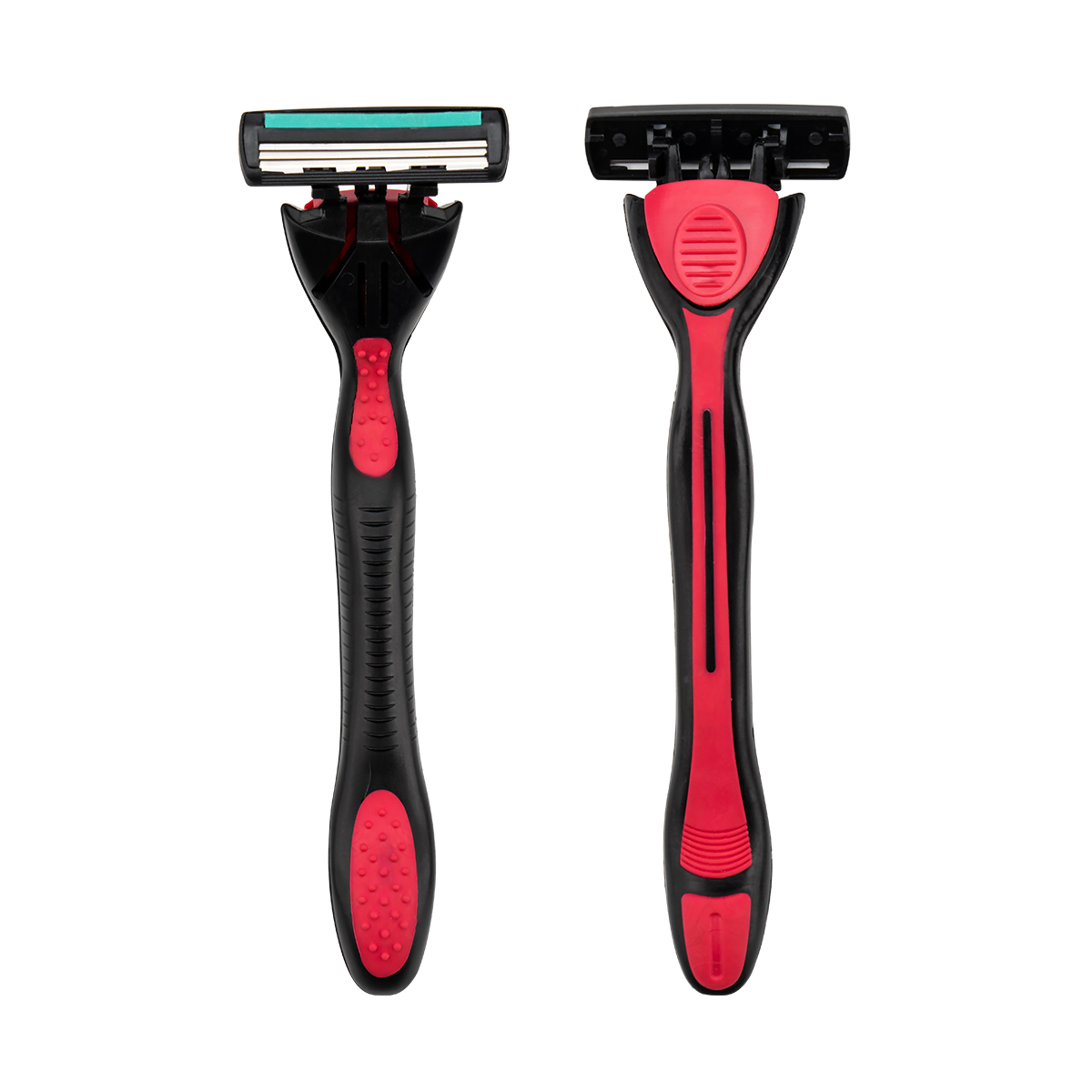
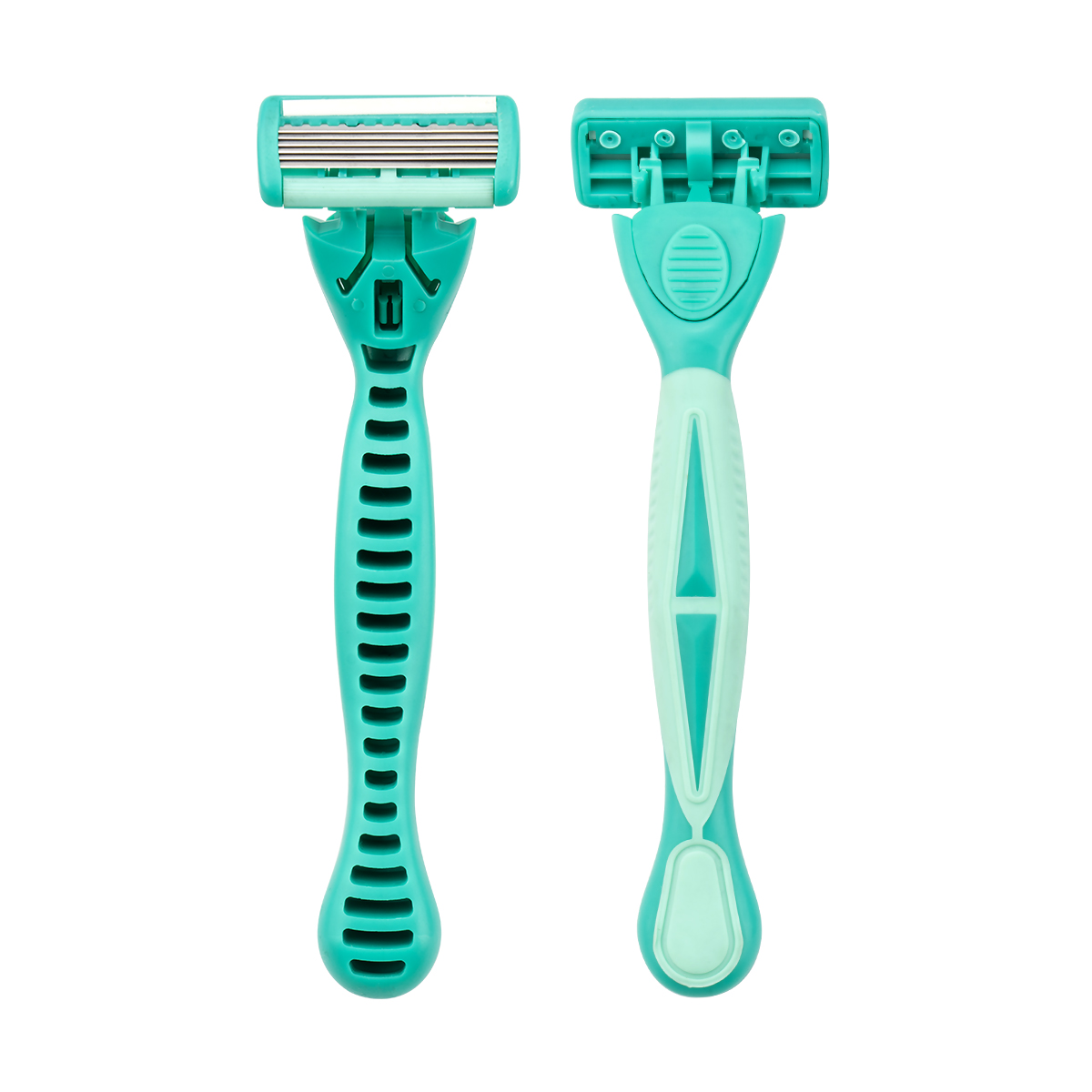
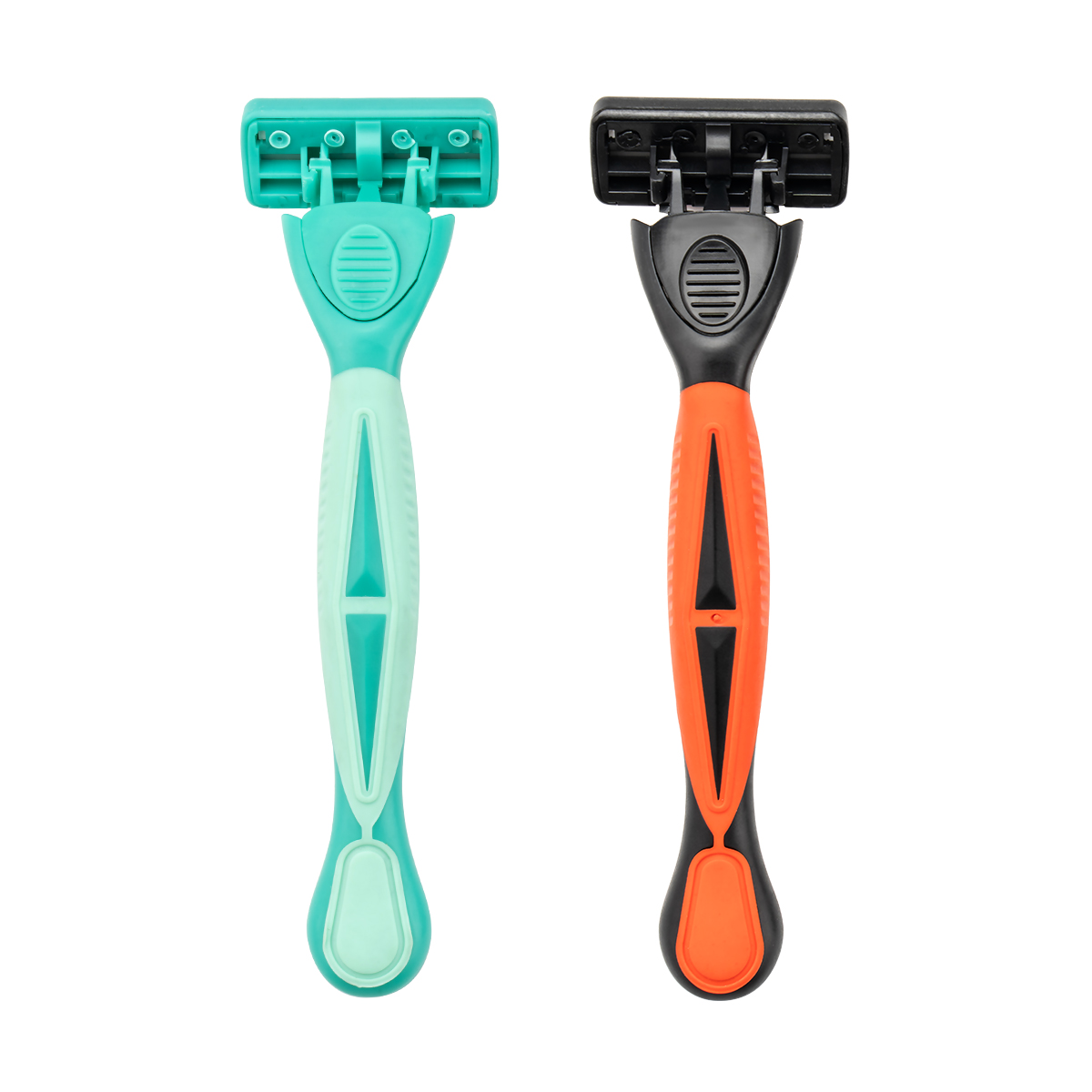
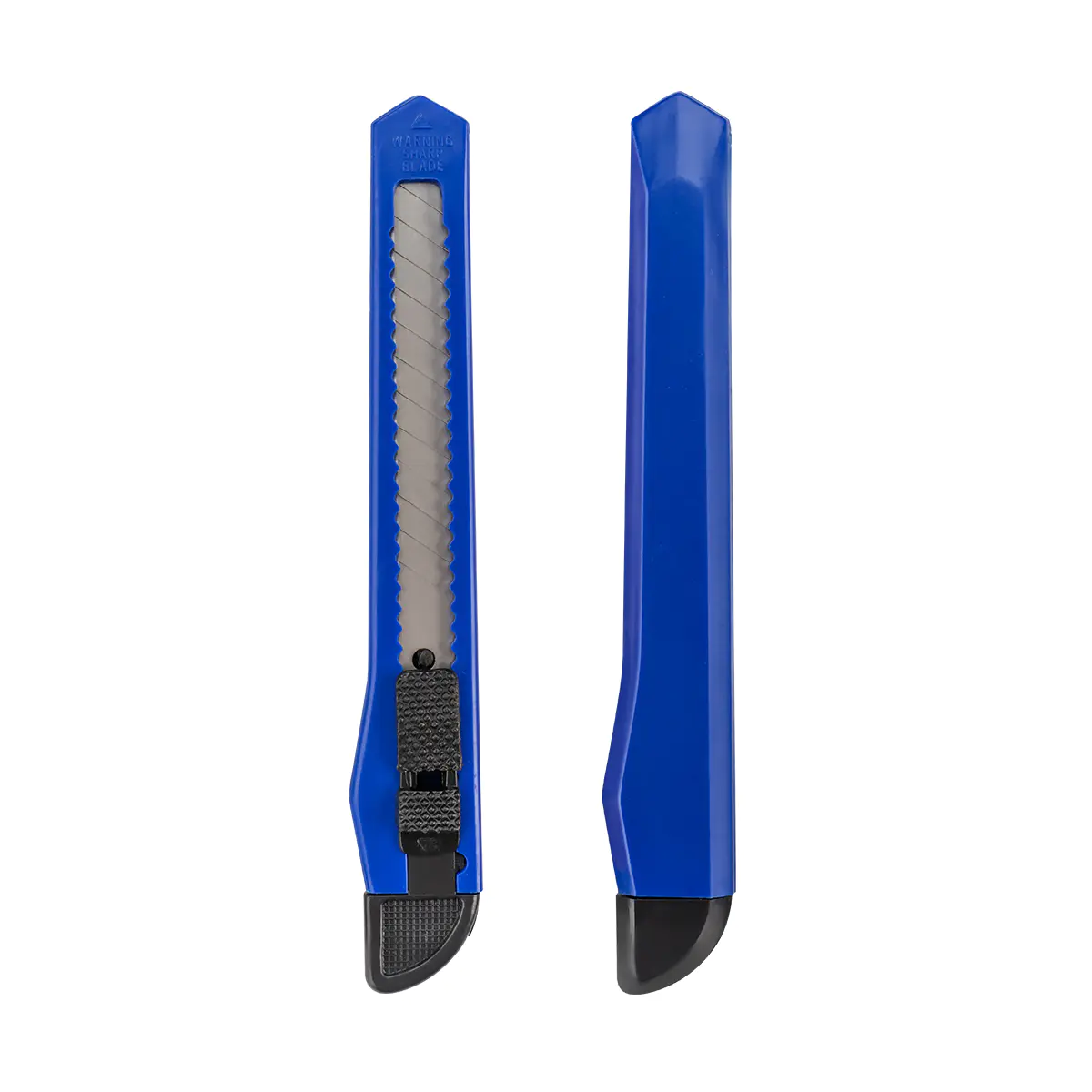
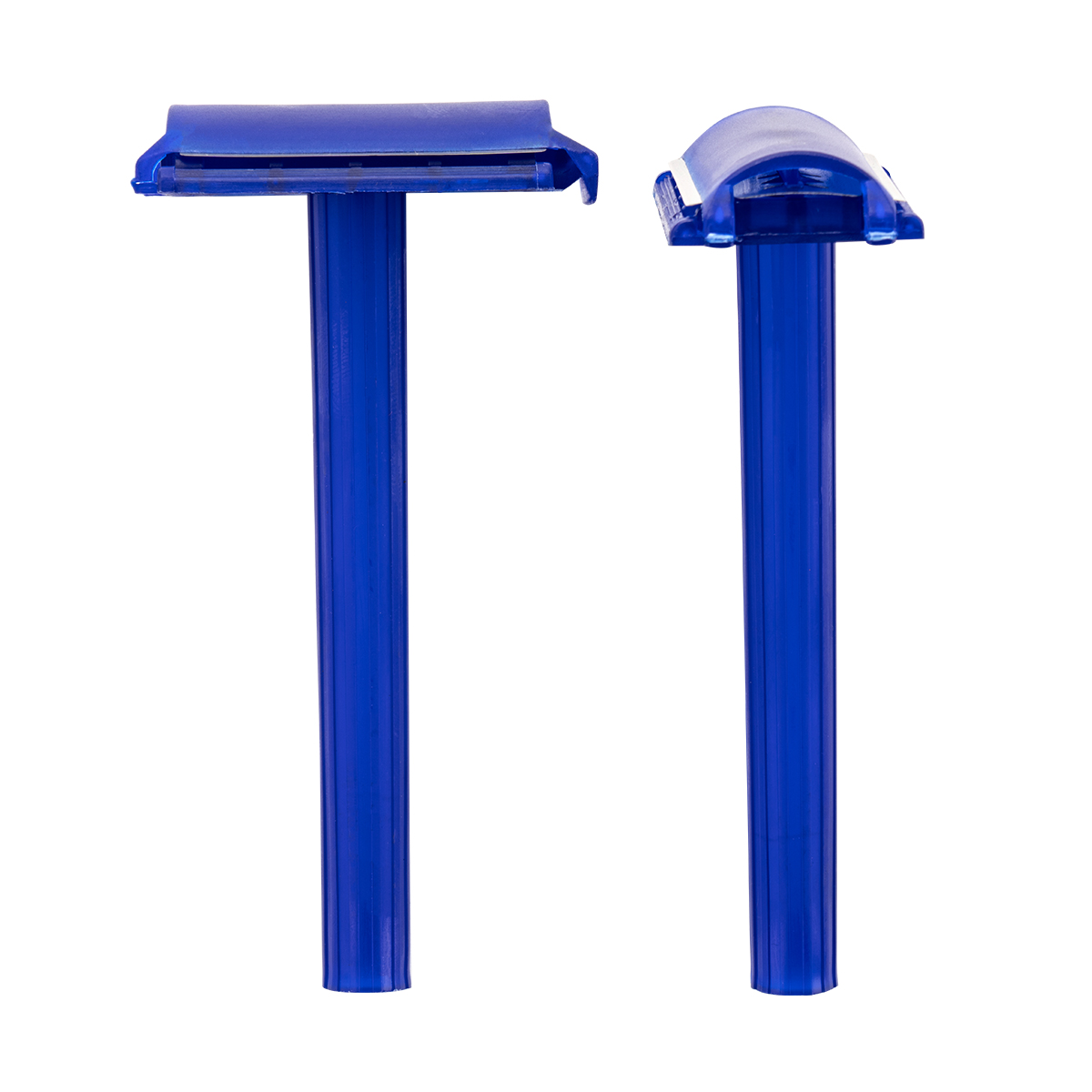

We are an industry and trade enterprise
specializing in the production of disposable razors and utility knives for more than 30 years.
Why Is a 4-Layer Open Blade Disposable Razor Better Than a Sealed Cartridge
Content
- 1 4-Layer Open Blade Disposable Razor Engineering: Inside the Replaceable Blade Head System
- 1.1 Six Details That Define a Well-Made Disposable Razor
- 1.2 Why Blade Count Changes the Number of Passes You Need
- 1.3 From Steel Coil to Finished Cartridge: The Manufacturing Sequence
- 1.4 Assembly and Quality Control Checkpoints
- 1.5 Handle Dimensions and Cartridge Specifications
- 1.6 How Long a Replaceable Blade Head Actually Lasts
- 1.7 Why the Replaceable Head Format Makes Practical Sense
- 1.8 Where a 4-Layer Open Blade Disposable Razor Fits Into Daily Life
- 1.9 Common Questions About 4-Layer Open Blade Disposable Razors
- 1.10 Handle Color and Product Line Variations
- 1.11 Reading the Cartridge Before You Buy or Restock
4-Layer Open Blade Disposable Razor Engineering: Inside the Replaceable Blade Head System
Every close, comfortable shave starts long before the blade touches skin. It starts on a production line, in a mold, on a quality bench, and inside the geometry of a 4-layer open blade. This piece walks through how a Disposable Razor is actually built — from raw steel to a finished Disposable Men's Razor or Disposable Safety Razor ready to leave the factory floor — and why the details most people never notice are the ones that decide whether a shave feels effortless or irritating.
Six Details That Define a Well-Made Disposable Razor
A razor is a small product with a long list of engineering decisions packed into it. Blade angle, spring tension, plastic hardness, and cartridge tolerance all interact with each other. Below are the six structural elements that a production team evaluates before a Disposable Razor is approved for assembly.
4-Layer Blade Stack
Four individually mounted blades sit at incrementally offset heights, so the load of cutting a hair is spread across multiple edges instead of one. This lowers the pressure any single blade needs to apply against the skin.
Open Blade Architecture
Instead of a sealed cartridge, the gap between blades stays exposed. Foam, water, and cut hair pass straight through under a running tap rather than packing into a hidden cavity that traps bacteria and residue.
Replaceable Blade Head
The cutting cartridge separates from the handle through a snap-fit mount. Once the edge dulls, only the head is swapped — the handle, grip, and pivot mechanism stay in continuous use.
Lubricating Strip
A water-activated strip sits above the top blade and releases a thin lubricating layer on contact, reducing drag between the blade edge and the skin surface during each stroke.
Pivoting Head
The cartridge rotates on a small hinge built into the neck of the handle, letting the blade face follow curved surfaces — jawline, ankle, knee — without the handle angle needing constant adjustment.
Ribbed Grip Handle
Raised horizontal ribbing runs down the handle where fingers naturally rest, giving a secure hold even when the handle is wet with water or shaving foam.
Why Blade Count Changes the Number of Passes You Need
One of the most measurable differences between razor formats is how many strokes it takes to reach a smooth result. A single-blade edge has to cut hair close to the skin in one pass, which usually means going over the same area again. A 4-layer open blade spreads that work across four cutting edges, so each pass removes more length before the skin ever needs a second stroke. The chart below reflects typical pass counts reported for common blade configurations on coarse facial or body hair.
Figures represent typical stroke counts needed for a visually smooth result on coarse hair; individual results vary with hair density and technique.
From Steel Coil to Finished Cartridge: The Manufacturing Sequence
A finished Disposable Razor passes through several distinct production stages before it reaches a retail package. Stainless steel strip is first slit to the exact blade width required, then ground along one edge to form the cutting bevel. This grinding step is repeated across multiple passes with progressively finer abrasives, since a rough edge at this stage cannot be corrected later.
Once blades are ground, they move to a coating stage where a thin polymer layer is applied to reduce friction and slow oxidation. The coated blades are then mounted into the cartridge housing at a fixed offset height — this offset is what allows a 4-layer open blade to function as a graduated cutting system rather than four blades doing identical work.
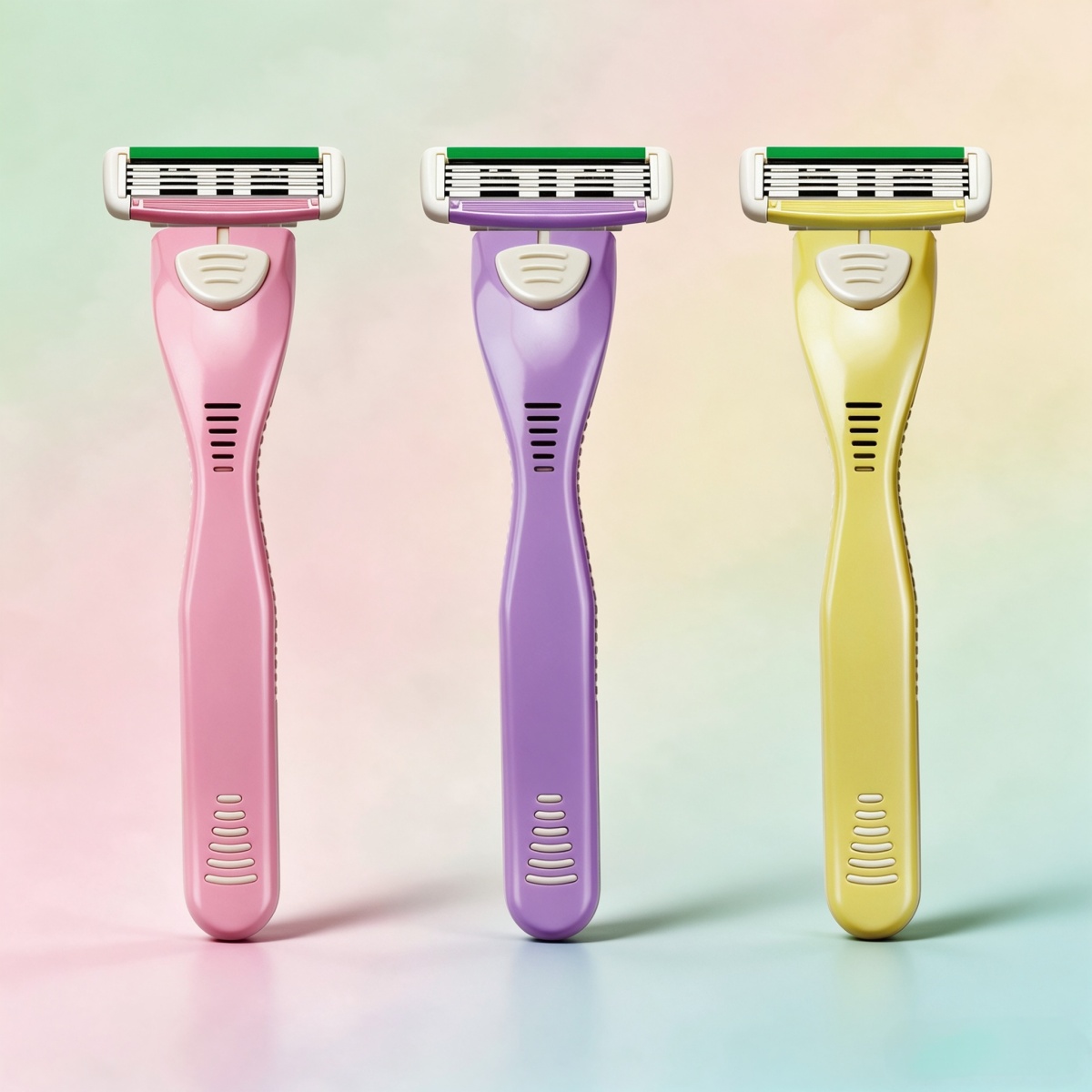
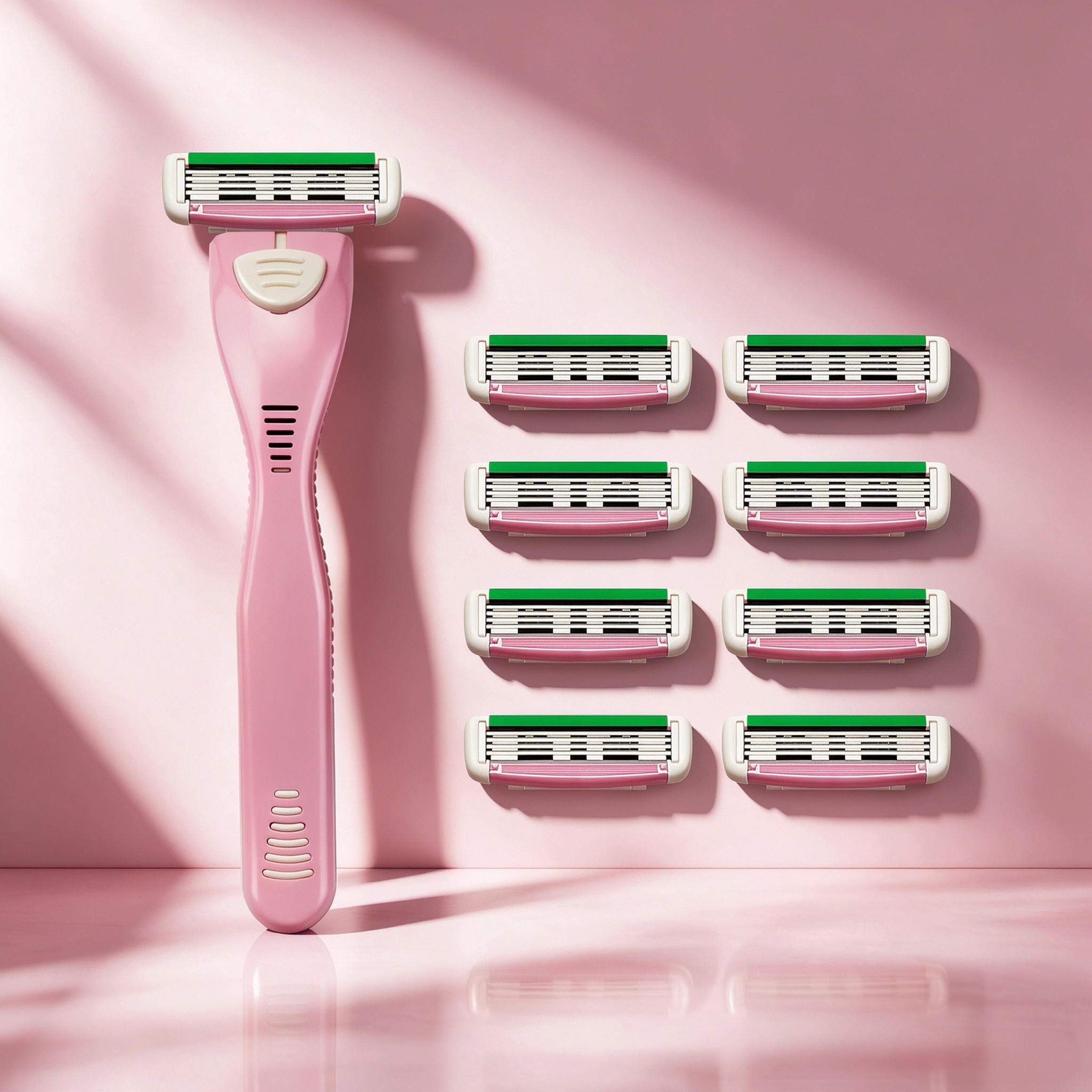
The plastic housing itself is produced separately through injection molding. ABS plastic is used for the structural handle body because it holds dimensional stability under repeated wet and dry cycles, while a softer thermoplastic elastomer is co-molded into the grip zones for tactile comfort. Handle color, whether the soft pink, lilac, or pale yellow seen across a Disposable Safety Razor line, or the deeper blue tones used on a Disposable Men's Razor line, is achieved by mixing pigment directly into the resin before molding rather than painting the surface, which keeps the color from chipping with use.
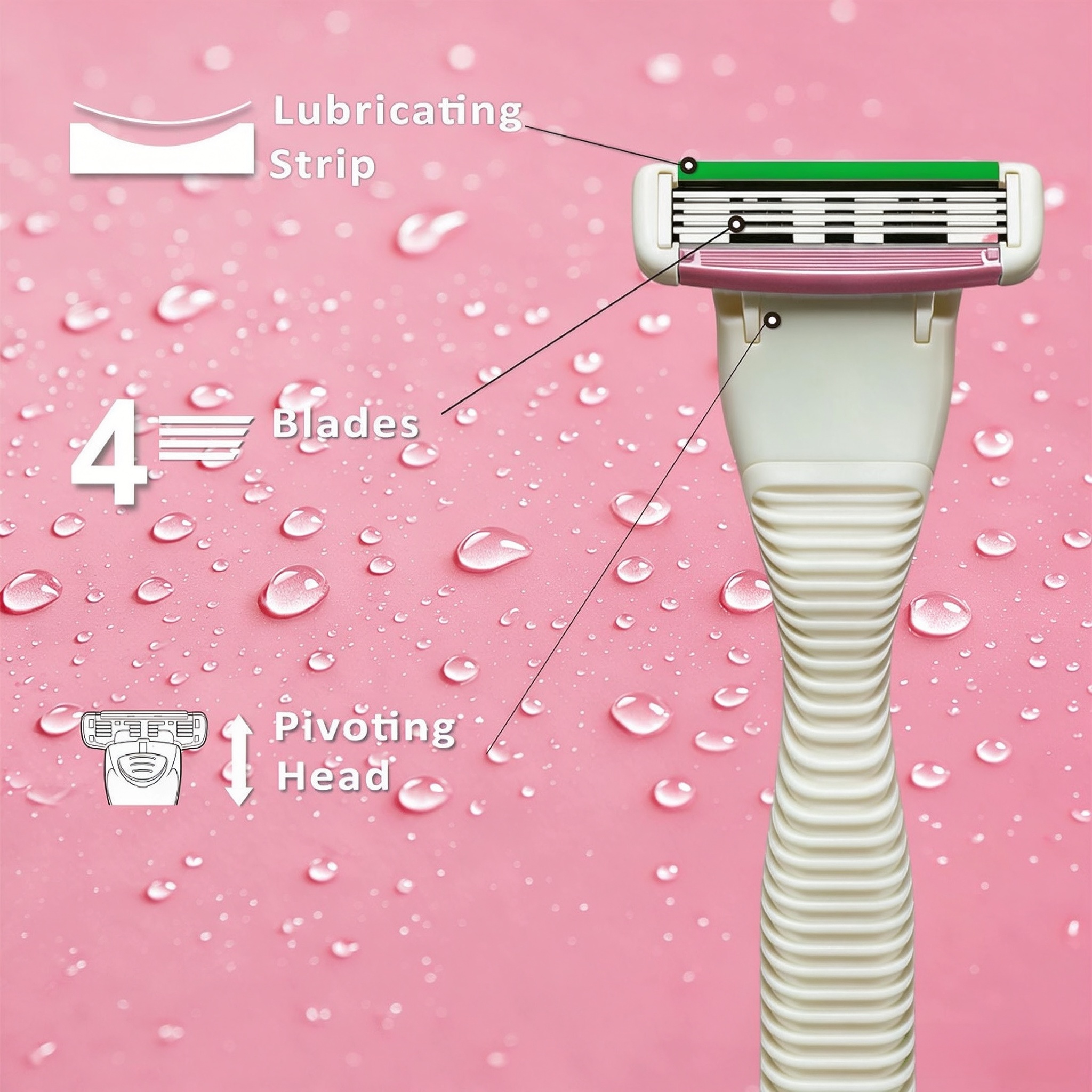 Cartridge components: lubricating strip, four-blade stack, and pivoting head mount.
Assembly and Quality Control Checkpoints
After molding and blade preparation, cartridges and handles meet on the assembly line. Automated vision systems check blade spacing to confirm each of the four edges sits at its designed offset — a deviation of even a fraction of a millimeter can change how the blade tracks across skin. Handles are checked for pivot resistance, meaning the head has to rotate smoothly within a defined force range: too stiff and it won't follow body curves, too loose and it won't hold a stable cutting angle.
Blade Alignment Check
Each cartridge is scanned to confirm all four blades sit at the correct graduated height before packaging.
Pivot Resistance Test
The hinge connecting the cartridge to the handle is tested for a consistent rotation force across the full production batch.
Grip Bond Test
The soft rubber grip sections are pulled to confirm the co-molded bond to the ABS handle body will not separate with use.
Snap-Fit Cycle Test
The replaceable blade head mount is clicked on and off repeatedly to confirm it holds its grip strength across many cartridge swaps.
Handle Dimensions and Cartridge Specifications
Consistency in size matters as much as material quality, since a cartridge that fits loosely on one handle batch and tightly on another creates a poor shaving experience. The table below lists the standard measurements used across the current Disposable Razor handle and cartridge design.
| Specification | Measurement |
|---|---|
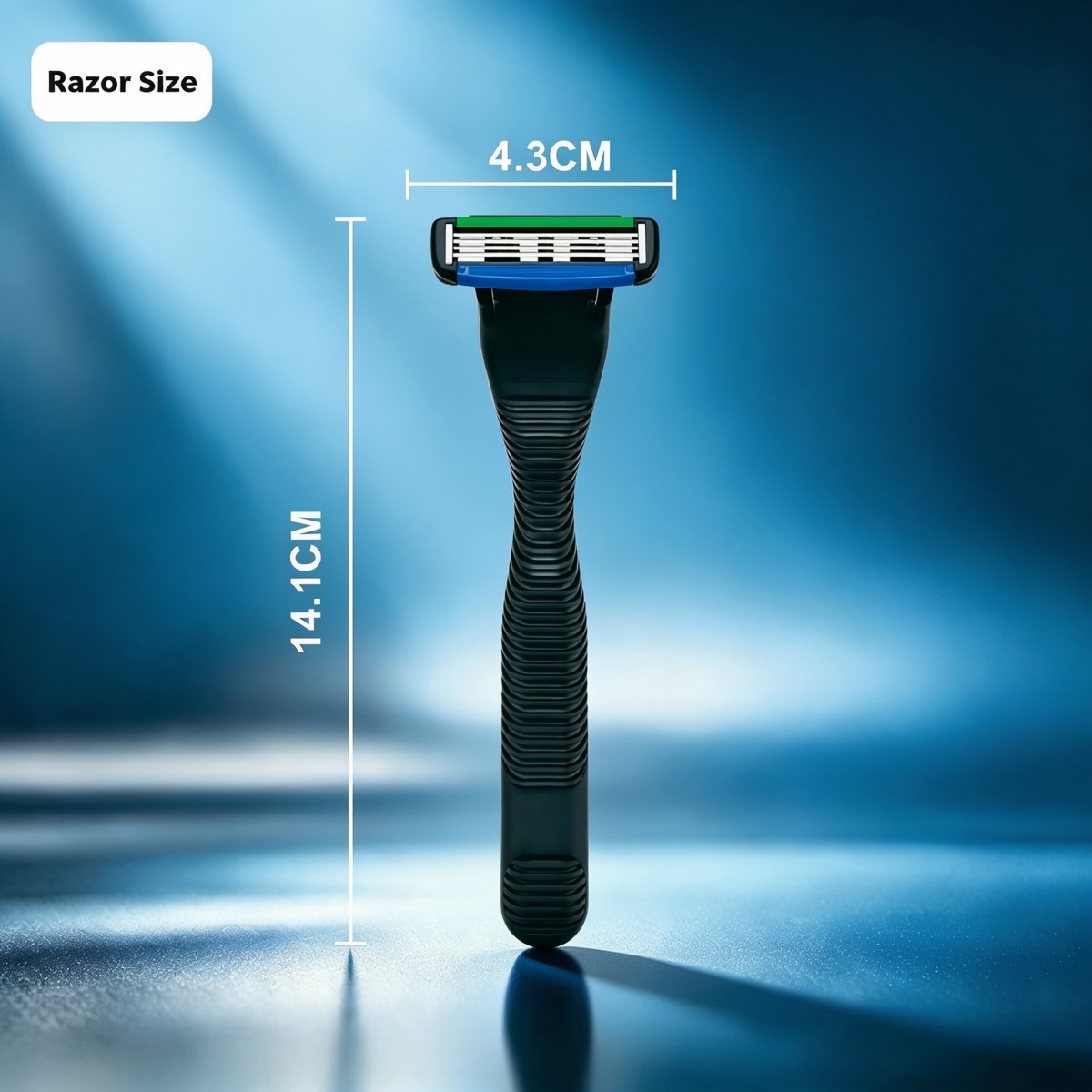
| Cartridge width | 4.3 cm |
| Handle length (assembled) | 14.1 cm |
| Blade count per cartridge | 4 layers |
| Cartridge structure | Open blade, easy-clean design |
| Head mount type | Replaceable, snap-fit cartridge |
| Head movement | Pivoting head with hinge mount |
| Handle material | ABS body with co-molded grip |
| Lubrication | Water-activated top strip |
How Long a Replaceable Blade Head Actually Lasts
Because the blade head separates from the handle, tracking cartridge sharpness over repeated use becomes a practical question rather than a cosmetic one — the handle stays, only the cutting edge changes out. Sharpness does not drop in a straight line; it holds fairly steady for a stretch of uses and then declines more quickly once the coating on the blade edge wears through. The line below illustrates that typical pattern across a single cartridge's working life before a replacement head is recommended.
Illustrative sharpness curve for a single replaceable cartridge; rinsing after every use and drying the blade head between shaves helps extend the flatter portion of this curve.
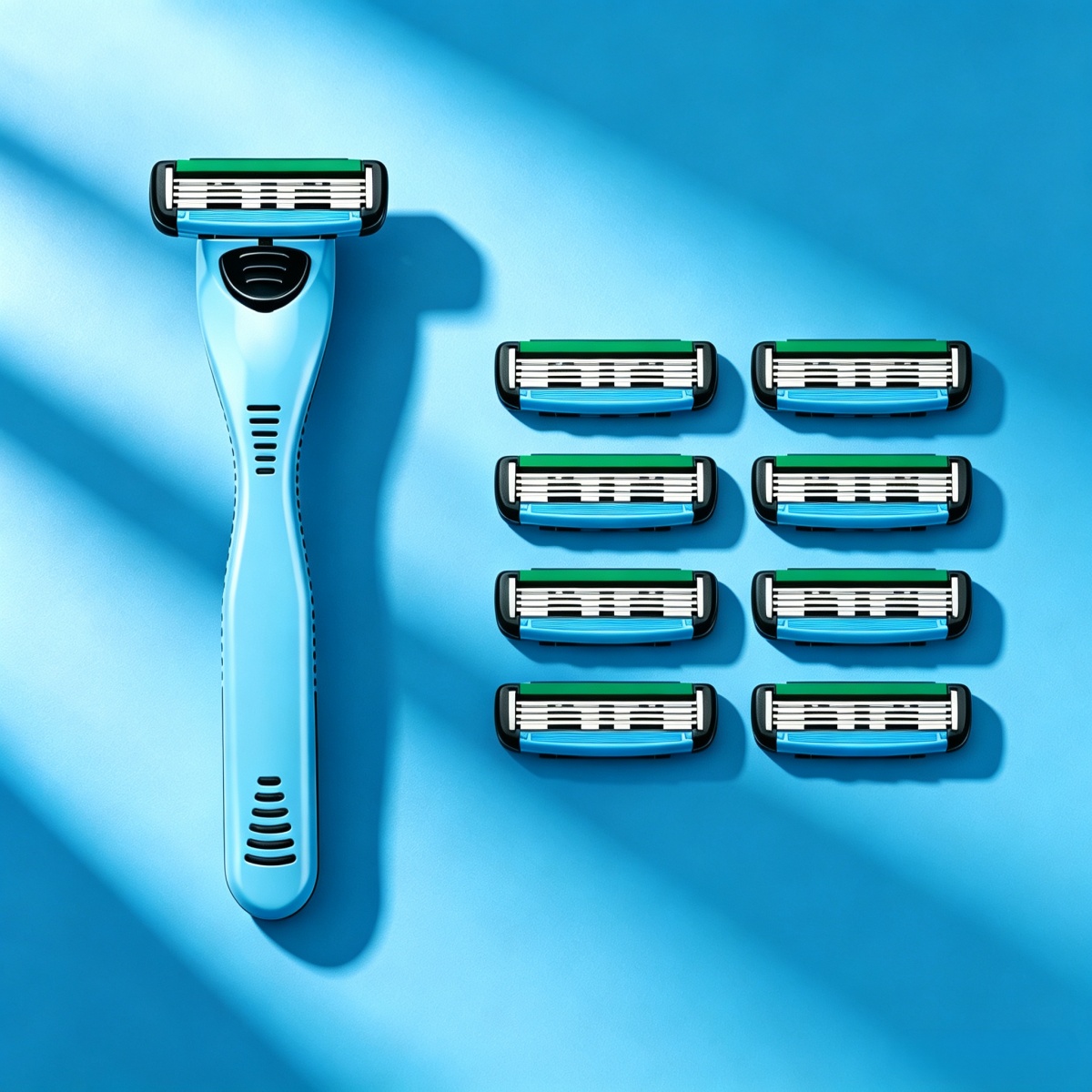 A single handle paired with a stack of replaceable blade heads extends the working life of the whole razor system.
Why the Replaceable Head Format Makes Practical Sense
The core idea behind a replaceable blade head is simple: the part that wears out fastest is the edge, not the handle. A fully disposable razor throws away a functioning grip, pivot, and molded body every time the blade dulls. A replaceable-head Disposable Razor keeps that structural body in service while only the cartridge — the part actually doing the cutting — gets swapped.
This also changes how the product behaves in daily storage. A single handle can sit in a shower caddy or travel bag while a small stack of spare cartridges, often packaged five or eight to a set, stays sealed until needed. That means less material handled per shave and a more predictable rhythm for when a fresh edge is due — most users notice the shift from a crisp cut to a slight tugging sensation, which is the natural signal to click on the next head.
Where a 4-Layer Open Blade Disposable Razor Fits Into Daily Life
The same core cartridge and handle design gets used across a wide range of daily situations, not just a single bathroom routine. Below are the settings where the combination of a compact handle, replaceable head, and open blade structure tends to matter most.
Daily Bathroom Routine
The open blade rinses clean under a bathroom tap in seconds, so a morning routine doesn't get slowed down by clearing trapped hair from a sealed cartridge.
Travel and Carry-On Use
A compact 14.1 cm handle and cap-covered blade head pack easily into a toiletry bag, with spare cartridges taking up minimal additional space.
Hospitality and Guest Amenities
Consistent cartridge sizing and a simple snap-fit head make restocking straightforward wherever guest-ready personal care items are kept on hand.
Shared Household Use
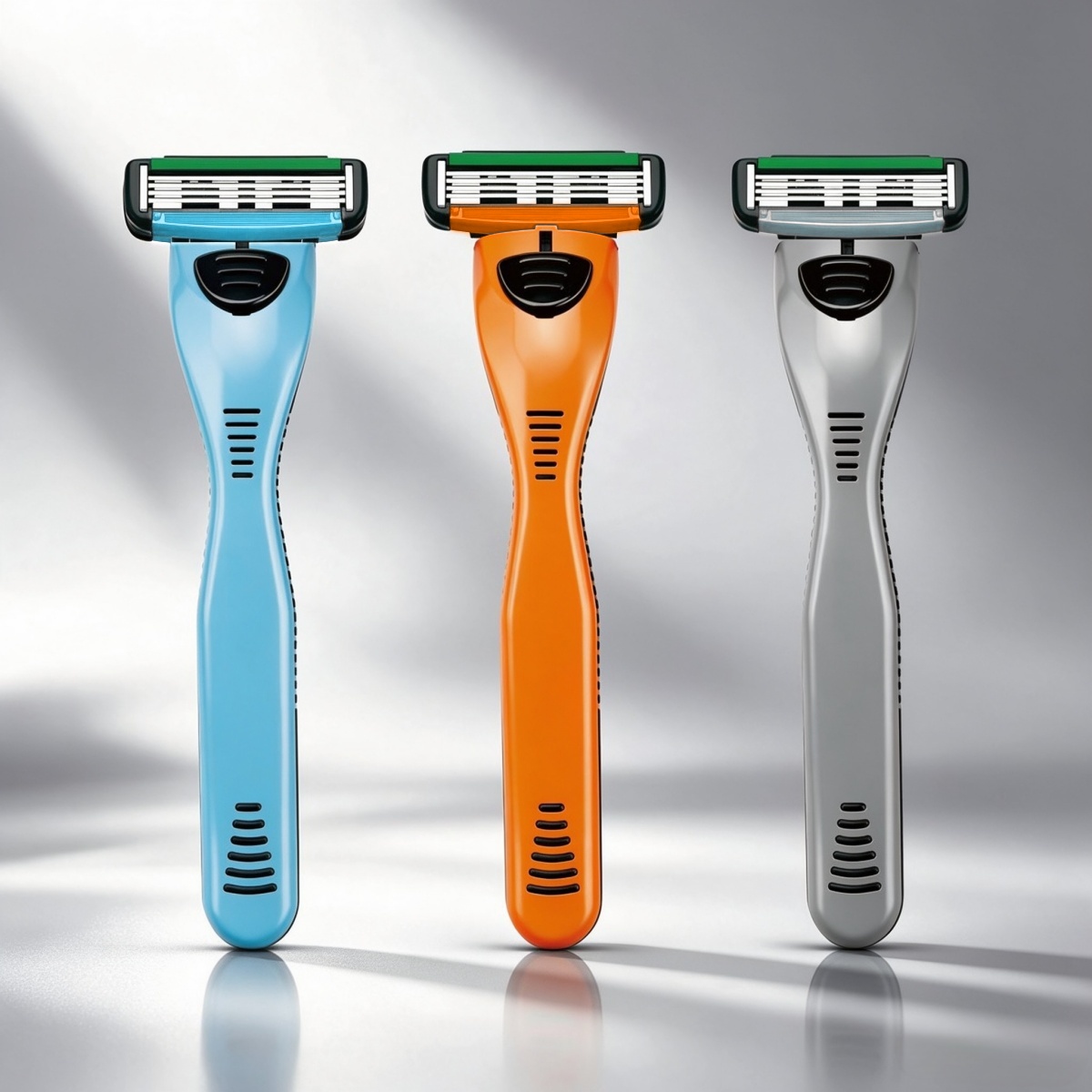
Individual replaceable heads let each household member keep a personal cartridge on one of several color-coded handles without cross-using blades.
Common Questions About 4-Layer Open Blade Disposable Razors
How is an open blade cartridge different from a sealed one?
A sealed cartridge encloses the blade stack behind a narrow guard, which can trap hair and foam in gaps that are hard to reach. An open blade structure leaves the space between blades exposed, so running water passes directly through during rinsing instead of getting caught behind a barrier.
Does a 4-layer blade actually reduce skin irritation?
Spreading the cutting work across four staggered edges lowers the pressure any single blade needs to apply, which generally means fewer repeated strokes over the same patch of skin. Fewer repeated passes is one of the more consistent factors linked to reduced razor burn.
How do I know when to replace the blade head?
A dulling cartridge typically starts to pull or tug at hair instead of slicing cleanly, and the pass count needed to get a smooth result starts creeping up. At that point, releasing the old head from the snap-fit mount and clicking on a fresh one restores the original cutting feel.
Why does the handle have ribbed sections instead of a smooth surface?
Smooth plastic becomes slippery once it's wet with water or shaving foam. The raised ribbing sits exactly where fingers naturally grip the handle, maintaining control through the full length of a shaving motion.
Can the same handle be used with different colored cartridges?
Cartridge mounts are built to a standard snap-fit dimension within a given product line, so any compatible replaceable head from that line — regardless of its accent color — fits the same handle without adjustment.
Handle Color and Product Line Variations
While the internal cartridge engineering stays consistent, the external handle is produced across multiple color and finish options so the same core 4-layer open blade system can serve different product lines. A Disposable Safety Razor built for a softer aesthetic typically uses pastel handle tones such as pink, lilac, or pale yellow, while a Disposable Men's Razor line more often uses deeper blue or charcoal handle finishes. Both share the identical cartridge specification underneath the surface color.
| Product Line | Typical Handle Finish | Cartridge Set Options |
|---|---|---|
| Pastel Safety Razor Line | Pink, lilac, pale yellow | 5-pack or 8-pack replaceable heads |
| Deep Tone Men's Razor Line | Blue, charcoal | 5-pack or 8-pack replaceable heads |
Reading the Cartridge Before You Buy or Restock
A quick visual check on packaging tells most of what matters about a given Disposable Razor batch. The blade count printed on the pack should match what's visible through the cartridge guard — four distinct cutting edges staggered from front to back. The lubricating strip should run as a solid, evenly colored band across the top of the cartridge; a patchy or uneven strip usually points to an inconsistent coating pass during production. The plastic guard around the blades should sit flush with no visible gaps, since a warped guard is often the first sign of a mold that has started to wear.
On the handle side, the pivot point should move freely when pressed but return to a neutral position on its own — a pivot that stays wherever it's pushed, or one that doesn't move at all, points to a hinge assembly outside its intended tolerance. The ribbed grip zones should feel slightly soft to the touch compared with the firmer plastic body, confirming the two-material molding process was completed correctly rather than using a single rigid plastic throughout.
Cartridge packaging for replacement heads is generally sold in sets of five or eight, sized to match roughly one to two months of regular use depending on shave frequency and hair density. Keeping a spare set on hand means a dulling blade head never interrupts a routine — the handle stays exactly where it always is, and only the cartridge clicks over to a fresh one.
Recommended Product
Recommended News

Keep In Touch
 No. 2-2, Oufu Road, Zhangting Town, Yuyao City, Ningbo City, Zhejiang, China.
 +86-574-87560886/87560055
 +86-574-87560885
Copyright © Ningbo Chuangxin Cutting-Tool Manufacture Co., Ltd.
